
Legionella Water Sampling for Businesses
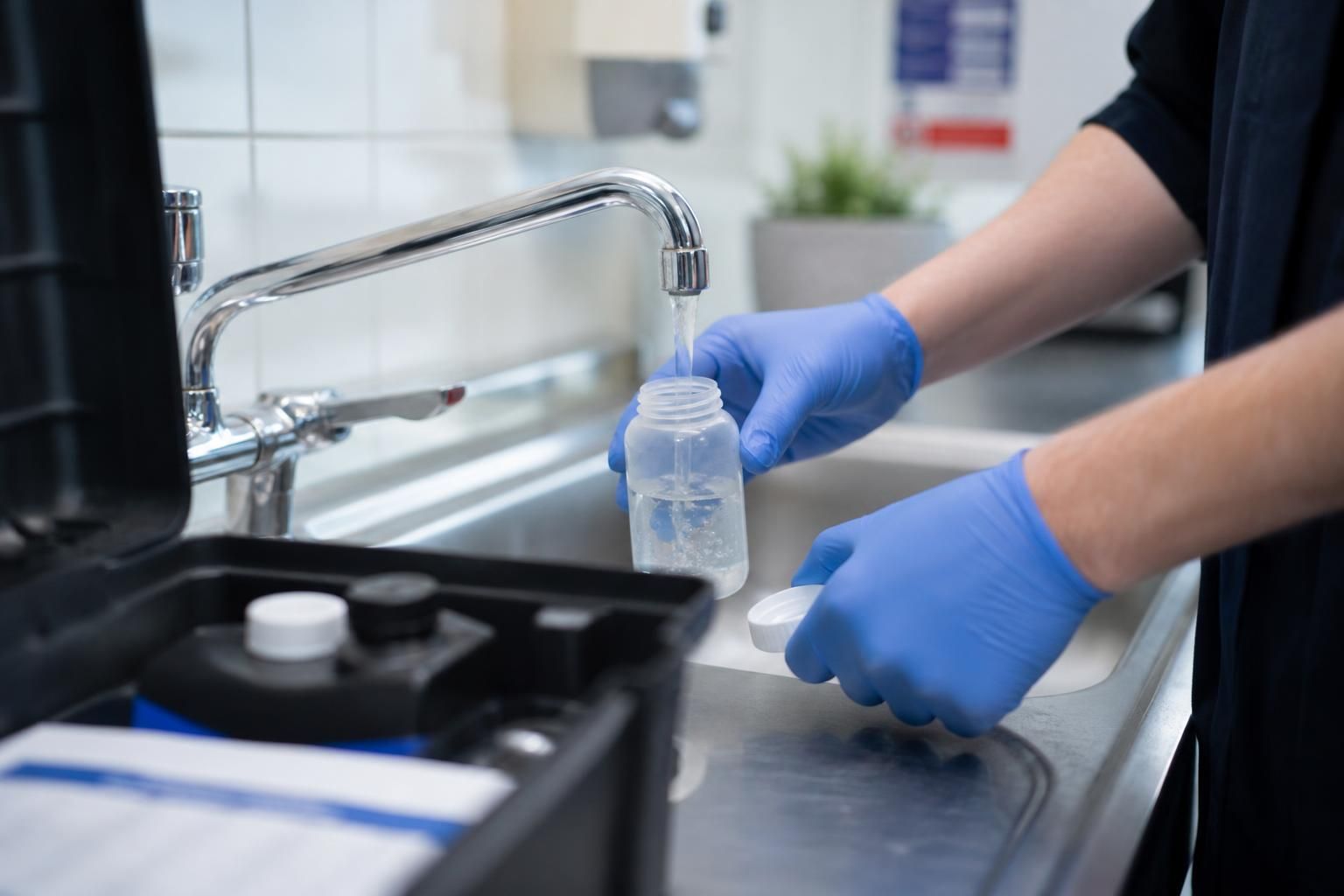
Legionella water sampling involves collecting representative water samples from building systems for laboratory analysis. Blue Fish Water Management supports businesses by coordinating sampling, interpreting findings and identifying appropriate actions to support water safety compliance.
Which Legionella Sampling Approach Is Right for Your Site?
Legionella sampling can be planned as routine monitoring, targeted investigation or post-remedial verification. The appropriate approach depends on system risk, suspected cause, operational changes and the decision the results must support, from confirming control measures to guiding corrective action.
Routine Monitoring Samples
Planned samples taken at defined points and intervals to provide ongoing evidence of water system control. This approach suits sites with established monitoring arrangements where results are used to track trends and support documented compliance.
Risk-Based Sampling
Sampling is selected according to the system’s risk profile, including water outlets, storage arrangements, temperature control and vulnerable users. It is suitable where the sampling plan needs to reflect the specific features and hazards of a building rather than follow a generic schedule.
Targeted Investigative Sampling
Additional samples focus on locations or systems associated with an unexpected result, suspected stagnation, temperature concern or other change in conditions. The findings can help identify the likely extent of an issue and inform proportionate corrective action.
Post-Remedial Verification
Samples are collected after remedial work or other control measures to assess whether the intended improvement has been achieved. This approach is appropriate when results are needed to support decisions about returning a system to normal monitoring or taking further action.
Change or Commissioning Sampling
Sampling is planned around a new, altered or recommissioned water system to establish evidence of its condition and control. It can support handover, operational review and the development of an appropriate ongoing sampling programme.
What Is Included in Legionella Water Sampling Support?
Thorough legionella water sampling support covers agreed sampling locations, suitable containers, sample identification, chain-of-custody records and laboratory submission. Clear documentation helps relate each result to the relevant water system and maintain an auditable compliance trail.
Agreed Sampling Locations
Sampling points are identified in relation to the building’s water systems and the purpose of the assessment. Selecting representative locations helps results provide useful evidence about the systems under review.
Controlled Sample Collection
Samples are collected using suitable containers and procedures for legionella analysis. Careful handling helps protect sample integrity and reduces the risk of introducing factors that could affect laboratory findings.
Clear Sample Identification
Each sample is labelled against its location and relevant system details. Consistent identification allows individual results to be traced back to the correct outlet, circuit or area.
Chain-of-Custody Records
Transfer details are recorded from collection through to laboratory receipt. This creates a documented chain of custody and supports an auditable record of how samples have been handled.
Laboratory Submission
Collected samples are submitted for appropriate laboratory analysis, including UKAS-accredited water testing where applicable. Laboratory results provide the analytical evidence needed for informed review.
Result Interpretation
Results are considered alongside the relevant water system information and sampling context. This helps distinguish findings that require further investigation from those that can be recorded within routine monitoring.
Documented Follow-Up
Findings are set out clearly so responsible persons can identify appropriate next steps. Where results indicate a concern, the documentation can inform further investigation, remedial work or changes to monitoring arrangements.
Which Legionella Water Sampling Support Is Right for Your System?
How often should legionella water sampling be carried out?
Choose sampling arrangements according to system complexity, risk assessment findings and dutyholder responsibilities. Routine monitoring may suit established controls, while investigations require targeted locations, contextual review and documented follow-up actions.
Read moreHow are legionella water sampling results interpreted?
Interpretation considers the organism detected, concentration, sampling location, system conditions and trends. Results should be assessed against risk controls and relevant guidance, with proportionate investigation or remedial action where necessary.
Read moreWho is responsible for legionella water sampling?
Responsibility rests with the dutyholder, supported by competent water hygiene professionals where specialist sampling knowledge is required. Roles should be defined in the management scheme, with findings recorded and reviewed.
Read moreWhat should businesses prepare before legionella water sampling?
Prepare current system schematics, asset registers, temperature records, risk assessments, previous laboratory reports and access arrangements. Identify relevant outlets, unusual operating conditions and recent remedial work for sampling context.
Read moreIs legionella water sampling needed after water system changes?
Yes, repeat sampling may be appropriate after alterations affecting storage, distribution, temperatures or outlets. Review updated controls, confirm system conditions, and document findings before usual ongoing monitoring resumes where justified.
Read moreQuestions to Ask Before Arranging Legionella Water Sampling
Before arranging legionella water sampling, clarify the purpose and scope of the work: which water systems are being assessed, what risk information will inform the sampling plan, and whether the proposed approach is appropriate for the site. Ask who will carry out the work and what relevant competence, experience and quality controls support their sampling process.
Confirm what evidence will be provided, how results will be reported and explained, and what timescales apply to sampling, laboratory analysis and follow-up advice. It is also important to establish who will review the findings, decide whether further investigation or remedial action is needed, and maintain the water safety records and ongoing monitoring arrangements.
Agreeing the sampling approach
Check that the plan distinguishes between the water systems, outlets and conditions relevant to the assessment. It should identify any access requirements, operational information or existing risk records that may affect how representative the samples are. Where the work is part of a wider investigation, confirm how sampling fits with other assessment or monitoring activities.
Once these points have been answered, the proposed sampling programme should be recorded alongside the site’s water safety arrangements. The responsible people should understand what the samples are intended to establish, how the results will be considered and what information must be retained for future review.
Sampling results are evidence to support a wider assessment, rather than a substitute for understanding the system and its operating conditions. Where findings are unexpected or cannot be interpreted confidently, seek suitable technical advice before drawing conclusions or changing the control measures.
Discuss Your Legionella Water Sampling Requirements
Discuss your legionella water sampling requirements with Blue Fish Water Management to clarify the appropriate scope, sampling approach and next steps. Our team can provide practical advice based on your site’s water systems and compliance objectives.