
Legionella Testing for Business Compliance
Legionella testing examines water systems for Legionella bacteria and supports evidence-based risk control. For commercial, industrial and domestic premises, sampling plans and laboratory methods help verify control measures, investigate concerns and inform compliance decisions under UK water safety guidance.
Legionella Testing Approaches Compared
Legionella testing approaches differ in what they measure, when they are appropriate and how results support decisions. Comparing routine monitoring, targeted investigation and supplementary analytical methods helps dutyholders select proportionate evidence for each water-system risk.
Routine compliance sampling
Planned samples from representative outlets provide ongoing evidence that water-system controls are working. This approach suits established commercial, industrial and domestic premises where monitoring arrangements already form part of the legionella control programme.
Targeted investigative sampling
Additional samples focus on locations, systems or outlets linked to an identified concern, such as suspected contamination or an unfavourable trend. It is more focused than routine monitoring and helps inform proportionate corrective action.
Culture-based laboratory testing
Culture methods grow Legionella from a water sample and can confirm the presence of recoverable bacteria, with results reported to support risk-management decisions. Samples should be handled and analysed by a suitably competent, UKAS-accredited laboratory where accreditation is required.
PCR analysis
Polymerase chain reaction (PCR) detects Legionella genetic material and can provide supplementary information when rapid investigation is important. Because detection of DNA does not by itself establish whether bacteria are viable, PCR results need careful interpretation alongside the system risk and other evidence.
Follow-up verification testing
Testing after remedial work or changes to a water system checks whether the intervention has addressed the issue identified. The sampling scope should reflect the affected parts of the system, the original findings and the evidence needed to support continued control.
What Legionella Testing Support Includes
A complete testing service links sample selection and chain-of-custody controls with laboratory analysis, result interpretation and documented recommendations. Reports can support audits, demonstrate control measures and identify when further investigation or remedial action is proportionate.
Risk-based sampling scope
The testing scope is matched to the water system, its uses and the findings of the relevant risk assessment. This helps determine which systems, assets and outlets require sampling.
Representative sample points
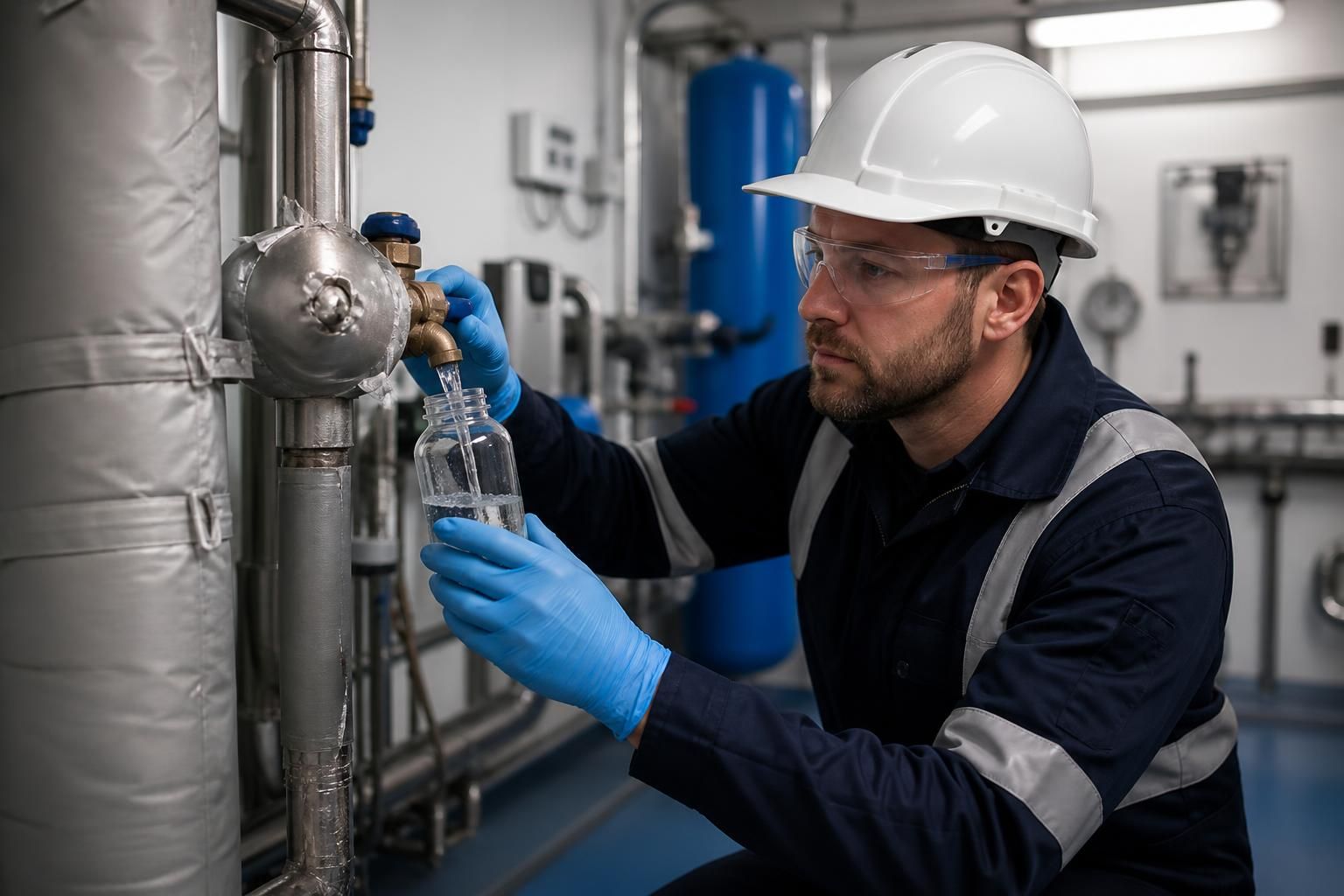
Samples may be taken from points such as outlets, storage vessels and hot-water generation systems, where these are relevant to the investigation or monitoring plan.
Controlled sample handling
Collection, labelling, storage and transport procedures help preserve sample integrity and maintain a clear chain of custody from the water system to the laboratory.
UKAS-accredited testing
Samples are submitted for analysis through UKAS-accredited water testing arrangements, providing a recognised laboratory basis for Legionella results used in compliance records.
Method-led result analysis
Laboratory findings are assessed in context rather than viewed in isolation. The analysis can help identify whether further sampling, system review or control measures should be considered.
Clear testing records
Testing documentation brings together sample locations, dates, analytical findings and relevant observations, giving dutyholders an auditable record for water safety management.
Legionella Testing: Common Questions Answered
Which Legionella test is suitable for a business water system?
Suitability depends on system design, occupancy, control history and suspected exposure pathway. Routine sampling may verify controls, while targeted testing supports investigations after alterations, incidents or unusual findings emerge.
Read moreHow are Legionella water samples collected for laboratory testing?
An assessor selects representative outlets, uses sterile containers, records location and conditions, and follows required flushing or stagnation procedures. Samples are preserved, securely transported and documented for laboratory microbiological analysis.
Read moreWhen should Legionella test results trigger further investigation?
Further investigation is warranted when results exceed action thresholds, reveal persistent detection, show unexpected distribution, or conflict with control records. Review sampling, system conditions, exposure risk, and identify remedial requirements.
Read moreWho is responsible for arranging Legionella testing in a business?
Usually, the duty sits with the person responsible for premises management, supported by competent water-safety advisers. Employers, landlords, facilities teams or dutyholders may coordinate testing and retain complete compliance records.
Read moreWhat does a Legionella testing report include?
A Legionella testing report typically records sample locations, dates, methods, laboratory findings, quality controls, interpretation and recommended actions. It links results to control records and supports proportionate documented follow-up decisions.
Read moreWhat to Ask Before Commissioning Legionella Testing
Before commissioning Legionella testing, clarify which water systems, outlets and risk areas are included, what exclusions apply, and why each sample location has been selected. Ask who will carry out the work, what relevant competence they hold, and whether the laboratory methods are appropriate for the type of samples and decisions required.
Confirm what the final report will contain, including sample identifiers, results, interpretation and any recommended actions, as well as the expected reporting timescale and arrangements for communicating significant findings. Establish who is responsible for reviewing results, updating the water safety plan, arranging follow-up testing or remedial work, and retaining evidence for future compliance reviews.
Check what the sampling plan is designed to answer
A suitable plan should link each sample to a clear purpose, such as checking routine control, investigating a concern or assessing a particular part of a water system. Ask whether storage tanks, return loops, outlets, temperature control points and areas of infrequent use have been considered where relevant, and request a clear explanation for any areas not sampled. Testing is not a substitute for understanding the system design, usage and existing control measures.
When results are available, they should be interpreted alongside the system’s operating conditions, control records and previous findings. A sample represents a particular outlet at a particular time, so a result should not be treated as a complete measure of risk across the whole water system.
The appropriate next step is to review what the findings mean for the existing control strategy and determine whether it remains suitable. This provides a reasoned basis for confirming controls, investigating an unexpected result or updating the water safety plan.
Discuss Your Legionella Testing Requirements
Discuss your proposed sampling scope with Blue Fish Water Management Ltd to clarify the most suitable testing approach, laboratory analysis and reporting requirements. Practical advice can help align the work with your water safety responsibilities and compliance evidence.