
Commercial Clean Water Filtration Systems
Commercial water filtration systems are designed to reduce specific contaminants, including chlorine and, where appropriate, fluoride. For businesses managing potable water, Blue Fish Water Management provides practical guidance on suitable treatment and ongoing water quality control.
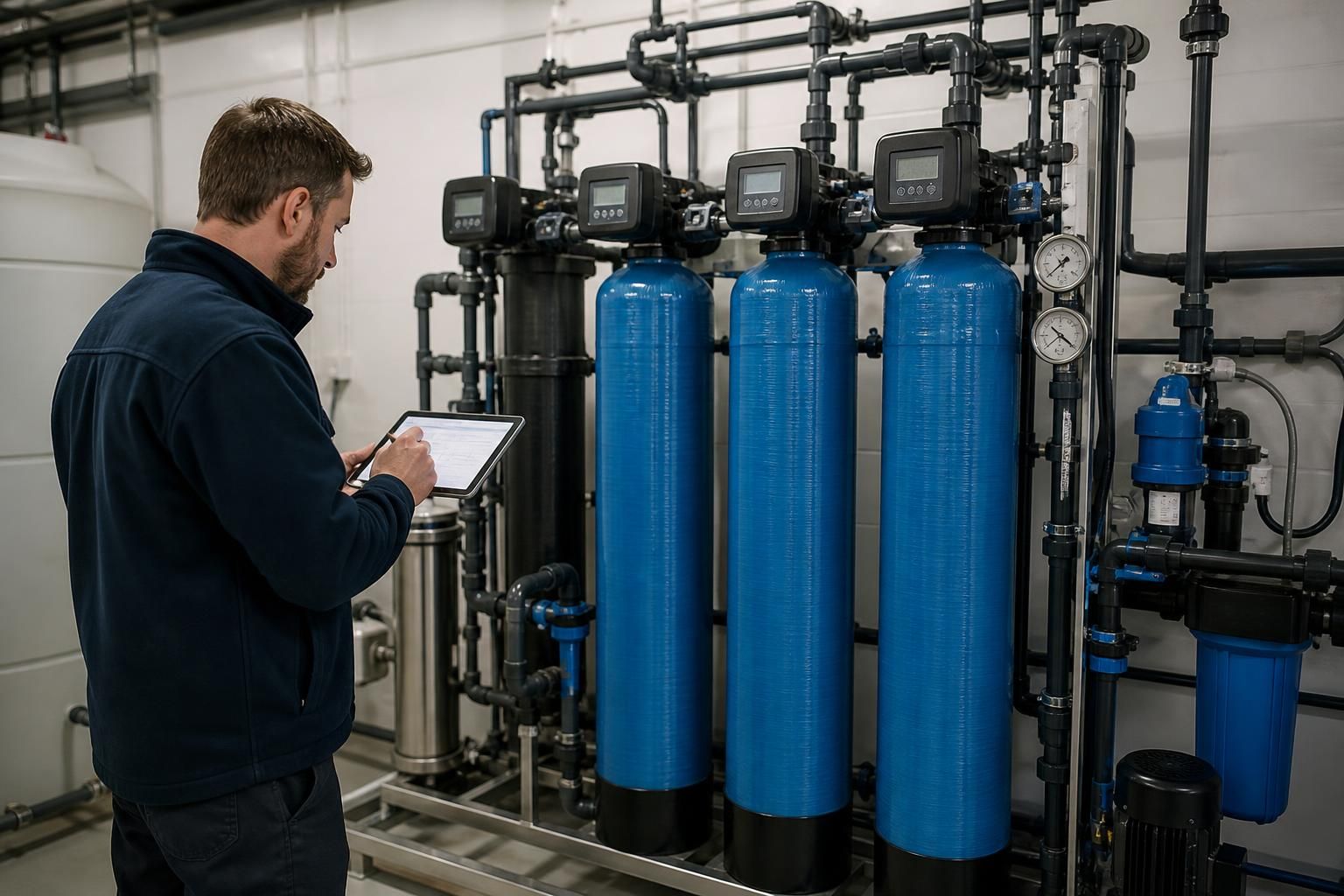
Commercial Water Filtration Options Compared
Commercial water filters vary by the contaminant targeted, the volume treated and whether protection is needed at one outlet or across a building. The comparison below sets out how each approach affects installation, maintenance and operational control.
Point-of-use activated carbon filters
Installed at a drinking-water outlet, these filters are suited to offices, catering areas and individual appliances where treatment is needed locally. They can improve taste and odour by reducing chlorine, but require planned cartridge replacement and outlet-level monitoring.
Whole-building carbon filtration
A central carbon filter treats water entering a commercial premises rather than serving one tap. It may suit sites seeking consistent treatment across multiple outlets, although the installation requires adequate space, flow assessment and a defined maintenance regime.
Sediment pre-filtration
Sediment filters remove suspended particles such as rust, grit and scale fragments before water reaches downstream equipment. They are often selected to protect finer filters or treatment stages, with replacement determined by pressure loss and the condition of the incoming supply.
Multistage filtration systems
Multistage systems combine different filter media so that larger particles and selected dissolved or taste-related contaminants are addressed in sequence. They can provide broader treatment than a single cartridge, but involve more components to inspect, replace and document.
Reverse osmosis systems
Reverse osmosis uses a membrane to reduce a wide range of dissolved substances and is generally applied where water quality requirements justify more intensive treatment. It needs suitable pretreatment, pressure, membrane care and management of the concentrated reject stream.
Fluoride-reduction filtration
Where fluoride reduction is specifically required, specialist media or membrane-based treatment may be considered following analysis of the incoming water. Selection should reflect the measured concentration, required treated volume, replacement arrangements and verification of the finished water.
What Commercial Filtration Support Includes
Effective commercial filtration support starts with identifying the substances requiring control and the points of use affected. Blue Fish Water Management can help interpret water-quality information, specify appropriate treatment, and establish documented checks for filter condition, replacement and potable-water compliance.
Water Quality Review
Available water-quality information is reviewed to identify the contaminants relevant to the premises and determine whether filtration is an appropriate control measure.
Treatment Selection
Filtration requirements are matched to the intended potable-water use, the substances requiring control and the operating conditions of the water system.
Point-of-Use Planning
The locations requiring treatment are identified so that filtration is considered at the relevant outlets, supply points or sections of the system.
Filter Condition Checks
Documented checks can be established for filter condition, system performance and indicators that a filter requires inspection or replacement.
Compliance Records
Filter specifications, inspection findings, replacement activity and related water-quality information can be recorded to support consistent potable-water management.
Which Filtration Support Does Your Water System Need?
Can one commercial filter remove both fluoride and chlorine?
A site survey can identify incoming water characteristics, demand, pressure, storage and outlet requirements, distinguishing point-of-use filters from whole-system treatment while defining monitoring responsibilities for each installation.
Read moreHow often should commercial water filters be replaced?
Filter replacement intervals depend on contaminant loading, flow demand, manufacturer guidance and monitoring results. Record changes, inspect housings and seals, and replace cartridges sooner if pressure drop, damage or concerns.
Read moreWhat records should be kept for commercial water filtration systems?
Retain water-quality results, inspection findings, filter changes, maintenance records, faults, corrective actions, dates, locations, readings, certificates and service reports to evidence documented control during audits for each installed filtration system.
Read moreWhat checks demonstrate that a commercial water filter remains suitable?
Suitability checks should compare treated-water results with intended standards, confirm adequate flow and pressure, inspect installation integrity, verify correct cartridge specification, and review manufacturer instructions alongside documented site-specific relevant requirements.
Read moreWho is responsible for commercial water filtration compliance?
Responsibility normally sits with the duty holder, supported by competent water-management personnel and appointed contractors. Clear roles should cover risk decisions, operational controls, escalation, review and evidence retention across operations.
Read moreQuestions to Ask Before Choosing a Commercial Water Filtration System
Check the design basis
Request details of the source-water information used, the outlets or processes included, expected demand, and any limitations affecting treatment selection. A suitable proposal should explain why the filtration method is relevant to the identified requirement rather than presenting a standard arrangement without context.
Use the answers to compare proposals against the site’s existing water safety arrangements and documented risk controls. The selected filtration approach should have a clear technical rationale and fit the way the building’s potable water system is operated.
If the evidence is incomplete or the proposed treatment is difficult to justify, obtain competent advice before committing to installation. Blue Fish Water Management can help assess the information available and identify a suitable route towards controlled, compliant drinking water provision.
Discuss Your Commercial Filtration Requirements
Discuss your commercial filtration requirements with Blue Fish Water Management to review the contaminants of concern, intended points of use and management arrangements. Receive practical advice on suitable treatment options and the evidence needed for informed decision-making.