
Water Sampling & Testing for Compliance
Water sampling and testing identifies microbial and chemical conditions in water systems, helping dutyholders, facilities managers and employers assess legionella risk. Appropriate samples, testing and documented results support informed remedial action and compliance.
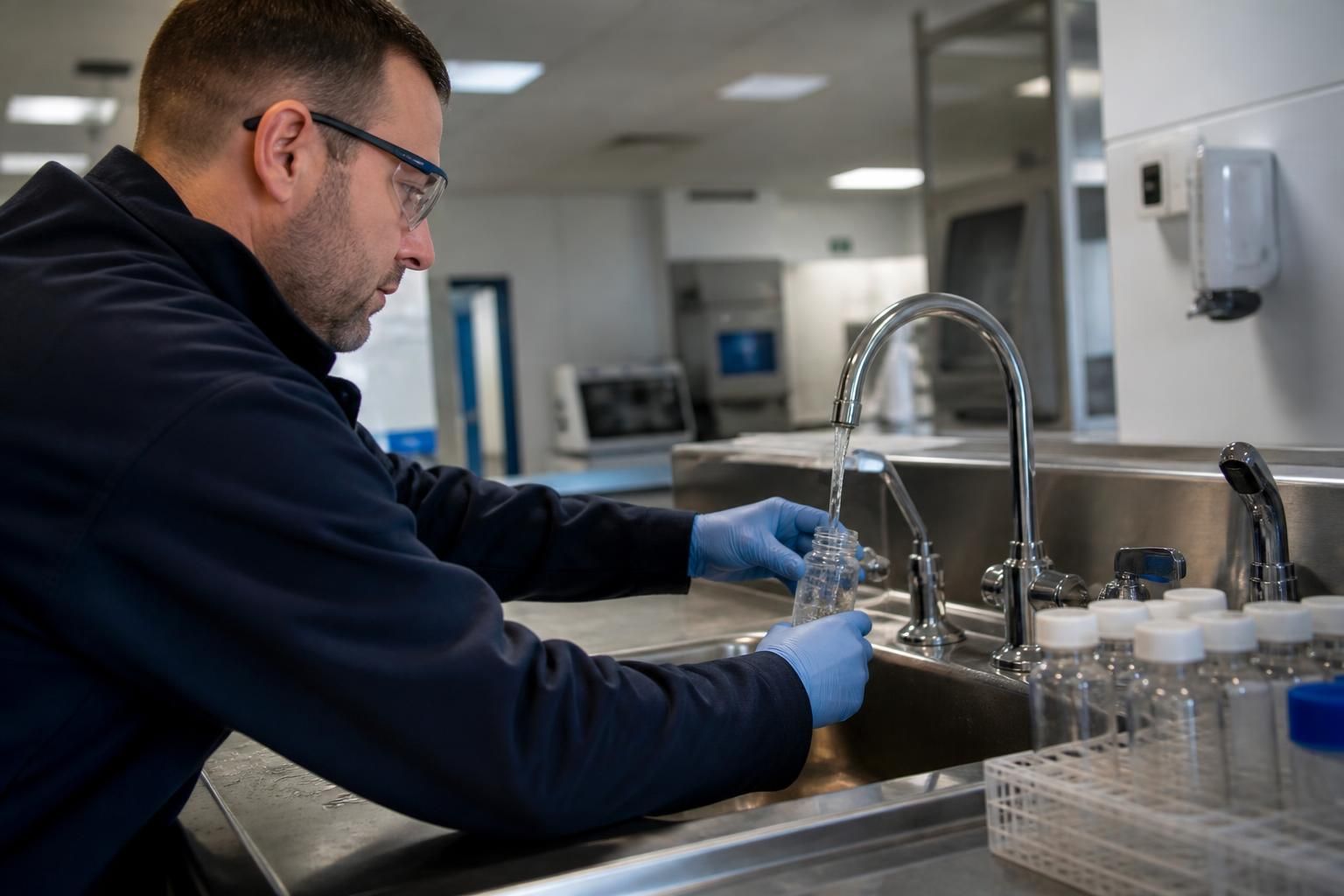
Choose the Right Water Sampling and Testing Approach
Water sampling and testing can be planned as routine monitoring, investigation, verification or a focused survey. Comparing purpose, sample selection, laboratory analysis and reporting requirements helps dutyholders choose a proportionate approach for the system and decision required.
Routine Legionella Monitoring
A planned programme uses representative outlets and agreed sampling points to monitor microbial results and relevant system conditions over time. It is suitable for buildings with established control measures that require documented evidence of ongoing monitoring.
Targeted Outlet Sampling
Targeted sampling focuses on specific outlets or parts of a water system, such as low-use outlets, sentinel points or areas with known control concerns. This narrower approach is appropriate when the decision relates to a defined location rather than the whole system.
Investigation Sampling
Investigation sampling is used when an adverse result, suspected contamination or an unexplained change in system conditions requires further examination. Sample locations should be selected to help identify the possible extent and source of the issue.
Microbiological Testing
Microbiological analysis examines samples for organisms relevant to water hygiene and legionella control. Results should be interpreted alongside sampling conditions, system records and other risk information rather than treated as a standalone assessment.
Chemical and Physical Parameter Testing
Chemical and physical testing can assess factors that influence water quality and control measures, including temperature and disinfectant conditions where relevant. The parameters selected should reflect the system type, identified hazards and the decision the results need to support.
Post-Remedial Verification
Verification sampling checks conditions after remedial work, cleaning, disinfection or other corrective action. The scope and timing should reflect the work completed, allowing dutyholders to assess whether further monitoring or action is required.
Practical Elements of Water Sampling and Testing
An effective water sample process covers site preparation, representative collection, secure labelling, controlled transport, suitable analytical methods and review of results. These practical controls preserve sample integrity and create an auditable basis for decisions under UK water safety requirements.
Sampling Plan and Site Preparation
Sampling locations and parameters are selected with reference to the water system, its use and the relevant legionella risk considerations. Site preparation helps ensure samples are taken from points that provide useful evidence about system conditions.
Representative Water Samples
Samples are collected using controlled methods designed to represent the conditions being assessed. The approach can cover microbial indicators, legionella-related testing and relevant chemical parameters where these support the investigation.
Labelling and Identification
Each sample is identified with the information needed to link it to the correct site, outlet, sampling point and collection record. Clear identification reduces the risk of results being assigned to the wrong location.
Secure Handling and Transport
Samples are protected and managed through the transfer process so that their condition is preserved for laboratory examination. Chain-of-custody records provide a traceable account of sample handling from collection to receipt.
Appropriate Laboratory Analysis
Testing is matched to the question being investigated and carried out through suitable analytical procedures. UKAS-accredited water testing supports the production of reliable results for compliance and water management decisions.
Results Review and Reporting
Laboratory findings are recorded in a clear report and considered alongside sampling locations, system information and existing risk controls. This helps dutyholders and facilities managers identify whether further investigation or remedial action should be considered.
Which Water Sampling and Testing Support Is Right for Your System?
Which water systems require routine water sampling and testing?
Routine monitoring may suit stable systems, whereas targeted sampling supports investigation of failures, temperature issues or suspected contamination. Higher-risk sites may require planned sampling schedules, trend review and documented follow-up.
Read moreHow should water sampling results inform compliance decisions?
Results should be assessed against the sampling purpose and relevant action limits. A single result rarely defines compliance; interpretation should consider system conditions, sampling context, laboratory method and risk assessment.
Read moreWhen should water samples be retested?
Retesting is appropriate after an anomalous result, suspected sampling error, corrective action or significant system change. Timing and scope should reflect the risk assessment and reason for repeating the analysis.
Read moreWho is responsible for arranging water sample testing?
The dutyholder usually arranges testing, often delegating coordination to a competent facilities or water hygiene professional. Employers and landlords should ensure responsibilities, records and follow-up actions are documented and assigned appropriately.
Read moreWhat should a water sampling and testing report include?
Reports should identify sampling locations, dates, sample identifiers, methods, analytical findings, detection limits, interpretation, chain-of-custody details, recommended actions, responsible persons and completion dates, creating a clear audit record for follow-up.
Read moreQuestions to Ask Before Water Sampling and Testing
Before commissioning water sampling and testing, clarify which systems, outlets and risk areas are included, who will carry out the work, and what relevant competence and technical oversight they have. Ask how the sampling scope will be justified and what records will be supplied to demonstrate that the work was completed appropriately.
Confirm which analytical methods and reporting format will be used, when results are expected, and how significant findings will be communicated. It is also important to establish who will review the results, decide whether further action is needed, retain the records and arrange any follow-up sampling or monitoring.
What will be sampled, and why?
Request a clear schedule showing the systems, storage vessels, sentinel outlets, representative outlets and any higher-risk locations included. The rationale should explain how outlet selection reflects system design, usage, temperature conditions, occupancy and known risk areas, rather than treating a small number of samples as representative of every part of a complex installation.
Once these points are agreed, record the sampling plan, responsibilities and decision criteria before any water sample is collected. This creates a clear reference for comparing the laboratory findings with the system’s risk assessment and water safety arrangements.
Testing is most useful when its findings lead to proportionate action. Where results indicate a concern, the responsible dutyholder should document the decision, any corrective work and the basis for further verification, rather than treating the laboratory report as an isolated pass-or-fail outcome.
Discuss Your Water Sampling Requirements
Discuss your water sampling requirements with Blue Fish Water Management Ltd to clarify the appropriate scope, sampling approach and reporting needs. Receive practical advice on the next suitable step for maintaining clear, evidence-based legionella compliance decisions.