
How often should legionella water sampling be carried out?
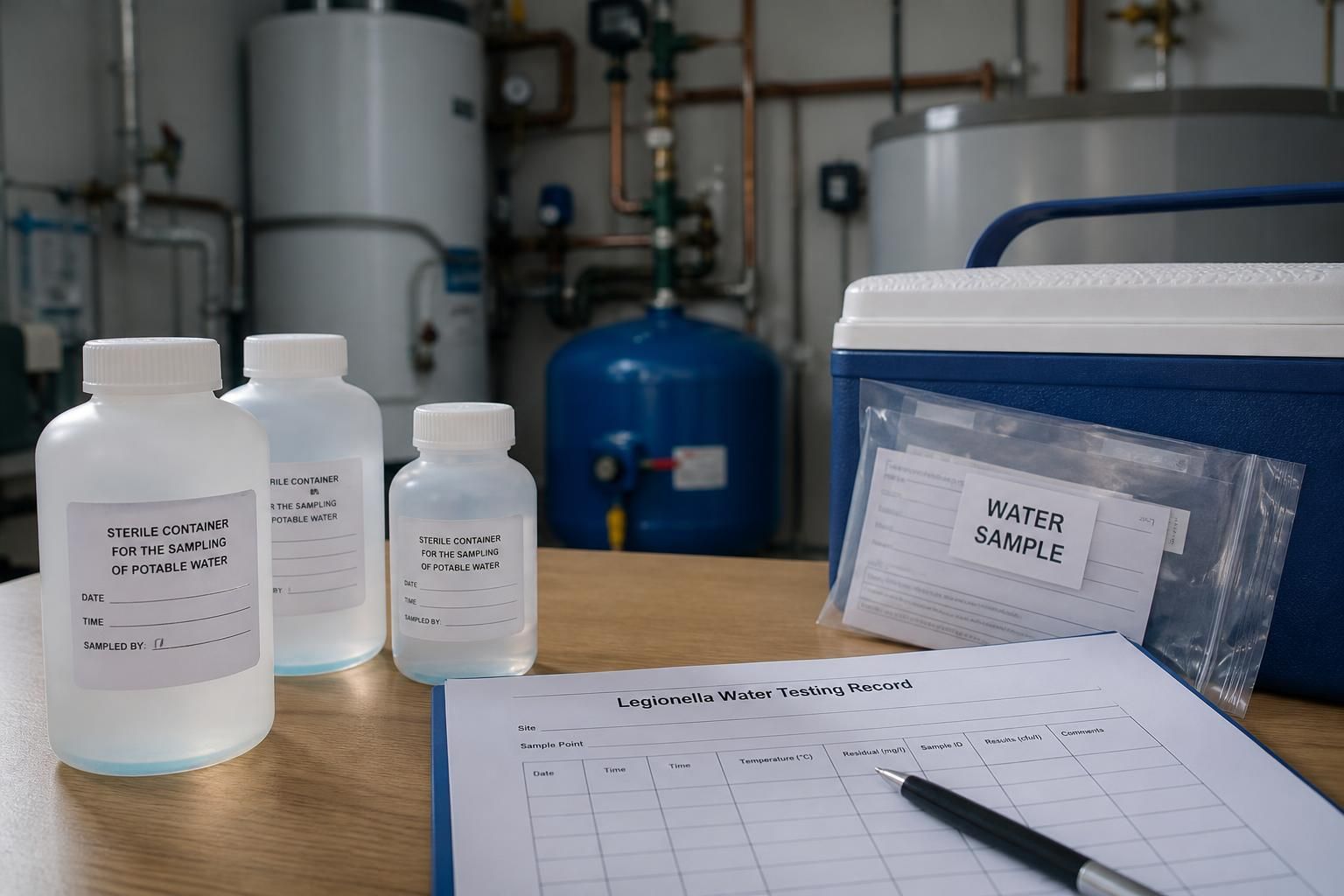
Legionella water sampling should be carried out at an interval justified by the site-specific risk assessment and written control scheme. A well-controlled system may not need routine microbiological sampling, whereas sampling should be more frequent where there is greater risk to occupants, evidence of ineffective control, an adverse result or a change to the water system.
Sampling is one part of legionella control rather than a replacement for routine monitoring. Temperature checks, inspection of tanks and calorifiers, flushing of infrequently used outlets, cleaning and disinfection, and maintenance of control equipment should continue at the frequencies set out in the written scheme. Microbiological results provide evidence about the condition of the system, but they cannot by themselves demonstrate that every outlet is safe.
When determining the sampling interval, the responsible person should consider:
- the type and complexity of the hot and cold water system;
- the temperatures and conditions within tanks, calorifiers, pipework and outlets;
- the likelihood of water stagnation, low use or dead legs;
- the number of outlets and the difficulty of maintaining consistent control;
- the vulnerability of people who may be exposed to contaminated aerosols;
- previous legionella results, trends and remedial actions;
- whether the system has been altered, recommissioned, disinfected or left unused; and
- the findings of inspections, temperature monitoring and maintenance records.
In lower-risk commercial premises with effective controls and consistent monitoring, routine legionella sampling may be used periodically to verify that the control scheme remains effective. The risk assessment should explain why that interval is appropriate and identify the locations to be sampled. Sampling at random outlets alone can give an incomplete picture, so a planned programme will normally include representative points such as sentinel outlets, storage tanks, calorifier outlets or returns, and areas where stagnation or temperature control problems are more likely.
Higher-risk premises require a more structured approach. Healthcare settings, care environments, accommodation with vulnerable residents, and sites with complex or poorly controlled systems may need more regular sampling, with the exact frequency determined by the responsible person and relevant sector guidance. A fixed calendar interval should not be adopted simply because it has been used elsewhere; the programme must reflect the people, systems and risks at the particular premises.
Additional samples may be appropriate after:
- installation, replacement or significant alteration of tanks, calorifiers, pumps, pipework or outlets;
- system recommissioning following a period of closure or limited use;
- cleaning, descaling, thermal disinfection or chemical disinfection;
- persistent temperature-control failures or other signs that control measures are not working;
- a positive or elevated legionella result; or
- a suspected or confirmed case of legionnaires’ disease linked to the premises.
Following an unsatisfactory result, the response should be based on the concentration found, the locations affected, the condition of the system and the susceptibility of exposed people. This may involve checking the sampling process, reviewing records, investigating the cause, carrying out remedial work and taking follow-up samples. Follow-up sampling should continue until the responsible person has sufficient evidence that the corrective measures have worked; it should not be treated as a substitute for identifying and correcting the underlying problem.
Samples should be collected by a competent person using suitable methods, correctly labelled and sent to a laboratory capable of carrying out the required analysis. Results should be recorded alongside dates, sample points, temperatures, control checks and remedial actions. Keeping this information together makes it possible to identify deterioration over time rather than viewing each result in isolation.
Blue Fish Water Management can help businesses establish a proportionate sampling programme through risk assessment, water hygiene monitoring, UKAS-accredited testing and review of remedial requirements. The appropriate interval should be documented, reviewed when circumstances change and adjusted when monitoring or sampling shows that the existing control strategy is no longer suitable.
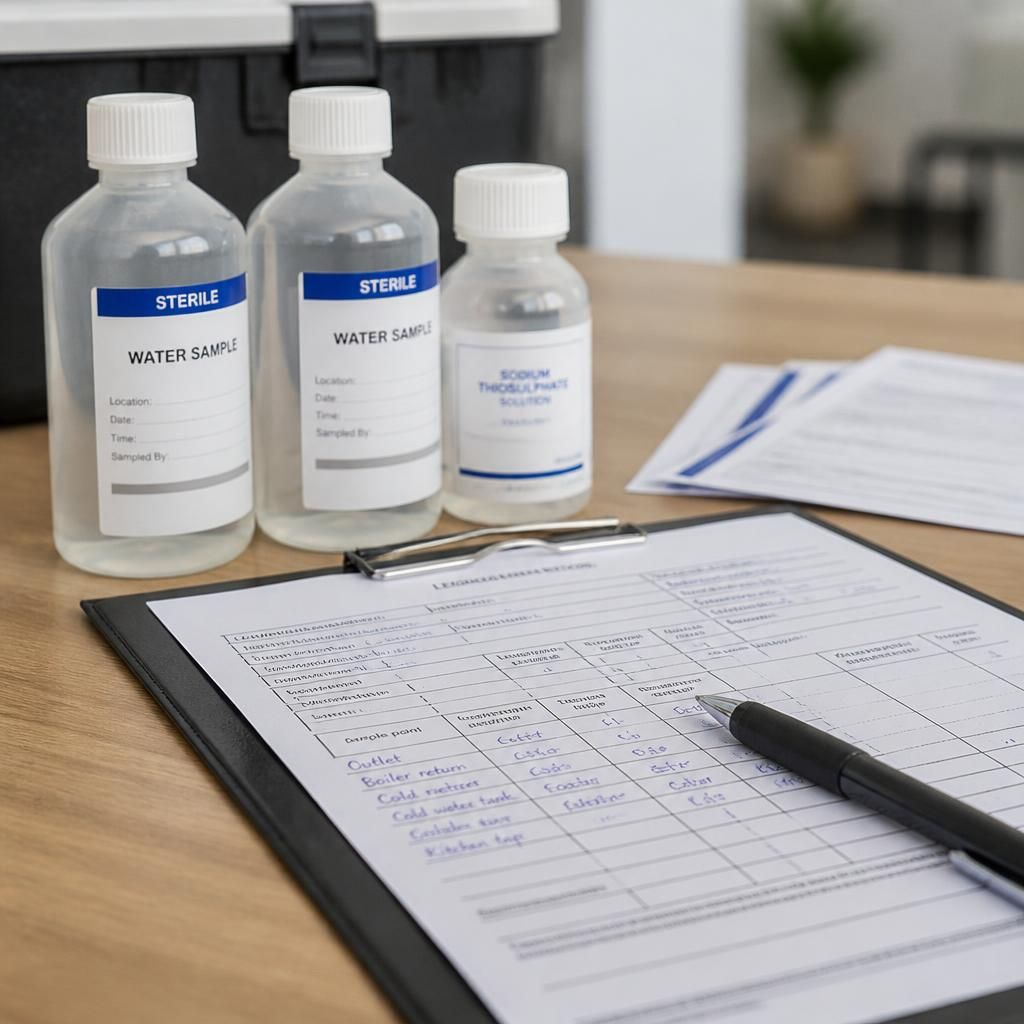
The interval between legionella samples should be reviewed when the evidence used to set it changes. A satisfactory result does not, by itself, justify extending the next sampling date, just as a single adverse result does not establish the cause without further investigation. The responsible person should consider the result alongside current control records and the condition of the water system before confirming the next planned sample.
Keeping a clear review trail helps demonstrate why a particular interval was selected. Record the sampling rationale, the evidence considered, any decision to change the frequency and the person who approved it. This makes the programme easier to manage and ensures that the sampling schedule remains linked to actual site conditions rather than becoming an unexamined calendar task.
Review your legionella sampling requirements
If you need to review whether your current sampling interval remains appropriate, speak to Blue Fish Water Management about a site-specific assessment and documented sampling programme.