
Chlorine Filters & Media for Water Treatment
Chlorine filters and media help control residual chlorine, taste, odour and related water-quality concerns in domestic, commercial and industrial systems. Blue Fish Water Management advises B2B clients on suitable filtration approaches, supporting safer operation, appropriate maintenance and water hygiene compliance.
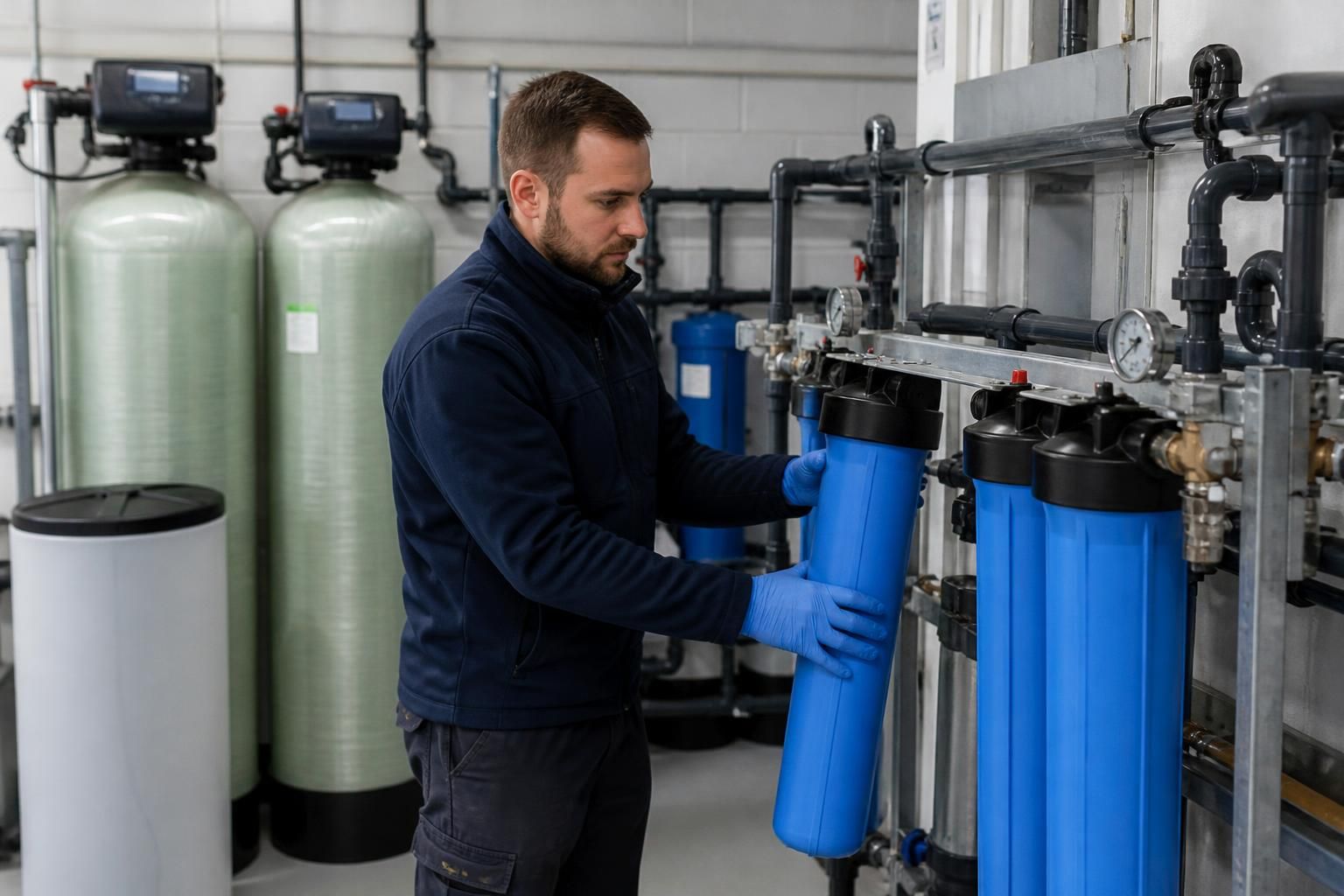
Compare Chlorine Filter and Media Options
Selection depends on whether the requirement is point-of-use treatment, whole-system protection, or pre-treatment for a downstream process. Compare media capacity, flow demands, contact time, replacement needs and monitoring implications before specifying equipment for a water system.
Activated Carbon Filters for Point-of-Use Treatment
Activated carbon cartridges can reduce chlorine taste and odour at selected outlets, making them suitable where treatment is needed for drinking water or a specific process rather than the entire installation. Cartridge capacity, flow rate and replacement intervals should be matched to actual demand.
Whole-System Activated Carbon Filters
Larger carbon vessels treat water entering a building or process system and can reduce free chlorine across multiple outlets. This approach requires careful sizing, backwashing or media replacement arrangements, and monitoring because removing disinfectant residual may affect downstream water hygiene controls.
Catalytic Carbon Media
Catalytic carbon is designed for applications where standard activated carbon may not provide sufficient performance, including some systems affected by chloramine. Its suitability depends on the disinfectant present, contact time, flow rate and water chemistry, so testing and proper specification are important.
Carbon Block Cartridges
Carbon block filters combine chlorine reduction with fine particulate filtration in a compact cartridge. They are generally suited to point-of-use equipment and controlled flows, but pressure loss and cartridge loading need to be considered where incoming water contains sediment.
Specialist Chlorine-Reduction Media
Alternative media may be selected for particular water chemistries, treatment objectives or equipment constraints. Their performance depends on the target disinfectant and operating conditions, so the media specification should include capacity, required contact time, regeneration or replacement needs, and disposal arrangements.
Pre-Treatment Before Downstream Processes
Chlorine-reduction media can be installed before processes such as specialist manufacturing, laboratory use or other treatment stages that are sensitive to disinfectant residuals. The filter should be assessed alongside the downstream equipment, with monitoring to confirm that chlorine reduction does not compromise wider water-quality controls.
Practical Chlorine Filter and Media Support
A practical chlorine filter package should cover more than media selection: it should define installation requirements, safe handling arrangements, commissioning checks, replacement controls and records. These elements help operators manage the equipment consistently within their wider water hygiene procedures.
Media Selection for the Application
Filter media should be selected according to the incoming water characteristics, residual chlorine requirement, flow demand and intended use. Blue Fish Water Management can help define an appropriate chlorine reduction approach, including where activated carbon media is suitable.
Filter Sizing and Configuration
Correct sizing supports effective contact time without creating unnecessary restriction in the system. Assessment should consider peak flow, vessel capacity, pipework arrangement, isolation points, bypass requirements and available installation space.
Installation Requirements
Installation should allow safe isolation, inspection, servicing and media replacement. Valves, connections, drainage arrangements and any required sampling points should be positioned so the filter can be managed hygienically within the wider water system.
Flushing and Commissioning Checks
Before use, the filter should be flushed in line with the media and equipment requirements. Commissioning checks can include flow, pressure, valve operation, leaks, connection integrity and confirmation that the equipment is functioning as intended.
Media Replacement Controls
Replacement arrangements should define how media condition is reviewed, when change-out is required and how used media is handled. Clear responsibilities and documented replacement records help prevent neglected filters from affecting water quality or system operation.
Records and Compliance Evidence
Equipment details, installation information, commissioning findings, maintenance activity and relevant water-quality results should be recorded. Keeping these documents with the site's water hygiene records supports consistent management and provides useful evidence for compliance audits.
Chlorine Filters and Media: Questions and Answers
Is a chlorine filter suitable for your water system’s treatment requirements?
Support should match the system’s water source, flow demands, existing treatment, chlorine levels, operational responsibilities and compliance priorities, with media selection reviewed against monitoring results and documented risks in operation.
Read moreHow does activated carbon media remove chlorine from treated water?
Activated carbon media adsorbs free chlorine onto its porous surface as water passes through. Performance depends on contact time, flow, media condition, influent quality and appropriate replacement based on monitoring.
Read moreHow are chlorine filters sized for required flow rates?
Sizing considers peak and continuous flow, required contact time, vessel capacity, pressure loss, inlet pressure, water temperature and media depth. Design calculations should be checked against operating conditions and duty.
Read moreWhat types of chlorine filter media are available?
Options include granular activated carbon, catalytic carbon, carbon block cartridges and specialist blends. Selection depends on chlorine form, contaminant profile, flow pattern, contact requirements, pressure loss and planned disposal arrangements.
Read moreWhat checks confirm a chlorine filter is working correctly?
Checks include outlet chlorine testing, flow and pressure observations, leak inspection, valve operation, media condition, differential pressure, and review of monitoring records against documented performance criteria and established operating limits.
Read moreWhat to Clarify Before Choosing Chlorine Filters and Media
Chlorine filters and media should be specified against the water-quality objective, incoming conditions and required flow, rather than selected solely by filter size. Clarify which chlorine-related parameters the treatment is intended to address, how performance will be assessed, and whether the media is compatible with the wider water system.
Before proceeding, establish who is responsible for technical decisions, routine oversight and escalation if performance changes. The questions below cover the provider’s competence, the evidence and reports to be supplied, the expected project timescales, and the ongoing responsibilities that will remain with the system operator.
Confirm the treatment objective
Ask which parameters require control, such as residual chlorine, taste, odour or a related water-quality concern, and how these will be measured. The provider should consider flow demand, contact time, inlet conditions and any other treatment already installed, rather than selecting media solely by vessel size. Confirm that the proposed arrangement is suitable for the wider water system and does not create an unmanaged hygiene risk.
Once these points have been answered, the proposed chlorine filter arrangement should be recorded with its design assumptions, operating limits, installation requirements and acceptance criteria. This gives the system operator a clear basis for reviewing the specification before work proceeds.
Any agreed responsibilities, maintenance instructions and reporting arrangements should also be included in the handover information. Retaining these records supports consistent operation and makes future checks or changes to the water system easier to manage.
Discuss Your Chlorine Filter Requirements
Discuss your chlorine filter requirements with Blue Fish Water Management to clarify the treatment objective, review relevant system considerations and identify a suitable next step for specification, installation or ongoing management.