
Dechlorination for Safe Water Use
Dechlorination of water is the removal or reduction of residual chlorine after disinfection, allowing treated water to be used safely for its intended purpose. Blue Fish Water Management advises on suitable methods, verification and compliance for commercial water systems.

Dechlorination Service Specification
A properly managed dechlorination specification defines the treatment method, chlorine verification, discharge controls, records and acceptance criteria. It should reflect the system’s purpose, water quality requirements and applicable regulatory procedures, so results are documented and suitable for review.
Defined treatment scope
The specification identifies the water system, affected outlets or discharge route, intended end use and the residual chlorine level required before the water is released or reused.
Selected dechlorination method
The treatment method is chosen according to flow, chlorine concentration, water chemistry and operational constraints. Options may include controlled chemical neutralisation, adsorption or other suitable process equipment.
Chlorine verification
Residual chlorine is checked at defined points using an appropriate test method. Results are compared with the agreed acceptance criteria, with further treatment or investigation where readings remain outside the required range.
Controlled discharge
Discharge arrangements account for the receiving system, drainage route, chemical handling requirements and any restrictions on releasing chlorinated water. Controls should prevent unsuitable water entering the environment or an unintended part of the system.
Records and acceptance
The completed record should identify the treatment applied, test results, sampling points, equipment or chemicals used, deviations and corrective actions. Final acceptance confirms that the specified dechlorination outcome has been evidenced and reported.
Understanding Dechlorination Responsibilities and Results
Dechlorination may use chemical neutralisation, activated carbon filtration or controlled flushing, depending on the residual chlorine level, flow conditions, discharge point and the intended use of the water. The selected approach should account for contact with equipment, possible by-products and whether the receiving drain or environment can accept the treated discharge.
The responsible person should confirm the treatment specification, arrange appropriate monitoring and retain records of readings, corrective actions and final acceptance. Results should be interpreted against the agreed endpoint rather than assumed from the treatment method alone; verification may require representative samples from relevant outlets and confirmation that chlorine levels remain suitable after treatment.
Free chlorine, combined chlorine and residual control
Testing should identify which chlorine parameter is relevant to the specification. Free chlorine is the active residual commonly associated with chlorinated water, while combined chlorine may remain after reactions with organic or nitrogenous material. The treatment objective should therefore state the required residual and the test method used to demonstrate that the endpoint has been reached.
Before dechlorination begins, the responsible person should agree the treatment boundary, discharge route and acceptance criteria with the relevant parties. This avoids uncertainty over who controls the process and how any unexpected result will be managed.
Once the work is complete, the dechlorination record should support a clear handover to the system owner or operator. Blue Fish Water Management can provide practical advice on interpreting the findings and identifying any further action needed for safe, compliant use.
Applications for Dechlorination of Water
Dechlorination requirements vary between healthcare, education, industrial, commercial and residential premises, particularly where water is discharged, retained or returned to service. The appropriate approach depends on system scale, contamination risk, operational constraints and the evidence required by stakeholders.
Healthcare and Care Settings
Dechlorination may be required where a treated water system is being returned to use in a healthcare or care environment. The process should be tied to clearly documented acceptance criteria, representative outlet checks and a handover record that supports safe operation.
Schools and Education Premises
Schools, colleges and other education buildings may need dechlorination after remedial work or disinfection of water systems. Planning should consider occupied areas, access to outlets, discharge arrangements and the evidence required before normal use resumes.
Industrial Water Systems
Industrial sites may require controlled chlorine removal where treated water could affect equipment, processes or discharge arrangements. The method should reflect the system design, residual level, flow conditions and the operational consequences of returning the water to service.
Commercial Buildings
Offices, retail premises, hotels and other commercial buildings can require dechlorination across tanks, distribution pipework or selected outlets. A defined treatment boundary and targeted verification help distinguish completed sections from parts of the system that still require attention.
Communal Residential Systems
Apartment blocks and other premises with shared water systems may need dechlorination before residents regain normal access to affected outlets. The responsible person should coordinate the treatment area, communication requirements, sampling points and final acceptance with the system owner.
Controlled Discharge Situations
Where chlorinated water must be discharged rather than retained in the system, dechlorination should be planned around the receiving drain or environment. The discharge route, treatment endpoint and monitoring records should be agreed before work starts.
Technical Control in Dechlorination Work
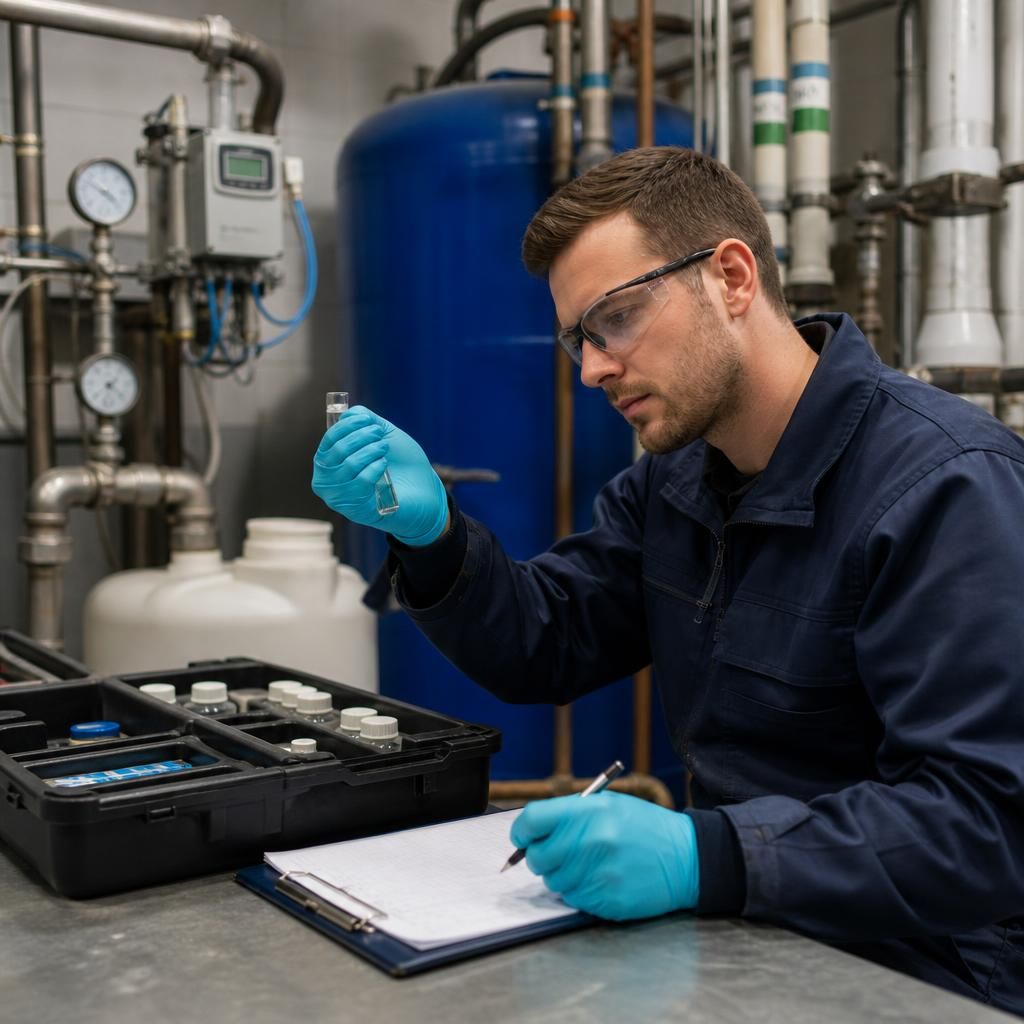
Blue Fish Water Management approaches dechlorination as a controlled handover between disinfection and normal system use. Experienced technical personnel review the treatment objective, system characteristics and operational risks before recommending how residual chlorine should be reduced and checked.
Work is supported by clear records covering readings, sample locations, treatment decisions and corrective action. This creates an auditable account of what was changed and why, helping the responsible person compare results with agreed acceptance criteria rather than relying on an assumed outcome.
Where testing is required, findings can be supported through UKAS-accredited water testing. The resulting advice distinguishes completed treatment from issues requiring further investigation, with attention to safe operation, compliant records and a controlled return to use.
Questions to Ask Before Appointing a Dechlorination Provider
How do you assess a provider’s competence in dechlorination of water?
Ask whether the provider can define competence requirements, identify responsible personnel, explain escalation arrangements and demonstrate relevant experience with comparable systems, without relying solely on generic treatment claims.
Read moreWhich dechlorination method suits the water system?
Selection should be based on documented compatibility with pipework, tanks, membranes and discharge arrangements, not preference alone. Ask for method-specific limitations, controls and evidence required before system handover and acceptance.
Read moreWhat should a dechlorination report include?
A report should record treatment date, system identification, initial and final chlorine readings, sampling points, method used, discharge arrangements, deviations, corrective actions, responsible personnel, acceptance decision, and supporting evidence provided.
Read moreCan dechlorination results be supported by UKAS-accredited water testing?
Yes, where testing is undertaken by a UKAS-accredited laboratory, results can provide independent evidence of residual chlorine levels. Confirm sample locations, analytical scope, reporting arrangements and relevance to acceptance criteria.
Read moreWhat follow-up support should a dechlorination provider offer after treatment?
It should clarify residual issues, identify monitoring or remedial requirements, confirm ownership of ongoing actions, and provide a defined process for reviewing evidence when operating conditions or compliance needs change.
Read moreDiscuss Your Dechlorination Requirements
Discuss your dechlorination requirements with Blue Fish Water Management to clarify the treatment boundary, monitoring needs and acceptance criteria. The team can advise on a suitable scope and provide practical guidance or a tailored quotation for your commercial water system.