
UV Treated Water Testing
UV treated water testing examines water quality and confirms whether ultraviolet disinfection systems are performing effectively. Blue Fish supports businesses with sampling, analysis and practical interpretation, helping verify treatment performance and inform ongoing water safety compliance.
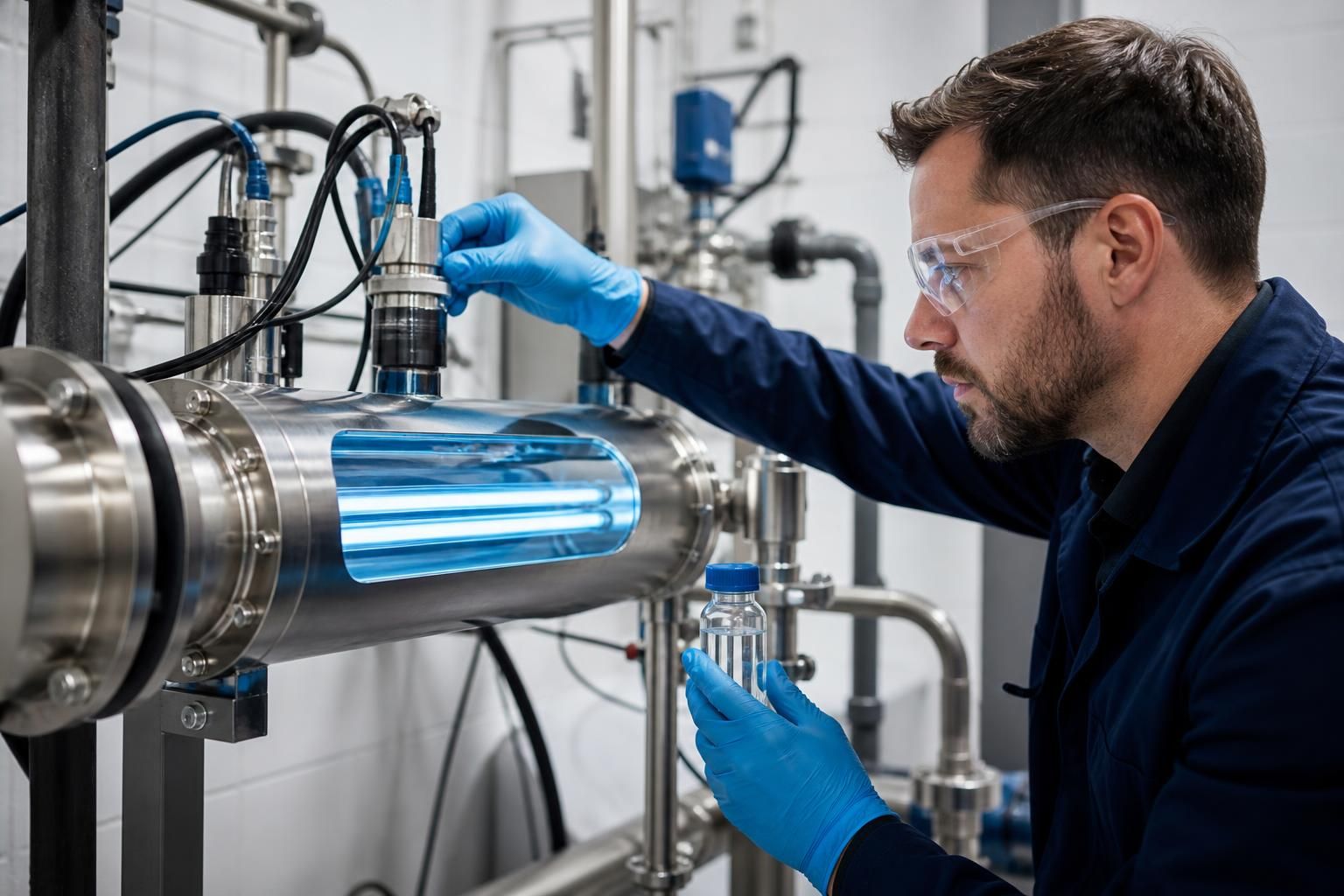
UV Treated Water Testing Options Compared
UV treated water testing can range from routine microbiological sampling to targeted checks of ultraviolet disinfection performance. The suitable approach depends on system design, risk profile, sampling needs and required evidence for compliance.
Routine Microbiological Sampling
Regular sampling checks whether treated water remains microbiologically satisfactory at relevant outlets and points in the system. This is suitable for ongoing verification where the UV unit forms part of a wider water safety management plan.
Post-Installation Verification
Testing after a UV system has been installed, altered or recommissioned provides evidence that the treated water meets the required microbiological expectations. It can help identify issues with installation, flow, maintenance or system use before normal operation continues.
UV System Performance Checks
Targeted checks assess whether the ultraviolet treatment process is operating as intended, alongside water sampling where appropriate. This approach is useful when reviewing lamp condition, monitoring records, system alarms or other indicators of treatment performance.
Investigative Sampling
Additional sampling may be appropriate when results change unexpectedly, contamination is suspected or a water safety concern requires clarification. Sampling locations and laboratory analysis can be selected to help distinguish a treatment issue from a problem elsewhere in the distribution system.
Compliance Evidence Testing
A structured testing programme can provide documented evidence for internal reviews, audits and water safety records. The scope should reflect the system risk assessment, relevant control measures and the level of evidence required by the responsible organisation.
Interpretation and Follow-Up
Results are most useful when considered alongside system design, operating records, maintenance information and previous findings. Practical interpretation helps determine whether further sampling, remedial work, monitoring or a review of the control strategy is appropriate.
What UV Treated Water Testing Includes
A practical testing programme may cover sampling before and after the UV unit, microbiological analysis, review of lamp and sensor records, and comparison with system requirements. These elements help identify treatment gaps, maintenance needs and evidence required for documented control.
Representative Water Sampling
Samples can be taken before and after the UV unit to compare incoming water quality with treated water and assess the effect of the disinfection stage.
Microbiological Analysis
Collected samples are assessed through appropriate microbiological testing, providing evidence of water quality and helping identify potential treatment concerns.
UV System Performance Review
Lamp status, sensor readings, alarm records and maintenance information can be reviewed alongside test results to assess whether the system is being operated as intended.
Comparison With Requirements
Results and operating information are considered against relevant system requirements, control measures and documented water safety arrangements.
Clear Findings and Records
The findings are presented in a structured record that identifies anomalies, supports compliance documentation and informs any appropriate maintenance or remedial action.
Questions About UV Treated Water Testing
When is UV treated water testing appropriate for a commercial water system?
Testing should be considered when commissioning, after maintenance, following changes to source water or equipment, and at intervals defined by the risk assessment, system requirements and compliance procedures in place.
Read moreWhat should businesses do after unsatisfactory UV treated water test results?
Results should prompt documented corrective action: review sampling and equipment records, investigate contamination sources, assess exposure risk, repeat testing where appropriate, and retain evidence for compliance decisions and risk management.
Read moreWhat evidence should UV treated water testing provide?
Evidence should link sampling results to the UV unit’s required performance, show traceable laboratory reporting, document operating records, and support compliance decisions and ongoing review within the water safety plan.
Read moreWho should oversee UV treated water testing in a business?
A competent person with appropriate water hygiene knowledge should coordinate the programme, liaise with laboratories and contractors, review findings, and ensure actions align with the business’s risk assessment and procedures.
Read moreCan UV treated water testing support a water safety compliance audit?
Yes. Results can provide objective records for audit review, demonstrating that sampling, laboratory analysis, UV equipment checks and corrective actions align with documented water safety procedures and applicable compliance requirements.
Read moreWhat to Confirm Before Arranging UV Treated Water Testing
Before commissioning UV treated water testing, clarify the scope: which parts of the system and which outlets will be assessed, what analyses are appropriate, and which acceptance criteria will be applied. Ask who will carry out the work, what relevant competence they hold, and whether the testing arrangements are suitable for the intended water use.
Agree what the final report will contain, including sample identification, methods, results, interpretation and any limitations. Confirm the expected testing and reporting timescales, then establish who is responsible for reviewing findings, arranging corrective action, scheduling repeat testing and maintaining ongoing UV system records.
Define the points and tests in advance
Ask whether samples are required from the water entering the UV unit, leaving the unit and at representative downstream outlets. Confirm which microbiological or other analyses are justified by the system and its intended use, how samples will be identified, and whether the programme considers risks such as stagnation, bypasses or changes in flow. The agreed scope should also state the criteria that will be used to interpret the findings.
UV treated water testing provides evidence from defined samples and system checks, but a single result does not by itself demonstrate continuing performance. Findings should be considered alongside the UV unit’s operating conditions, maintenance history and the intended use of the water.
Where results or records indicate a concern, the next step is a documented review of the system and any necessary corrective action, followed by further verification where appropriate. This gives the responsible person a clear basis for maintaining effective ultraviolet disinfection and demonstrating control.
Discuss Your UV Treated Water Testing Requirements
Discuss your UV treated water testing requirements with Blue Fish to clarify the appropriate scope, sampling approach and reporting needs. You can receive practical advice on the next step for assessing your system and maintaining suitable documented controls.