
Dechlorination for Safe Drinking Water
Dechlorination removes or neutralises residual chlorine after potable water system disinfection, allowing water to return to an appropriate drinking-water condition. Blue Fish Water Management supports UK businesses with controlled, compliant dechlorination as part of planned water hygiene works.
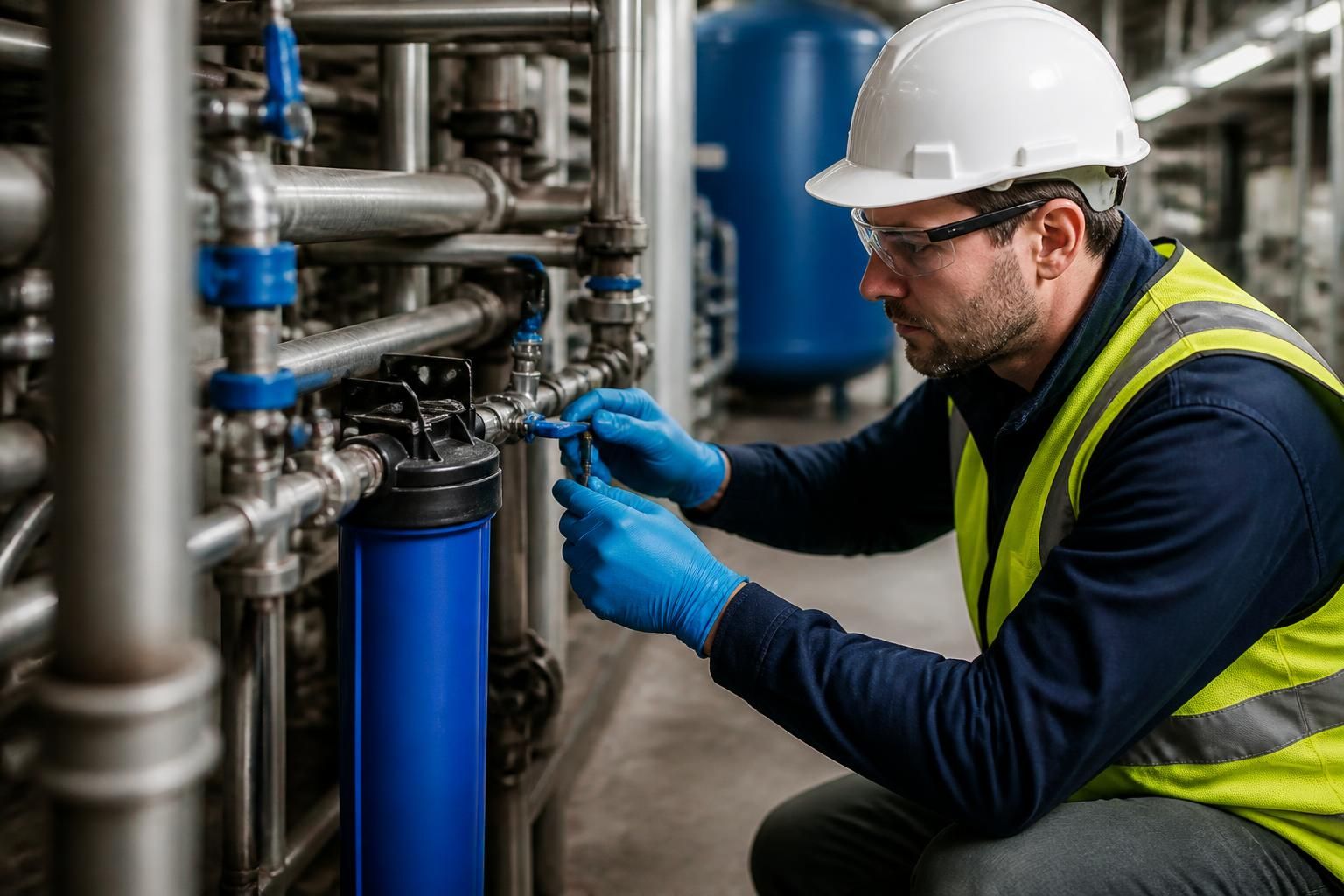
Dechlorination Approaches for Different Potable Water Systems
Dechlorination options range from controlled neutralisation within a system to managed discharge or treatment of larger volumes. The appropriate approach depends on water volume, discharge constraints, system configuration, monitoring requirements and the condition required afterwards.
Chemical Neutralisation
A measured dose of a neutralising agent reduces residual chlorine in tanks, pipework or discharge water after disinfection. This suits systems where chlorine must be removed in a controlled manner, with dosing calculations and follow-up testing used to confirm the required condition.
Activated Carbon Filtration
Activated carbon can remove chlorine as water passes through a suitable filter. It is more appropriate for defined flow rates or ongoing treatment than for unrestricted bulk discharge, and requires attention to contact time, filter condition and microbial control.
Controlled Flushing
Flushing with potable water can reduce residual chlorine in smaller or straightforward systems where the resulting discharge can be managed appropriately. This approach uses more water and may be unsuitable where drainage capacity or discharge conditions are restricted.
Managed Bulk Dechlorination
Larger volumes may require a planned treatment process before discharge, combining controlled neutralisation, filtration or both. The method should account for storage volume, discharge location, chemical handling, monitoring and the condition required before the system is returned to use.
Neutralisation Followed by Verification
In many potable water systems, dechlorination is one stage within a wider process: residual chlorine is reduced, the system is flushed where necessary, and water quality is checked before use. Dechlorination alone does not demonstrate that the system is microbiologically safe.
What Professional Dechlorination Includes
Professional dechlorination typically covers planning the neutralising agent, confirming discharge controls, monitoring residual chlorine, protecting receiving water, and documenting the process. These steps help demonstrate that treated water was managed responsibly before a potable system returned to service.
System and Discharge Review
The potable system, treatment area, discharge route and receiving environment are reviewed before work begins. This establishes how dechlorination will be controlled and where verification samples should be taken.
Neutralisation Planning
The appropriate neutralising approach is selected for the volume and residual chlorine present. Application is planned to avoid uncontrolled dosing and to support the intended return of the system to drinking-water use.
Residual Chlorine Monitoring
Residual chlorine is checked during the process using suitable water quality measurements. Monitoring shows whether neutralisation is progressing as intended before treated water is released or the system is reinstated.
Responsible Discharge Control
Discharge arrangements are considered to help protect drains, receiving water and the surrounding environment. Controls are applied so water is not released without appropriate consideration of its treatment condition.
Completion Records
The work is documented with relevant treatment details, monitoring results and discharge information. Clear records provide an auditable account of how dechlorination was managed within the wider water hygiene programme.
Questions About Potable Water Dechlorination
When is dechlorination required after potable water system disinfection?
Specialist support is most appropriate where disinfection affects storage tanks, complex pipework, sensitive premises, or multiple responsible parties, requiring coordinated isolation, sampling, and return-to-service decisions based on site-specific risk assessment.
Read moreWhat determines the correct dechlorination method for a potable water system?
The method depends on water volume, residual chlorine concentration, discharge route, receiving environment, system materials, and constraints. These factors determine the neutralising agent, application approach, monitoring requirements, and disposal arrangements.
Read moreWho should approve dechlorinated water before a potable system returns to service?
Approval should come from the competent person responsible for the water system, informed by residual chlorine results, sampling evidence, risk assessment, and any site-specific safety or compliance requirements before reinstatement.
Read moreWhat records should potable water dechlorination produce?
Records should identify the treated system, date, method, neutralising agent, discharge arrangements, monitoring results, personnel involved, and decisions made, creating an auditable account of dechlorination and reinstatement for future review.
Read moreHow is residual chlorine tested during potable water dechlorination?
Testing uses a calibrated method suited to the expected chlorine range, with samples taken at representative points. Results are interpreted against agreed limits, considering contact time, temperature, and sampling conditions.
Read moreWhat to Confirm Before Dechlorination
Dechlorination is the treatment stage used to remove or neutralise disinfectant remaining in a potable water system after disinfection. Before proceeding, confirm which tanks, pipework and outlets fall within the work, how the method suits the system, and what competence the person carrying it out can demonstrate.
Ask what records will be supplied to show the work was completed, what the report will contain, how the planned timescale depends on system access and verification, and who is responsible for confirming the system is suitable for return to use. Clarify any follow-up sampling, inspection or management actions needed after dechlorination so responsibilities remain clear.
Agree the system boundary
Ask for the work scope to distinguish between areas that will be treated, areas that will remain in service and any parts that require separate controls. Confirm how access, isolation and the condition of the system may affect the work, and record who is responsible for providing access and approving the defined scope.
Once the questions have been answered, agree the dechlorination method and acceptance criteria in writing before work begins. The system should only be handed back for drinking-water use when the agreed checks have been completed and the responsible person has formally authorised its return.
Keep the completed records with the site’s water hygiene documentation. They provide a clear reference for future maintenance, audits and any investigation into changes in water quality.
Discuss Your Dechlorination Requirements
Discuss your potable water system with Blue Fish Water Management to clarify dechlorination requirements, discharge considerations and verification needs. Receive practical advice on the appropriate next step for managing residual chlorine safely and documenting the work.