
Legionella Prevention and Management
Legionella prevention and management is the structured control of conditions that allow Legionella bacteria to grow and spread through water systems. It combines risk assessment, monitoring, testing, maintenance and documented actions to support safer systems and demonstrate ongoing compliance.

Technical Expertise in Legionella Prevention and Management
Effective legionella management gives dutyholders a clear method for identifying, controlling and reviewing risks within hot and cold water systems. It requires consideration of system design, water temperatures, stagnation, contamination risks and the groups who may be particularly vulnerable to exposure.
Blue Fish Water Management applies practical knowledge of water systems alongside the responsibilities set out in HSE guidance, including the principles of the Approved Code of Practice L8 and HSG274. This helps organisations establish suitable control measures, define accountable roles and ensure actions are based on the condition and use of each system.
Technical competence also depends on accurate records and meaningful review. Findings, monitoring results, maintenance activity, incidents and remedial decisions should be traceable, with control measures revisited when systems, occupancy or operating conditions change. This provides a sound basis for demonstrating that legionnaires prevention is being actively managed rather than treated as a one-off exercise.
How Legionella Management Is Delivered
A practical engagement starts by reviewing the water system, building use and existing records, then agreeing the required scope. Specialists carry out inspections, monitoring or testing, record findings, explain corrective actions and identify follow-up work needed to guide subsequent action.
- 1
Define the system and requirements
The engagement begins by establishing the system boundaries, dutyholder responsibilities, building use and relevant compliance requirements. Existing risk assessments, schematics, control schemes and maintenance records help determine the appropriate scope of work.
- 2
Assess conditions and exposure risks
Specialists examine how water is stored, distributed and used, considering design features, temperature control, stagnation, contamination routes and the presence of people who may be more vulnerable to Legionella exposure.
- 3
Set proportionate control measures
The findings are used to define practical measures for controlling identified risks. These may include responsibilities, monitoring arrangements, maintenance tasks, sampling requirements and escalation processes suited to the system.
- 4
Carry out the agreed technical work
The required inspections, temperature checks, sampling, water testing, monitoring or remedial activities are completed against the agreed scope. Work is undertaken with reference to the system’s condition and operating requirements.
- 5
Document the outcome
Results are compiled into clear records that link observations, test results, completed actions and outstanding issues. This evidence supports internal oversight and helps demonstrate how legionella control is being managed.
- 6
Identify and prioritise follow-up action
Any deficiencies or unresolved risks are explained with practical recommendations. Follow-up work can then be prioritised according to the nature of the issue, its potential significance and the controls needed to maintain safer system operation.
Evidence, Reporting and Technical Findings
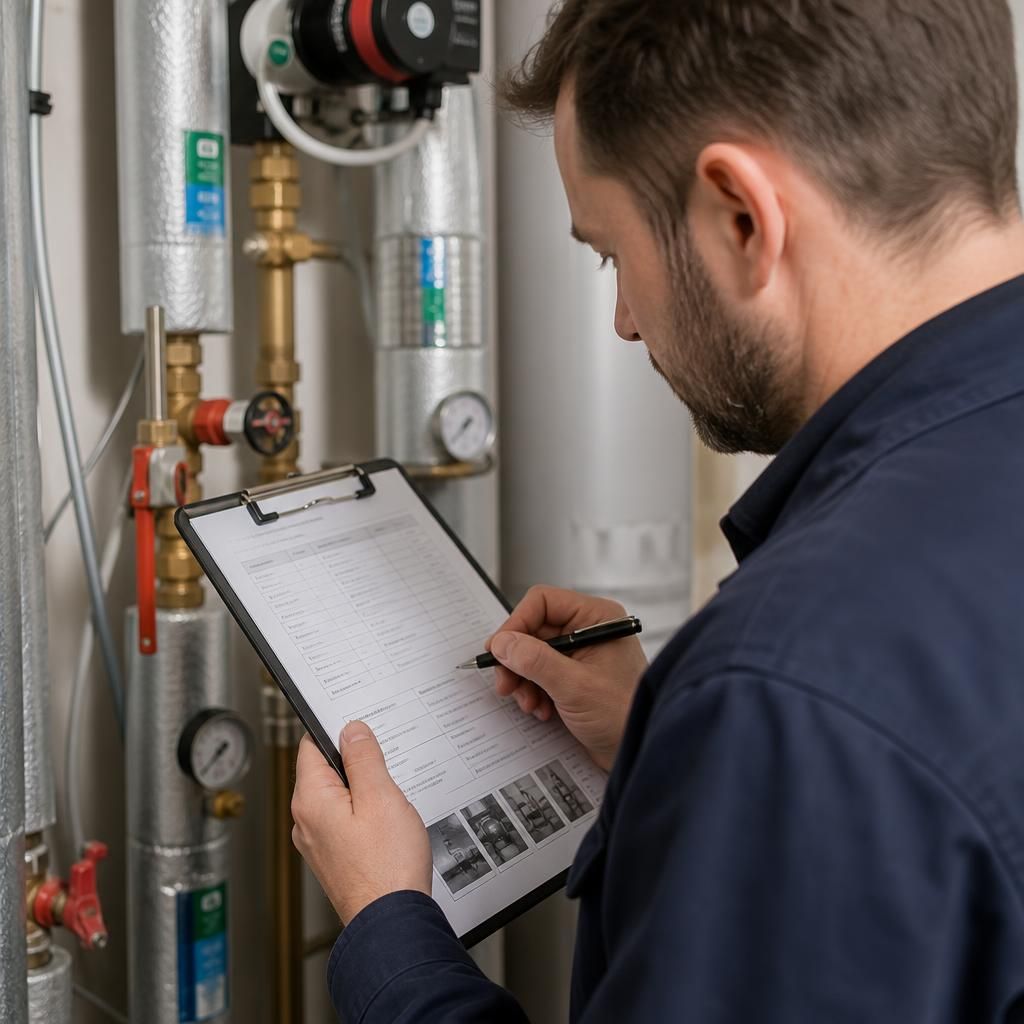
Completed legionella prevention work should produce an auditable report showing what was examined, how conclusions were reached and which areas require attention. The document should distinguish observed conditions from professional interpretation, enabling dutyholders to understand the significance of each result without relying on unexplained technical terminology.
Technical evidence may include system details, sampling information, temperature or control observations, photographs and laboratory results where testing forms part of the agreed scope. Each item should be linked to the relevant outlet, asset or system area, with dates and reference information sufficient to support verification and future comparison.
Reporting should present actions in a practical order, separating immediate concerns from improvements that can be planned. Blue Fish Water Management explains the reasoning behind recommendations and provides documentation suitable for internal governance, contractor instruction and review by auditors or other relevant parties.
Frequently Asked Questions About Legionella Prevention and Management
What happens if legionella control measures are found to be inadequate?
Implementation depends on system complexity, access, findings and agreed controls. Specialists can distinguish routine management from urgent remedial work, allowing dutyholders to prioritise actions without unnecessarily disrupting essential business operations.
Read moreWhen is a legionella management plan needed?
A legionella management plan is needed where water-system risks require coordinated responsibilities, control measures, monitoring and review. It is particularly important for complex premises, vulnerable occupants, or multiple responsible parties.
Read moreWill legionella prevention work disrupt business operations?
Prevention work can often be coordinated around site activities, with access, inspections and remedial tasks agreed in advance. Any disruption depends on system complexity, findings and controls identified as necessary.
Read moreIs legionella prevention required in every water system?
Not every system presents the same level of risk, but all should be assessed proportionately. Dutyholders must identify foreseeable exposure, then apply suitable controls, monitoring and documented appropriate review processes.
Read moreHow often should legionella prevention controls be reviewed?
Review frequency should reflect system risk, use and control complexity. Reassess after significant changes, incidents or adverse results, and whenever monitoring shows existing measures may no longer remain reliably effective.
Read moreTrusted Expertise
Pragmatic legionella management consistently combines consistent controls, clear advice and dependable delivery across diverse commercial property types and locations nationwide.
Discuss Your Legionella Management Requirements
Discuss your legionella management requirements with Blue Fish Water Management to clarify the appropriate scope, priorities and documentation for your premises. The team can explain the next practical steps and arrange suitable assessment, testing or compliance support.