
Pressure Cleaner for Water Tanks
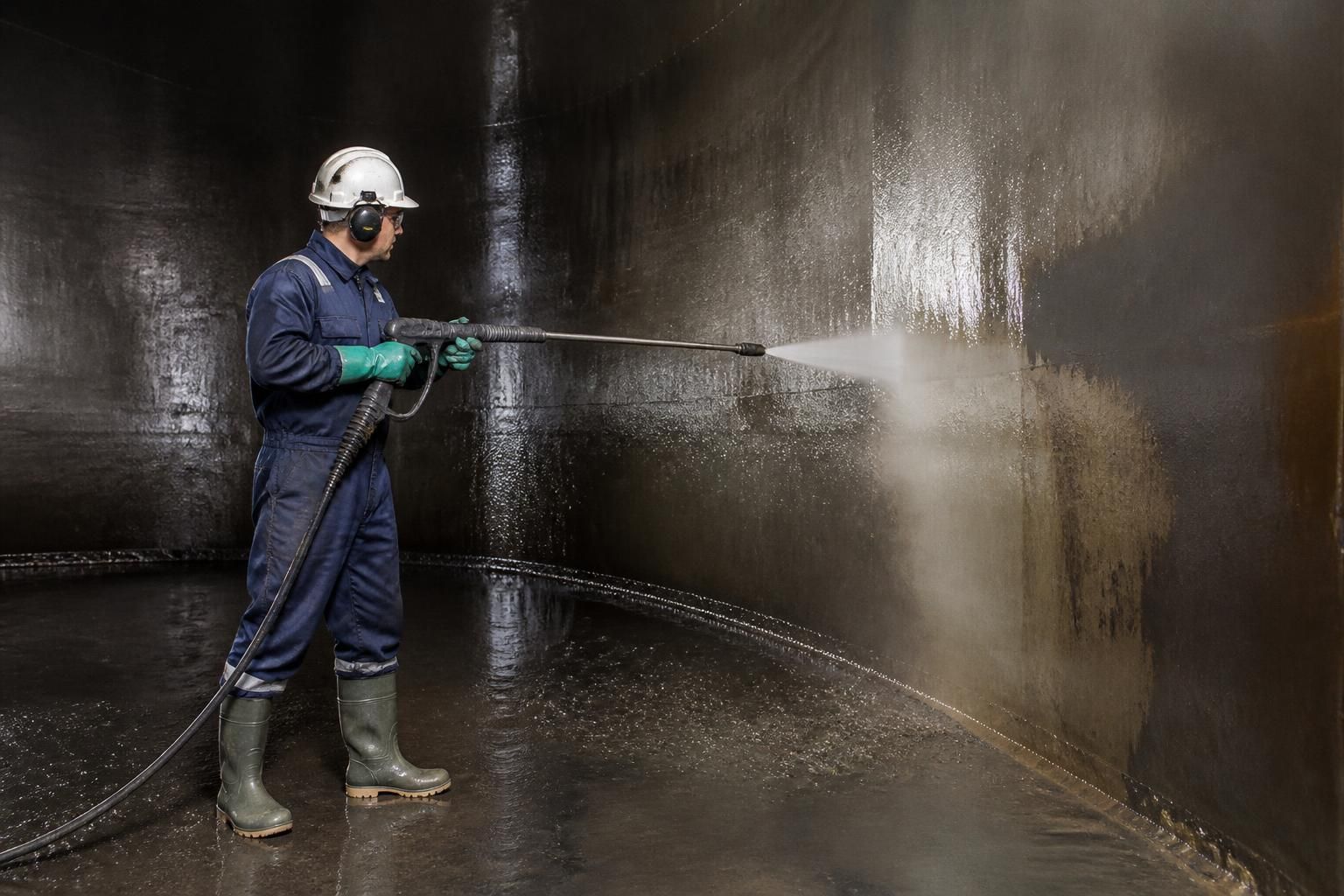
A pressure cleaner for water tanks uses controlled high-pressure water to remove sediment, biofilm and other deposits from tank surfaces. For commercial and industrial sites, professional cleaning supports hygienic storage, inspection and ongoing water safety management.
Safe Systems
Professional pressure cleaning removes deposits under controlled conditions, helping organisations maintain hygienic tanks, meet UK responsibilities, and plan corrective action.
What Professional Tank Pressure Cleaning Includes
An effective pressure-cleaning engagement starts with a review of the tank, its construction, access arrangements and associated components. This helps determine whether pressure washing is appropriate and establishes safe operating controls before work begins.
Afterwards, the contractor should record areas treated, defects, outstanding concerns and recommended follow-up. These findings can support water hygiene procedures, maintenance planning and compliance records.
Sediment and Biofilm Removal
Controlled pressure cleaning targets sediment, biofilm and other deposits on internal tank surfaces.
Suitability-Led Cleaning
The cleaning method is considered against the tank’s construction, access arrangements and connected components before work begins.
Support for Water Safety
Removing deposits helps organisations maintain more hygienic water storage as part of wider water safety management.
Defect Identification
The work can identify visible defects and outstanding concerns that may require separate remedial attention.
Clear Follow-Up Records
Records of treated areas, findings and recommended actions can support maintenance planning, water hygiene procedures and compliance documentation.
Pressure Cleaning Deliverables for Water Tanks
Tank-Specific Cleaning Plan
The work should be based on the tank’s construction, stored-water use, access arrangements and visible condition. A documented plan identifies the cleaning method, equipment requirements, isolation controls and any precautions needed before pressure washing begins.
Controlled Pressure Application
Pressure settings and spray equipment should be selected for the tank material and the type of deposit present. Controlled application helps clean surfaces effectively while reducing the risk of damage to linings, fittings, seals or associated components.
Hygiene and Contamination Controls
Professional procedures should prevent the cleaned tank from being recontaminated during access, washing and reinstatement. This includes suitable protective equipment, clean tools, controlled entry arrangements and appropriate handling of removed sludge and wash water.
Condition and Defect Evidence
Cleaning can expose defects that were hidden by sediment or biofilm. Photographs and written observations can record corrosion, damaged coatings, cracked components, poor seals, blocked outlets or other issues requiring inspection or remedial attention.
Completion Records and Recommendations
A useful completion record confirms the tank cleaned, the work undertaken and any limitations encountered. It should also separate completed cleaning from recommended follow-up actions, helping responsible persons plan maintenance, further investigation or additional water safety controls.
Questions to Ask Before Choosing a Pressure Cleaner for Water Tanks
What hygiene controls should a pressure cleaner use for water tanks?
Check the contractor’s tank-cleaning experience, method statement, risk controls, equipment suitability, hygiene arrangements, waste handling, inspection process and reporting standards before authorising pressure cleaning for your site and water system.
Read moreHow should a pressure cleaner prepare a water tank before pressure washing?
Preparation should include isolating the tank, confirming system access, reviewing its construction and lining, arranging drainage, removing stored water appropriately, and recording pre-cleaning defects for comparison after cleaning and inspection.
Read moreHow should a pressure-cleaned water tank be returned to service?
Return the tank only after confirming cleaning residues, disinfecting where required, completing inspection records, restoring connections, refilling with suitable water, and verifying water quality before normal operation is authorised.
Read moreHow should pressure washing pressure be selected for a water tank?
Select pressure according to material, lining condition, deposit type, nozzle distance and manufacturer guidance. Start conservatively, increase only where necessary, and avoid pressures that could damage surfaces, joints or coatings.
Read moreWhat should a pressure cleaner record during water tank pressure washing?
Records should identify cleaning areas, methods, equipment settings, observed deposits, defects, waste removal, photographs, deviations and recommendations. These contemporaneous notes create an auditable record for review and future maintenance planning.
Read moreWhat to Expect from a Professional Pressure Cleaning Process
A pressure cleaner for water tanks should be assessed by more than its ability to remove deposits. The method must suit the tank’s construction, lining, access points and condition, with any limitations identified before recommendations are made.
Blue Fish Water Management explains what the inspection and cleaning findings mean for the site, separating routine cleaning requirements from issues that may need monitoring, repair or further investigation. This gives responsible managers a clear basis for recording actions and coordinating future water safety work.
Confirming the cleaning approach
Blue Fish Water Management reviews the available information and identifies relevant limitations before work is planned. Where access, tank condition or system configuration affects the scope, these points are recorded so that the cleaning method is based on the site rather than applied as a standard procedure.
Once the findings have been reviewed, the next step is to agree any required cleaning, inspection or remedial actions with the person responsible for the site’s water safety arrangements. This helps ensure that pressure cleaning is treated as part of an ongoing control programme rather than an isolated task.
Where further work is recommended, Blue Fish Water Management can explain the reason for it and the practical implications for the tank and its operation. The resulting records give managers a clear reference for closing actions, updating maintenance plans and scheduling future checks.
Discuss Your Water Tank Pressure Cleaning Requirements
Discuss your water tank pressure cleaner requirements with Blue Fish Water Management. Share the tank type, access arrangements and known concerns so suitability can be considered and an appropriate cleaning assessment arranged.