
Fuel & Diesel Tank Cleaning
Professional diesel tank cleaning removes sludge, water, sediment and microbial contamination from fuel storage tanks. The process helps protect fuel quality, reduce equipment risks and identify defects requiring maintenance, supporting safer management of diesel storage systems.
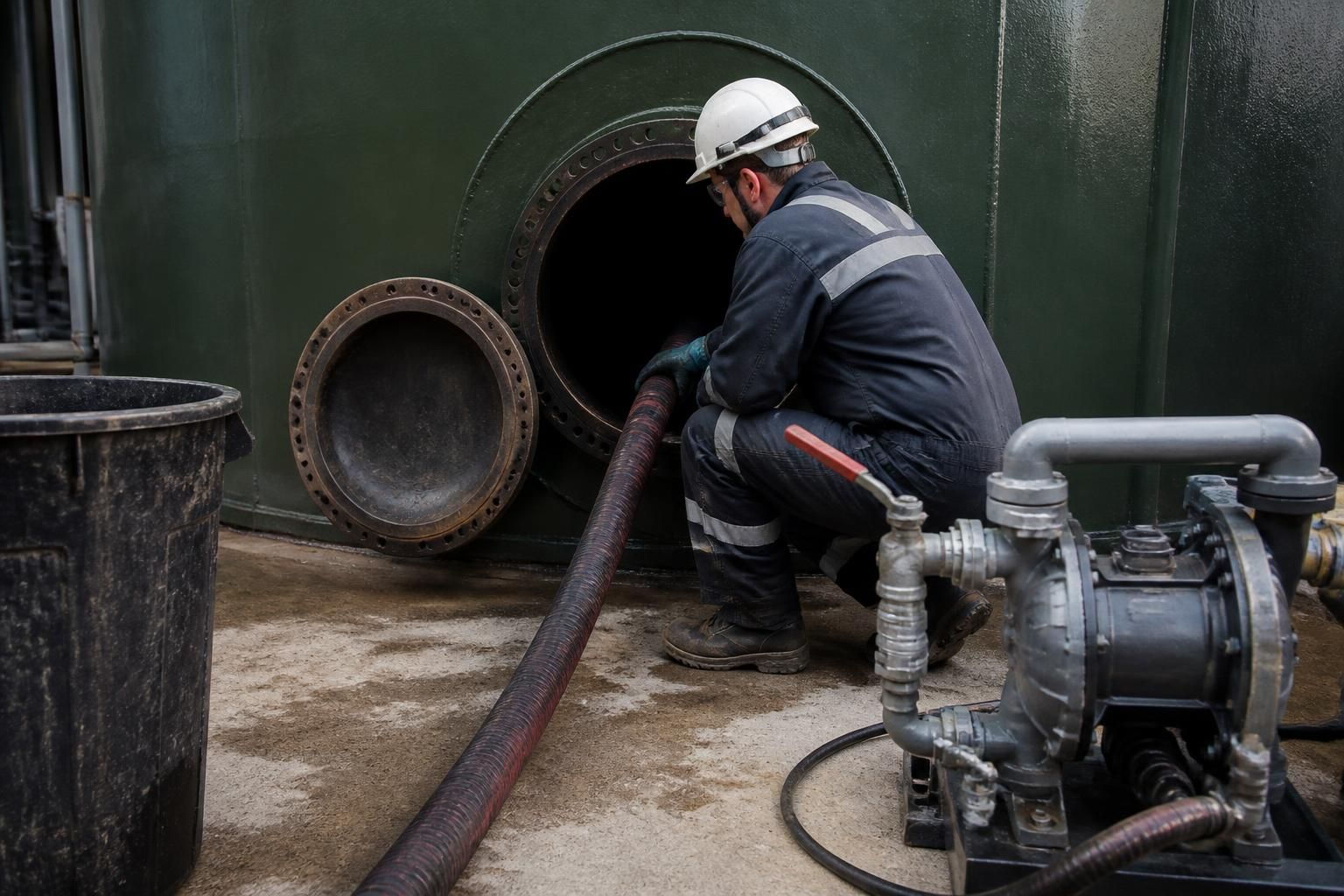
Key Challenges in Managing Diesel Tank Cleaning
Diesel tank cleaning involves controlling accumulated sludge, water, sediment and contamination without disrupting fuel storage operations. Businesses must also manage confined-space hazards, ignition risks, waste disposal, tank access, equipment compatibility and records demonstrating that maintenance decisions are properly assessed.
Determining When Cleaning Is Necessary
Fuel quality problems may develop gradually, making it difficult to distinguish tank contamination from faults elsewhere in the storage or dispensing system. Decisions should consider inspection findings, fuel condition, equipment performance and the history of previous maintenance.
Maintaining Fuel Supply During the Work
Cleaning can affect access to stored diesel and connected equipment. The work therefore needs to be planned around fuel usage, temporary storage arrangements, isolation requirements and the operational consequences of taking part of a system out of service.
Inspecting the Tank Structure
Cleaning may reveal corrosion, coating failure, damaged fittings or other defects that were hidden beneath deposits. These findings need to be assessed separately from the cleaning itself so that deterioration is not left unaddressed.
Controlling Recontamination
A clean tank can become contaminated again if delivery practices, venting, fill points, pipework or connected equipment introduce moisture and debris. Effective management includes reviewing the wider storage system rather than treating the tank as an isolated component.
Managing Removed Material
Sludge, contaminated fuel and wash residues require suitable containment, handling and disposal arrangements. The waste classification and disposal route may depend on its composition, contamination level and the site’s environmental controls.
Choosing a Suitable Cleaning Method
Tank design, access points, internal fittings, fuel type and the condition of the installation all influence the appropriate method. Equipment and procedures must be compatible with the system and must not create avoidable damage or additional contamination.
Demonstrating That the Work Was Effective
Maintenance records should show why cleaning was undertaken, what was found, how removed material was managed and whether further corrective action was identified. Clear documentation supports future inspections, compliance reviews and informed maintenance planning.
Reviewing Your Diesel Tank Cleaning Requirements
Fuel and diesel tank cleaning is a planned maintenance activity used to remove accumulated contamination from a storage tank and assess whether the tank remains suitable for continued service. The decision should take account of fuel condition, tank history and any operational symptoms rather than relying on a fixed cleaning interval.
Review sampling or inspection findings, recurring filter problems, water presence, changes in fuel use and the consequences of equipment failure. Ask whether the tank can be isolated safely, whether the stored fuel requires treatment or disposal, and whether cleaning alone is sufficient or further repair and monitoring should be arranged.
Assessing contamination and tank condition
Review fuel samples, inspection reports, tank history and maintenance records for sediment, free water, sludge, microbial growth or unusual fuel appearance. Consider whether blocked filters, injector problems, pump faults or repeated water accumulation could be linked to tank contamination, while also checking for faults elsewhere in the storage and distribution system.
Use the review findings to define a proportionate scope of work, distinguishing routine cleaning from tank repairs, fuel treatment or further investigation. A competent fuel tank cleaning service should confirm the proposed method, access arrangements, waste handling and any controls needed before work begins.
After cleaning, retain the service record and note any defects or recommendations for follow-up. This provides a clear maintenance history and helps inform future inspections, particularly where the tank supports critical plant or essential business operations.
Operational Benefits of Effective Diesel Tank Cleaning
Effective diesel tank cleaning gives businesses a clearer basis for managing stored fuel and associated plant. Findings can help distinguish contamination-related problems from defects requiring engineering attention.
Documented scope, controls and follow-up make the work easier to review and coordinate. This supports orderly operations, clearer evidence for compliance checks and a practical approach to tank condition and remedial work.
Cleaner Stored Fuel
Removing accumulated water and sediment helps maintain more consistent fuel condition within the tank.
Better Plant Protection
Contamination control helps reduce the risk of fuel-related stress on pumps, filters, injectors and other connected equipment.
More Stable Operations
A cleaner tank supports dependable fuel transfer and reduces the likelihood of contamination-related operational problems.
Earlier Defect Identification
Cleaning provides an opportunity to examine accessible surfaces and recognise corrosion, damage or other issues requiring engineering attention.
Stronger Maintenance Evidence
A defined cleaning scope and recorded findings give responsible teams clearer information for internal reviews and compliance checks.
Better Planned Follow-Up
The condition identified during cleaning can help prioritise repairs, fuel treatment, monitoring or future inspection activity.
Diesel Tank Cleaning Questions Answered
How can businesses assess competence before appointing a diesel tank cleaning contractor?
Choose a provider that can demonstrate relevant competence, explain containment and fuel-handling controls, identify escalation needs, and issue records covering findings, waste movements, defects and recommendations for responsible review afterwards.
Read moreHow disruptive is diesel tank cleaning for business operations?
Disruption depends on tank capacity, fuel volume, access and whether equipment can be isolated. Plan fuel transfer, temporary supply arrangements and controlled access beforehand, especially around critical plant and operations.
Read moreWhat signs indicate that a diesel tank needs cleaning?
Common warning signs include recurring water or sludge in filters, dark or hazy fuel, blocked strainers, injector problems, unusual odours, tank corrosion, or unexplained sediment during sampling and routine inspections.
Read moreWho is responsible for preparing a diesel tank for cleaning?
The tank owner or appointed site representative usually coordinates isolation, access, fuel status, permits and site controls, while the cleaning contractor confirms technical requirements and preparation details before work begins.
Read moreHow is diesel tank cleaning adapted to a site's fuel storage requirements?
Cleaning is tailored to tank size, fuel type, construction, access, contamination profile and operational constraints, with methods, equipment and controls selected accordingly to protect stored fuel and surrounding assets safely.
Read moreDiscuss Your Diesel Tank Cleaning Requirements
Provide details of the tank, its use and any concerns affecting stored fuel so the required service can be discussed accurately. Our team can clarify suitable next steps, information needed for a quotation and whether tailored professional advice is appropriate.