
Hot Water Cylinder Temperature Checks
Hot water cylinder temperature checks verify stored water temperatures against legionella control requirements, identifying unsafe operating conditions and supporting documented decisions on adjustment, maintenance or further investigation for commercial and domestic systems.
Which Temperature Checking Approach Suits Your Hot Water System?
The right approach depends on whether the check is a routine operational task, part of investigating a suspected fault, or evidence for a wider compliance review. Comparing scope, access requirements and reporting detail helps organisations select proportionate support.
Single-Point Cylinder Check
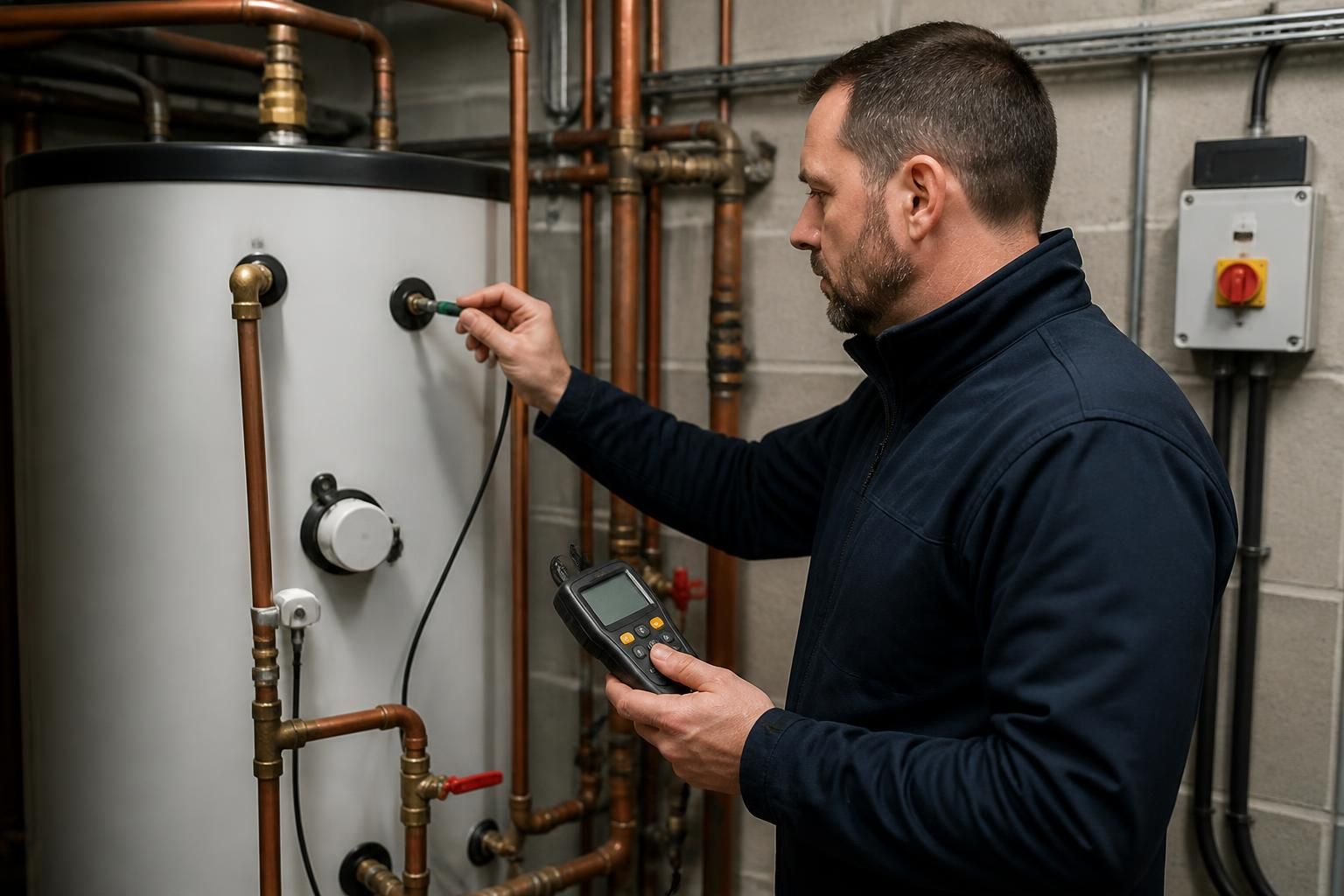
A direct temperature reading at the cylinder is suitable for a routine operational check where access is straightforward and the system is already understood. It provides a focused indication of stored-water temperature and can identify an obvious deviation requiring adjustment or maintenance.
Cylinder and Outlet Temperature Check
Checking both the stored water and a representative outlet gives a broader view of how the system is performing. This approach is useful where the cylinder reading appears acceptable but users may still be receiving water at an unsuitable temperature because of mixing valves, distribution losses or local faults.
Multi-Point System Check
A multi-point check records temperatures at relevant parts of the hot-water arrangement, such as the cylinder, flow, return and selected outlets. It is more appropriate for larger or more complex systems where a single reading would not show whether temperatures are being maintained throughout the distribution network.
Investigative Temperature Survey
An investigative survey is used when readings are inconsistent, temperatures are changing unexpectedly or a suspected control fault needs examination. It involves comparing measurements across the system and reviewing operating conditions to help distinguish instrumentation, circulation, storage or distribution problems.
Documented Compliance Check
A documented check is intended for organisations that need an auditable record of measured temperatures, locations, findings and recommended actions. It suits estates, facilities and compliance teams incorporating cylinder temperature evidence into legionella control records or a wider water hygiene review.
What Hot Water Cylinder Temperature Checks Cover
Practical temperature checks combine suitable measurement points, accurate readings and documented results. For each hot water cylinder or heater, the process considers stored-water temperature, outlet performance, return temperatures where relevant, access constraints and whether findings warrant adjustment, maintenance or investigation.
Cylinder temperature readings
Measurements are taken at appropriate points on the hot water cylinder or heater to establish whether stored water is being maintained at a suitable temperature for legionella control.
Outlet and distribution checks
Hot water outlets are assessed alongside the cylinder to identify temperature loss, inconsistent performance or conditions that may indicate a fault within the system.
System condition review
Readings are considered with the system layout, equipment condition and operating arrangements so that unusual results can be investigated rather than viewed in isolation.
Clear inspection records
Results are recorded against the relevant cylinder or heater, creating an auditable account of the checks and supporting ongoing water hygiene management.
Findings and recommendations
Where temperatures or operating conditions indicate a potential control issue, the findings identify whether adjustment, maintenance or further technical investigation should be considered.
Questions About Hot Water Temperature Check Requirements
When should organisations arrange specialist hot water cylinder temperature checks?
Routine checks suit stable systems with clear records; specialist assessment is preferable where readings conflict, equipment is altered, complaints arise, or persistent temperature variation indicates underlying faults requiring further investigation.
Read moreWho is responsible for hot water cylinder temperature checks?
Responsibility typically sits with the organisation controlling the premises, supported by competent facilities staff or appointed specialists. Duties should be defined, recorded and reviewed where systems, risks or personnel change.
Read moreWhat should hot water cylinder temperature check records include?
Records should identify the asset, measurement point, date, time, instrument, reading, assessor and relevant operating conditions, alongside deviations, corrective actions, escalation decisions and verification of completion where appropriate and required.
Read moreWhat should organisations do when a hot water cylinder temperature falls outside the target range?
Confirm the reading with a suitable calibrated instrument, assess whether the deviation affects stored-water safety, investigate contributing faults, document findings, and implement corrective action with follow-up verification promptly where necessary.
Read moreWhat equipment is needed for hot water cylinder temperature checks?
Use a calibrated contact thermometer, suitable probe, clean sampling containers where required, access equipment, protective gloves, and recording tools. Instrument suitability and calibration status should be checked before measurement begins.
Read moreWhat to Clarify About Temperature Check Scope and Follow-Up
Before arranging hot water cylinder temperature checks, clarify which assets, outlets and operating conditions are included, who will carry out the work, and what competence or technical method underpins the assessment. Ask whether access requirements, measurement limitations and any relevant system records will be considered.
Confirm what evidence will be provided, how results and exceptions will be reported, and when follow-up information is expected. It is also important to establish who is responsible for reviewing findings, authorising corrective work and incorporating future temperature checks into the organisation’s water hygiene arrangements.
Agree the measurement points and conditions
Ask for the proposed asset list, measurement locations and operating conditions before the visit. Clarify whether readings will be taken during normal operation, after a period of limited use or following a heating cycle, and how restricted access, blended outlets or unusual system arrangements could affect interpretation.
Once the checks are complete, the recorded temperatures should be reviewed against the system’s legionella control requirements and existing risk assessment. Any reading outside the expected operating range should be assigned an appropriate action, such as adjustment, maintenance or further technical investigation, rather than treated as an isolated result.
Keep the findings with the system’s water hygiene records so future checks can identify recurring changes and confirm whether corrective measures have been effective. Where readings remain inconsistent or indicate a wider system issue, specialist advice can help determine the most suitable next step.
Discuss Your Hot Water Cylinder Temperature Check Requirements
Discuss your hot water cylinder temperature check requirements with Blue Fish Water Management Ltd. Share the system context, concerns and compliance objectives, and receive practical advice on the most appropriate assessment route for your organisation.