
Mains Water Chlorination Services
Mains water chlorination is the controlled disinfection of incoming mains-fed water systems using chlorine to manage microbial contamination. Blue Fish Water Management plans treatment, carries out appropriate testing and provides practical guidance to support safe operation and compliance.
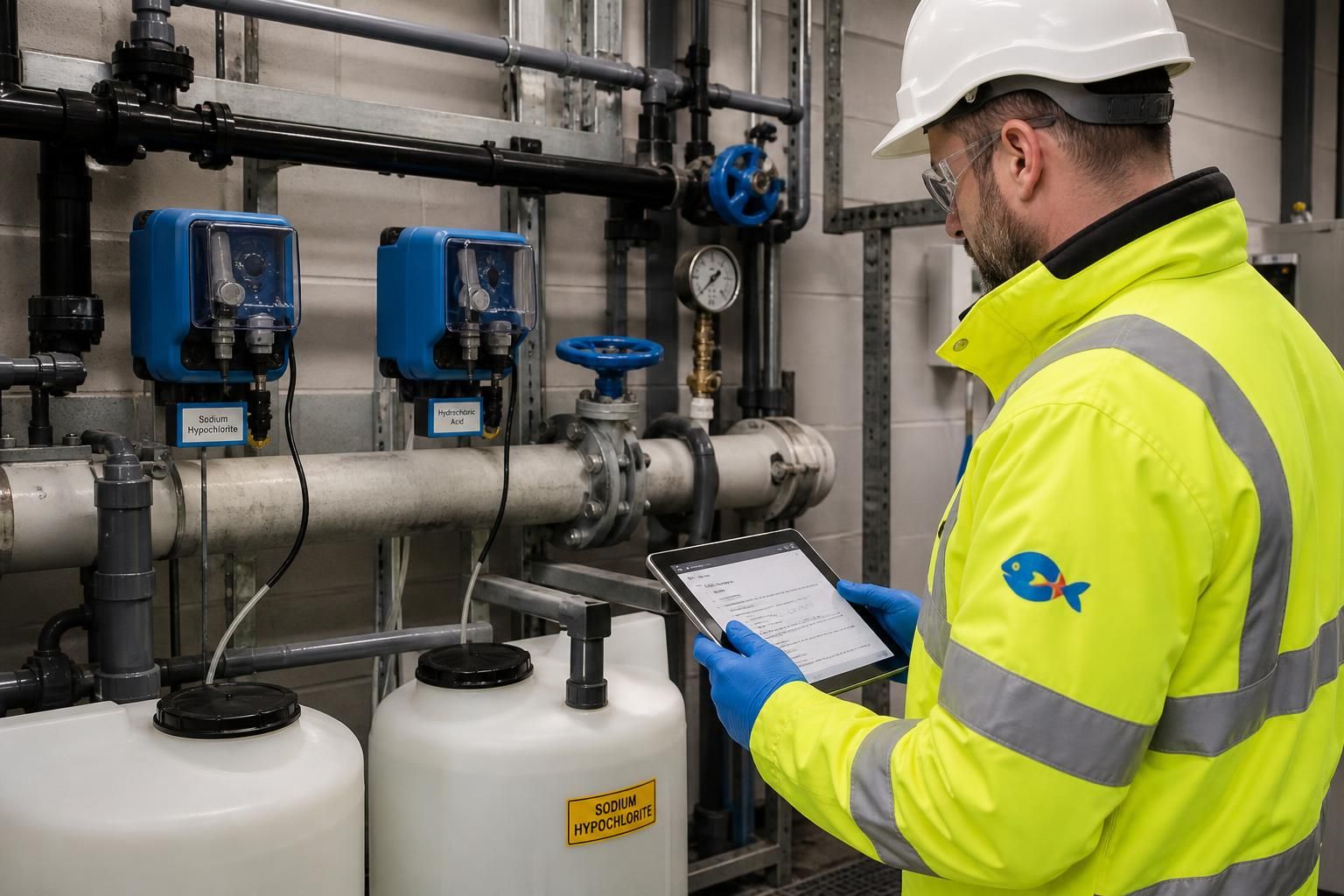
Mains Chlorination Service Specification
This specification sets out how mains water chlorination is defined, planned, controlled and evidenced. It separates treatment scope, technical requirements, verification records and operational controls so responsible persons can evaluate whether completed work supports safe, compliant system operation.
Treatment scope
Mains water chlorination applies to incoming potable water pipework and associated distribution systems requiring controlled disinfection. The scope is defined around the installation condition, system layout, materials, access points and the reason for treatment, such as new works, alterations or remedial disinfection.
Assessment and planning
Before treatment, the system is reviewed to identify dead legs, storage arrangements, outlets, isolation points, vulnerable components and discharge routes. A documented plan sets out the sections included, preparation requirements, sampling points, control measures and responsibilities for managing the work.
Chlorination method
Disinfection is carried out using a controlled chlorine dose applied throughout the defined system, with sufficient contact time for the planned treatment. Pipework is isolated, flushed and checked in sequence so treated water reaches relevant branches and outlets without creating uncontrolled discharge or cross-connection risks.
Process controls
Operational controls include checking chlorine concentration, confirming contact conditions, managing flushing and monitoring changes in water quality. The approach must account for pipework materials, system volume, access constraints and any restrictions needed to protect connected equipment or building operations.
Verification testing
Completion is supported by inspection and appropriate testing, including checks that residual chlorine has been managed after flushing and that samples are taken from representative points. Where microbiological analysis is required, results are interpreted against the agreed acceptance criteria and the intended use of the system.
Records and handover
The handover record should identify the treated system, treatment scope, method, test observations, sample locations, results, limitations and any follow-up actions. These records provide an auditable basis for demonstrating that mains water chlorination was planned, controlled and reviewed in line with relevant water hygiene procedures and compliance duties.
Understanding Mains Water Chlorination Requirements
Mains water chlorination usually means disinfecting a mains-fed installation, including relevant pipework and connected components, before it is brought into service or after work that could have introduced contamination. The treatment method should reflect the system design, materials, access points and assessed risk; it is not a substitute for correcting faults that allow contamination to enter.
The responsible person should ensure the work is properly authorised, affected users and connections are managed safely, and records identify the treated sections, method, chemicals, timings and results. Verification should use representative samples and clear acceptance criteria, with any unsatisfactory result investigated before the system is placed into normal use.
Assessing the need for disinfection
The responsible person should establish whether the work has created a credible route for contamination, taking account of open pipe ends, storage, stagnant sections, connection points and the condition of internal surfaces. Chlorination may form part of commissioning or remedial work, but it does not remove the need to replace unsuitable materials, rectify leaks or prevent further ingress. The decision and its technical basis should be recorded.
A key boundary is the distinction between the public water supply and the customer’s mains-fed installation. Mains water chlorination normally concerns the private pipework, storage and connected components under the building owner’s or operator’s control, rather than the utility network itself. Confirming this scope at the outset helps prevent gaps in responsibility and ensures that access, isolation and discharge arrangements are practical.
After treatment, the responsible person should retain the completed documentation with the site’s water hygiene records and use the findings to inform any further corrective work or monitoring. Blue Fish Water Management can help interpret the evidence and advise on proportionate next steps where the system, sampling results or compliance requirements need further review.
Where Mains Water Chlorination Applies
Mains water chlorination may be appropriate across new developments, occupied commercial premises, healthcare settings, industrial facilities and properties with storage tanks or extended distribution networks. These examples show how building use, system condition and assessed risk influence the treatment approach.
New-build developments
Mains water chlorination may be used to commission newly installed pipework before a building is occupied. The scope should include the relevant incoming supply, distribution routes, outlets and connected components, subject to the system design and project requirements.
Refurbished or altered systems
Work on existing pipework, valves, tanks or other components can introduce contamination into an otherwise established installation. Targeted chlorination may form part of the return-to-service process once alterations are complete and the affected sections have been identified.
Buildings with storage tanks
A mains-fed system containing cold-water storage tanks, booster arrangements or associated plant requires consideration of how water moves through each component. Chlorination planning should account for access, isolation points, materials and any sections that cannot be treated as one continuous system.
Extended distribution networks
Large buildings and properties with long or complex pipe runs can present challenges where outlets are remote from the point of entry. The treatment approach should reflect the layout, circulation routes, dead legs and areas where water use is limited.
Healthcare and care environments
Healthcare and care settings require careful coordination because water services support occupied areas and may be subject to additional operational controls. Any mains water chlorination should be planned around vulnerable users, critical outlets, isolation arrangements and the site’s existing water safety procedures.
Industrial and commercial premises
Factories, offices, warehouses, retail premises and other commercial sites may have mixed-use water systems with different operating patterns. Chlorination requirements can vary between welfare facilities, process-related areas, storage arrangements and separate building zones.
Vacant or recommissioned buildings
Properties that have been unoccupied or had sections of the water system taken out of use may need assessment before normal operation resumes. Mains water chlorination can be considered where the system condition, period of inactivity or evidence from inspection indicates a need for controlled disinfection.
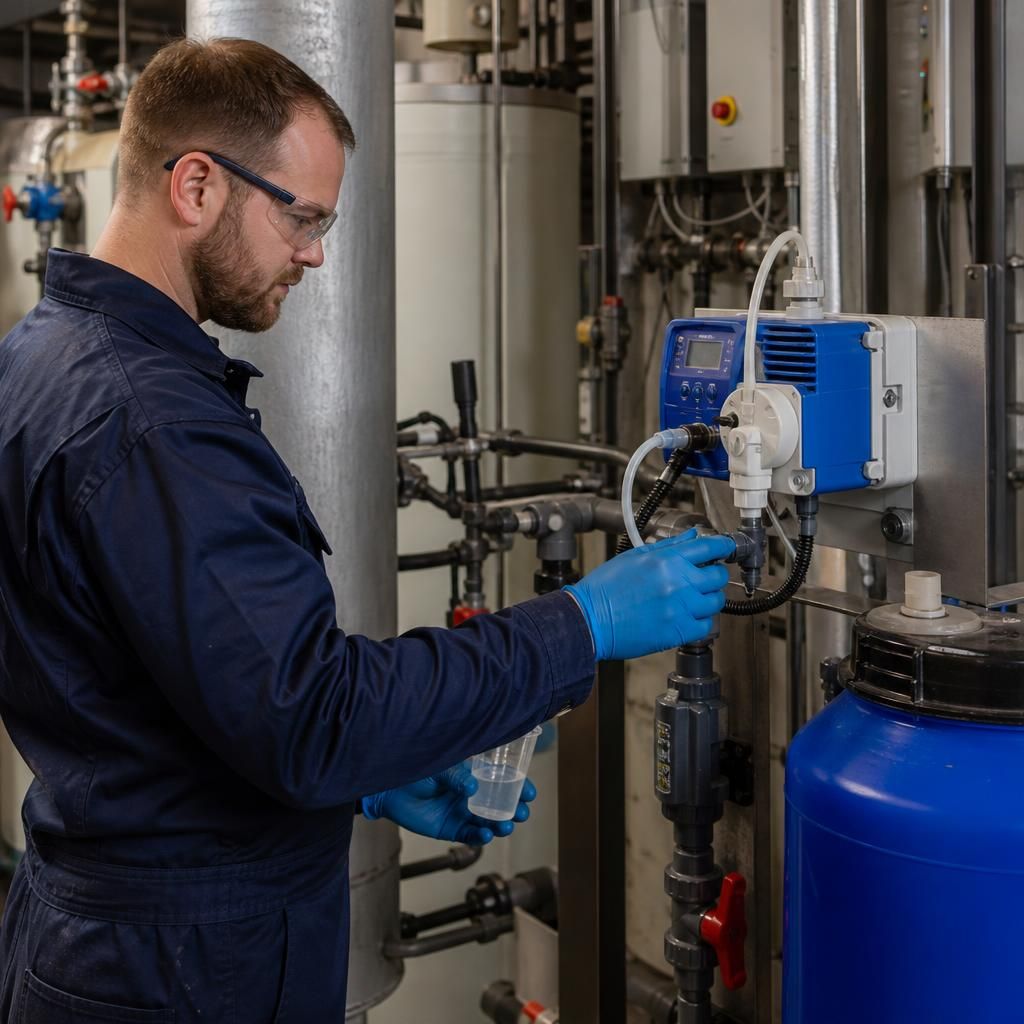
Technical Standards for Mains Water Chlorination
For mains water chlorination, planning considers the mains-fed system’s configuration, isolation points, dosing locations, contact arrangements and discharge routes before treatment. Defining these controls in advance helps avoid untreated sections and supports orderly work on site.
Experienced water hygiene personnel review access, materials and operational constraints with site contacts before agreeing the method. Pipework, storage tanks, outlets and dead legs can then be considered individually, rather than treated as though every installation has requirements.
Quality control is based on traceable records and clear evidence. Treatment details, sample locations, laboratory findings and corrective actions are brought together in a completion record, giving duty holders a practical basis for judging whether the system is ready for service or needs further attention.
Questions to Ask Before Appointing a Mains Chlorination Provider
What competence should a provider demonstrate for mains water chlorination?
Check that the provider can evidence competent personnel, relevant accreditation, appropriate procedures, clear reporting, defined responsibilities, and experience with mains-fed commercial systems before formal appointment and treatment begins on site.
Read moreWhat should a mains water chlorination method statement include?
A method statement should define scope, hazards, isolation, dosing arrangements, contact requirements, protective measures, discharge controls, responsibilities, contingency actions, verification, documentation, and approval points before work starts on site safely.
Read moreWhat should a mains water chlorination completion report contain?
A completion report should identify treated areas, chemicals and concentrations, contact period, test results, sample points, deviations, corrective actions, approvals, and recommendations, creating an auditable record for future compliance review.
Read moreWhat follow-up support should a mains water chlorination provider offer after treatment?
After treatment, support should include interpreting results, addressing failed samples, advising on corrective action, updating water hygiene records, and identifying further monitoring or review requirements where system conditions remain unresolved.
Read moreWhat timescale should a mains water chlorination project allow?
Timescales depend on system size, complexity, access, isolation, required contact period, sampling and laboratory reporting. Allow additional time where results are unsatisfactory or corrective work is necessary before final commissioning.
Read moreDiscuss Your Mains Water Chlorination Requirements
Discuss your mains water chlorination requirements with Blue Fish Water Management. Our team can help clarify the appropriate treatment scope, review relevant site considerations and provide practical advice or a tailored quotation based on your system and intended use.