
Hot Water Tank Maintenance
Hot water tank maintenance is the planned inspection, cleaning and servicing of stored-water systems for commercial, industrial and domestic premises. It helps identify conditions affecting water hygiene, system operation and compliance, supporting safer water, dependable performance and informed remedial decisions.
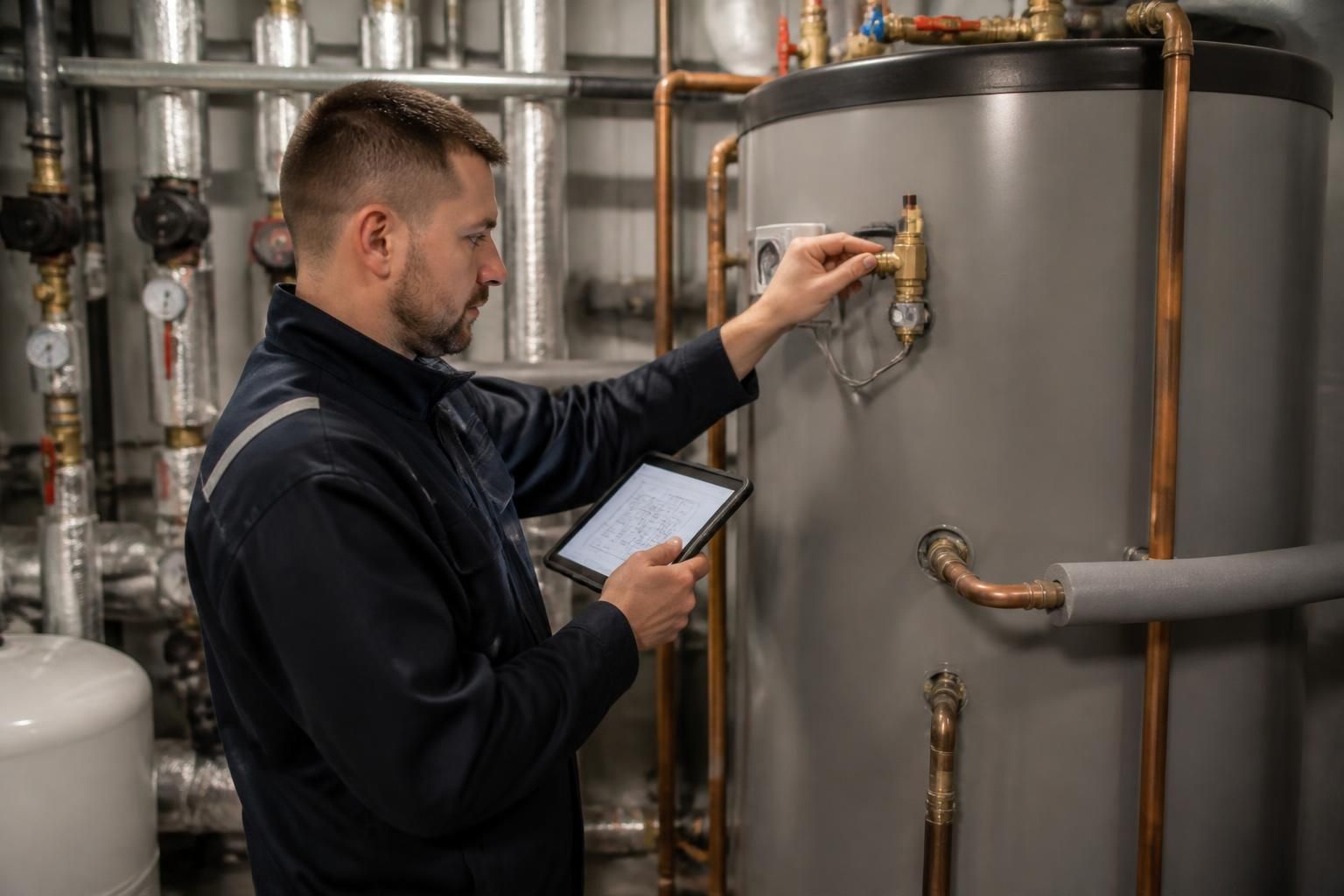
Safe System Care
Planned maintenance supports safe water systems, clarifies UK compliance responsibilities, and provides evidence-based findings to guide proportionate, informed remedial decisions.
What the Service Covers
An engagement reviews tank condition, temperature control, valves, insulation and pipework, focusing on how these affect storage performance and maintainability. This helps identify where access, component condition or accumulated material may complicate upkeep.
Depending on requirements, the service may include internal checks, deposit removal, component observations and recommendations, helping responsible parties organise maintenance around the tank’s condition.
Planned Maintenance Review
The tank is reviewed against its maintenance requirements so inspection findings can be incorporated into a practical servicing plan.
Temperature Control
Temperature readings and control arrangements are considered in relation to stored-water management and the need for suitable monitoring.
Condition Findings
Observations are recorded on accessible tank components and associated fittings, highlighting defects, deterioration or conditions requiring attention.
Maintenance Risks
Issues that could hinder cleaning, inspection or reliable operation are identified so responsible parties can assess their priority.
Clear Recommendations
The engagement produces practical findings and recommendations to support maintenance records, compliance decisions and proportionate remedial work.
Maintenance Evidence and Compliance Outputs
Practical maintenance outputs can include a structured service record, clear observations, photographs where appropriate, and prioritised actions for responsible persons. These records support ongoing monitoring, contractor coordination and review of water safety arrangements.
Condition Inspection
Maintenance checks examine the tank, associated pipework, valves, insulation and accessible components for deterioration, leaks, corrosion or other conditions that may affect water hygiene and system operation.
Temperature and Control Checks
Recorded checks of relevant temperature controls and operating conditions help identify whether stored hot water is being managed in line with the site’s water safety arrangements and applicable compliance requirements.
Cleaning and Internal Condition
Where included within the agreed scope, tank cleaning addresses accumulated sediment, scale and deposits that can affect water quality, heat transfer and the condition of the stored-water system.
Photographic Service Records
Photographs of relevant components or defects can supplement written observations, giving responsible persons and contractors clearer evidence when reviewing condition or planning remedial work.
Prioritised Remedial Actions
Findings can be grouped by significance, distinguishing routine maintenance needs from issues requiring further investigation or proportionate corrective work.
Compliance-Focused Reporting
A structured maintenance report records the work undertaken, observations, limitations and recommended next steps, supporting audit trails, contractor coordination and ongoing review of water safety arrangements.
Questions About Hot Water Tank Maintenance
How often should hot water tanks be maintained?
Maintenance should assess tank condition, insulation, access, valves, temperature control, sediment and corrosion, while checking associated pipework and controls. Findings determine cleaning, repairs, monitoring or replacement requirements for the system.
Read moreHow does hot water tank maintenance support legionella control?
Maintenance supports legionella control by checking storage temperatures, water turnover, cleanliness and protective measures, helping identify conditions that may encourage bacterial growth and informing proportionate corrective action within the system.
Read moreWho is responsible for arranging hot water tank maintenance?
The responsible person or dutyholder should arrange maintenance, using competent contractors where necessary. Landlords, facilities teams, employers or property managers may coordinate work, depending on premises ownership and management arrangements.
Read moreWhat should a hot water tank maintenance report contain?
A report should record the work completed, system components examined, test or measurement results, defects, photographs, risk implications, recommended actions, responsible parties, dates, and supporting notes for later informed review.
Read moreWhat does hot water tank maintenance involve?
Work typically combines review of system history, examination of accessible components, functional checks, hygiene-focused cleaning where required, and documented decisions on ongoing monitoring, repair or further specialist investigation or escalation.
Read moreWhat to Expect from Hot Water Tank Maintenance
Hot water tank maintenance is carried out against the system’s use, design and known risks rather than as a purely routine clean. The process considers tank condition, access, stored-water arrangements and relevant control measures, so the work can be matched to the premises and the way the system operates.
Blue Fish Water Management explains the basis for its recommendations and separates immediate concerns from matters suitable for planned attention. Where further investigation or remedial work may be appropriate, the findings are discussed clearly with the client so decisions can be made using the available evidence and the requirements of the water safety arrangements.
Establishing the maintenance scope
The scope may take account of available system records, previous observations, tank location, access arrangements and any known changes to the premises. This helps distinguish routine maintenance requirements from issues that need closer examination, while keeping the work relevant to the way the stored-water system is used.
Hot water tank maintenance should form part of wider water safety management rather than replace risk assessment, monitoring or testing where those controls are required. The maintenance record can be reviewed alongside existing compliance documentation to confirm that the system remains appropriately managed.
Where the findings identify a need for further attention, the next step is to establish the scope and priority of that work from the condition observed. This gives the responsible person a clear basis for arranging follow-up measures and maintaining an accurate record of the system.
Discuss Your Hot Water Tank Maintenance Requirements
To discuss hot water tank maintenance for your premises, contact Blue Fish Water Management with available system details and existing records. The team can consider your requirements, confirm whether the service is suitable, and outline the next practical step.