
Chlorinator Equipment & Filters
Chlorinator equipment and filters support controlled chlorine dosing, contaminant reduction and reliable water system operation. Blue Fish Water Management helps commercial and industrial clients identify suitable treatment components for legionella control, aligned to system requirements and compliance duties.
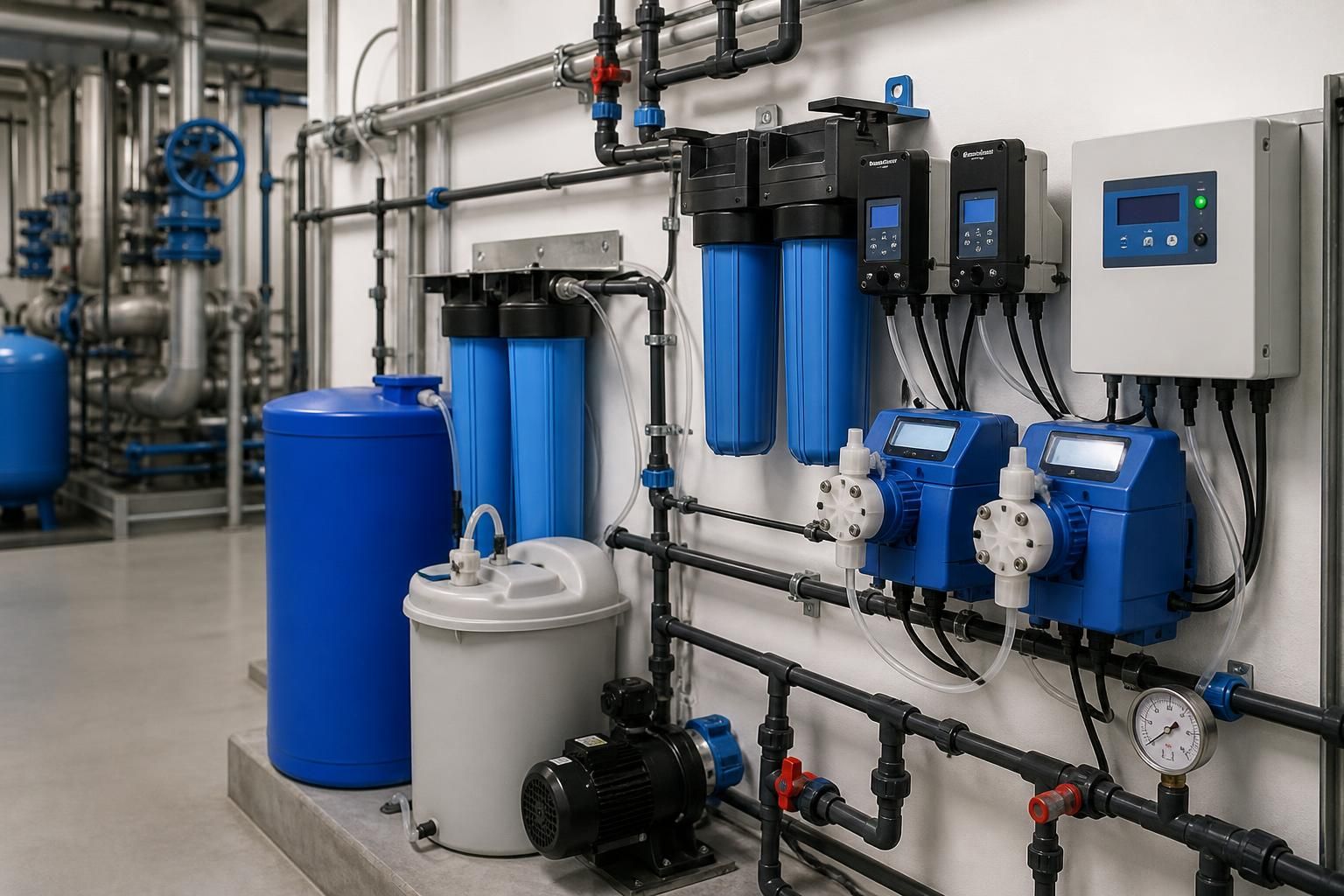
Chlorinator Equipment and Filter Options by Application
Chlorinator equipment and filters vary from individual replacement components to coordinated treatment assemblies. Selection depends on water quality, dosing capacity, filtration duty, control requirements and maintenance arrangements, so each option should be matched to the system’s operating conditions.
Replacement Dosing Pumps
Replacement dosing pumps suit systems where the existing chlorinator remains appropriate but the pump is worn, unreliable or no longer matched to the required dosing rate. Selection should consider chemical compatibility, flow range, control signal and the duty cycle of the installation.
Packaged Chlorination Units
Packaged chlorination units combine dosing, controls and associated components in a coordinated assembly. They are suitable for commercial or industrial systems requiring a defined treatment arrangement, with the final specification based on flow, storage, chlorine demand and monitoring requirements.
Injection Assemblies and Accessories
Injection points, non-return valves, calibration pots and chemical-resistant tubing support accurate and controlled chlorine dosing. These components are most relevant when upgrading or reconfiguring an existing system, particularly where poor injection conditions could affect distribution or equipment reliability.
Cartridge Pre-Filters
Cartridge pre-filters remove suspended particles before water reaches dosing or monitoring equipment. They suit smaller or cleaner systems where straightforward filter replacement is practical, but the cartridge grade and replacement routine must reflect the incoming water quality and operating demand.
Backwashable Media Filters
Backwashable media filters are intended for higher solids loads or installations where disposable cartridges would require frequent replacement. They can provide a broader filtration duty, provided the system has suitable backwash arrangements, drainage and space for inspection and maintenance.
Activated Carbon Filters
Activated carbon filters can reduce chlorine and certain organic contaminants, but their position in a treatment system requires careful consideration because removing disinfectant residual may affect water hygiene controls. They should be selected only where their treatment purpose, monitoring requirements and maintenance implications are understood.
Monitoring and Control Components
Residual chlorine sensors, flow switches, dosing controllers and alarms help link chlorinator operation to actual system conditions. These components are suitable where the treatment process needs documented oversight, automatic adjustment or fault indication rather than manual dosing alone.
Practical Components for Chlorination Systems
An equipment and filter package should be considered as a complete operational arrangement, covering component compatibility, safeguards, access for servicing, consumable replacement and records needed to demonstrate controlled, maintainable water treatment.
Dosing Pumps
Metering pumps deliver disinfectant at a controlled rate suited to the water system and dosing requirement. Selection considers chemical compatibility, duty conditions and the level of control needed for consistent treatment.
Injection Assemblies
Injection points introduce chlorine into the designated section of pipework. Appropriate non-return protection, isolation arrangements and positioning help prevent backflow and support safe inspection and maintenance.
Filter Housings and Cartridges
Filtration equipment removes selected particles and contaminants before or within the treatment process. Housing size, cartridge specification and flow capacity should match the system so filtration does not restrict operation.
Safety and Isolation Controls
Isolation valves, non-return devices and suitable chemical handling provisions help control access to dosing equipment. These features support safer intervention when components require inspection, cleaning or replacement.
Control and Monitoring Equipment
Control panels and monitoring devices provide a practical way to check dosing operation and identify abnormal conditions. Their specification should reflect the system design, operating parameters and information required for oversight.
Service and Compliance Records
Equipment schedules, commissioning details, inspection findings and replacement records create a traceable history for the treatment arrangement. Clear documentation supports planned maintenance and helps demonstrate that the system is being managed in line with relevant duties.
Questions About Chlorinator Equipment & Filters
How do we select chlorinator equipment for our water system?
Equipment selection should reflect water quality, dosing method, flow conditions and maintenance responsibilities. Filters require defined change-out criteria, while chlorinator safeguards, spares and records support compliant operation and planned servicing.
Read moreWhat determines chlorinator filter replacement intervals?
Replacement intervals depend on filter loading, incoming water quality, flow demand and manufacturer guidance. Differential pressure readings, reduced flow or test results can indicate earlier replacement, with checks supporting decisions.
Read moreWhat safeguards should chlorinator equipment include?
Safeguards should include non-return protection, leak detection, overfeed prevention, low-level alarms, isolation points and secure chemical storage. Interlocks, warning indicators and documented testing help control foreseeable dosing and equipment risks.
Read moreHow are chlorinator filters assessed for contaminant compatibility?
Compatibility assessment compares filter media, housing materials and seals with incoming contaminants, disinfectants, temperature and flow conditions. It should consider disposal requirements and whether performance can be verified through testing.
Read moreWhat operator training is needed for chlorinator equipment?
Training should cover safe chemical handling, equipment operation, alarm response, routine checks, filter servicing and escalation of defects. Competence records should identify attendees, topics, dates and any refresher requirements clearly.
Read moreWhat to Check Before Selecting Chlorinator Equipment & Filters
Before selecting chlorinator equipment and filters, clarify the treatment objective, required flow and pressure conditions, water quality considerations, and how the proposed components will integrate with the existing system. Ask who will confirm sizing, installation compatibility and safe operation, and what technical information will support those decisions.
Also establish what evidence will be provided, including equipment schedules, commissioning records, test results, operating instructions and maintenance requirements. Confirm the planned timescales, responsibilities for consumables and filter changes, monitoring arrangements, fault reporting and any ongoing review needed to keep the equipment effective and properly documented.
What should the equipment be designed to do?
Ask for the intended treatment outcome, design flow, pressure range, water quality assumptions and operating limits. Confirm whether the proposed filters are suitable for the contaminants and duty involved, whether dosing points are correctly positioned, and how the arrangement will interact with storage tanks, pumps, pipework and existing control systems. Any exclusions or assumptions should be recorded so that the equipment is not assessed in isolation from the wider water system.
Once these points have been answered, the next step is to turn them into an agreed equipment specification for the particular water system. This should identify the selected chlorinator and filter arrangement, operating limits, required safeguards and the criteria that will be used to verify correct performance.
Blue Fish Water Management can help review the proposed configuration against the system’s treatment requirements and compliance duties. A clear specification gives the client, installer and operator a shared basis for approval, commissioning and future maintenance decisions.
Discuss Your Chlorinator Equipment & Filter Requirements
Discuss your chlorinator equipment and filter requirements with Blue Fish Water Management to clarify the treatment arrangement, compatibility considerations and supporting documentation needed. We can help identify a practical next step for review, specification or implementation.