
Commercial Water Tank Disinfection Services
Water tank disinfection services address contamination risks in storage tanks and associated pumps across commercial, industrial and domestic water systems. Blue Fish provides risk-based cleaning, disinfection and verification to help responsible organisations maintain safe, compliant water supplies.
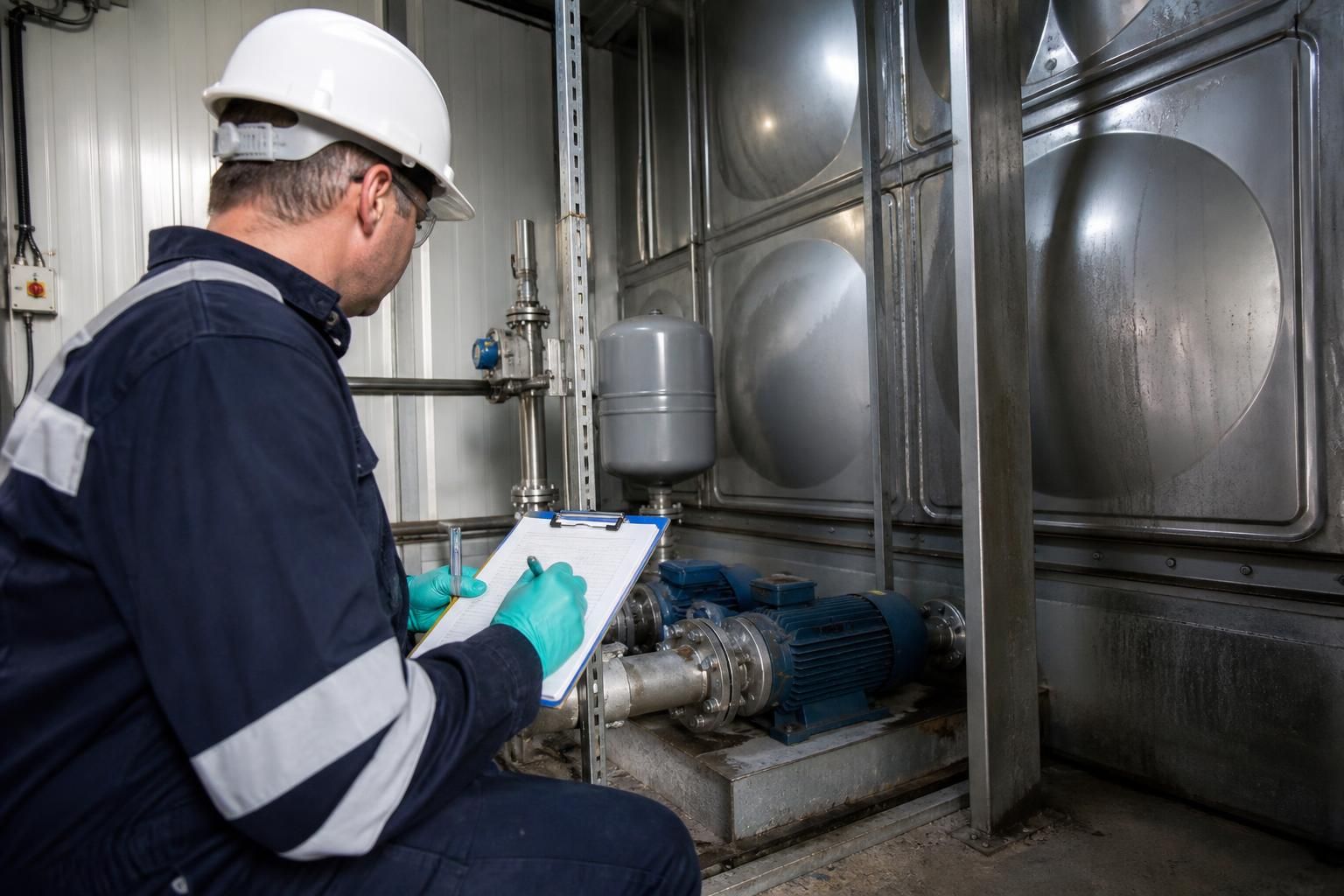
Water Safety
Tank disinfection helps organisations control contamination, meet UK water safety responsibilities, and establish documented evidence for returning systems to service.
What Our Water Tank Disinfection Service Includes
Water tank disinfection is a controlled treatment for storage tanks, pumps and connected pipework, selected according to site conditions and contamination risks. The engagement reviews access, water use, operational constraints and known contamination before defining the appropriate work method.
Recommissioning checks and records help facilities teams update water hygiene files, coordinate contractors and identify any further corrective work required.
Scope and Method Review
The work starts by defining the tank, associated equipment, access requirements and treatment method needed for the system’s condition and intended use.
System Preparation
Relevant tanks, pumps and outlets are prepared for treatment, with isolation and site controls considered to support safe, coordinated work.
Physical Tank Cleaning
The tank is cleaned to remove deposits, sediment and other material that could reduce the effectiveness of the disinfection process.
Disinfection Treatment
A suitable disinfection treatment is applied to the storage tank and, where required, connected components identified within the agreed scope.
Pump and Pipework Consideration
Pumps, outlets and connected pipework are considered where they may affect contamination control or the safe return of the water system to use.
Verification and Records
Completion checks and treatment records provide evidence of the work carried out and support updates to the site’s water hygiene documentation.
Practical Deliverables for Compliant Tank Disinfection
Key outputs are structured around safe execution and accountable handover: defined responsibilities, documented control measures, treatment records, sample results, photographic evidence where appropriate, and recommendations for correcting tank, pump or connected-system defects.
Pre-treatment system review
The service begins with a practical review of the storage tank, access arrangements, pumps, inlet and outlet connections, and relevant connected pipework. This helps identify sediment, stagnation points, access limitations and defects that could affect effective disinfection.
Risk-based method and controls
The planned work is set out around the system’s condition, use and operational risks. Agreed isolation arrangements, control measures and responsibilities provide a clear basis for carrying out the treatment without losing sight of wider water safety requirements.
Tank and associated equipment treatment
Cleaning removes accumulated deposits before disinfection is applied to the tank and, where included within the agreed scope, associated pumps or connected components. Treating the system in a coordinated way helps avoid leaving a contamination source within the treated arrangement.
Independent water quality verification
Post-treatment water samples can be submitted for UKAS-accredited testing to provide objective evidence of the system’s condition after disinfection. Results support an informed decision on whether further action is needed before the supply is returned to service.
Structured completion reporting
The completed report brings together the work undertaken, areas treated, relevant observations, verification findings and supporting evidence. This gives responsible organisations a traceable record for internal governance, compliance reviews and future water hygiene planning.
Defect and maintenance recommendations
Where the inspection identifies damaged components, poor tank condition, access issues or design features that may encourage recurring contamination, the report distinguishes these findings from the disinfection work and sets out practical corrective recommendations.
Questions to Ask Before Commissioning Water Tank Disinfection Services
How are water tanks with pumps disinfected?
An assessment should confirm tank design, pump arrangements, isolation points, contamination sources, access, materials, required controls, sampling plan, reinstatement criteria and responsibilities, with documentation agreed in writing before treatment starts.
Read moreWhat should a water tank disinfection method statement include?
It should define the treatment sequence, chemical controls, equipment, isolation arrangements, protective measures, emergency procedures, competence requirements, sampling points, acceptance criteria, records, and documented handover arrangements for safe system reinstatement.
Read moreWhat should a water tank disinfection quotation include?
It should itemise tank capacity, access requirements, isolation needs, treatment scope, sampling arrangements, exclusions, remedial recommendations, costs, assumptions, responsibilities, and required preparatory works, so clients can compare proposals fairly.
Read moreWhat qualifications should a water tank disinfection contractor have?
Look for demonstrable competence in water hygiene, tank cleaning, chemical handling, sampling and risk control, supported by suitable training, supervision, insurance, experience with comparable commercial systems and documented procedures.
Read moreWhat testing is required after water tank disinfection?
Post-disinfection testing typically includes water samples from representative outlets, checks for acceptable disinfectant residuals, and review against agreed criteria. Results support formal decisions on system reinstatement and follow-up action.
Read moreWhat to Expect from the Water Tank Disinfection Process
Water tank disinfection services are planned around the tank’s condition, construction, access arrangements, pump configuration and the nature of the water system. Before work begins, Blue Fish reviews relevant site information and identifies constraints that could affect safe treatment, including defects, restricted access or connected equipment that requires separate attention.
Findings are explained in practical terms, with clear separation between completed treatment, outstanding defects and recommended follow-up work. Where the planned method cannot achieve effective disinfection, the client is advised of the limitation and the options for correction, further investigation or controlled return to service.
Defined responsibilities and exclusions
The agreed scope records the areas to be treated, any isolation requirements and the responsibilities of the site team. Equipment or defects outside the defined scope are identified separately, so the client can distinguish between work completed during the disinfection and matters requiring additional action.
Once the findings have been reviewed, the responsible person can use the treatment records and recommendations to decide whether the water tank and pump are suitable for return to service or whether further action is required. Any remedial works, additional monitoring or retesting can be considered against the condition of the system and the risks identified.
Blue Fish can also help establish the next stage of the water hygiene plan, so the disinfection record supports ongoing management rather than being treated as a standalone exercise.
Discuss Your Water Tank Disinfection Requirements
If you need to assess whether professional water tank disinfection is suitable for your system, contact Blue Fish to discuss the tank, pump configuration and site requirements, confirm the appropriate next step and request further information.