
Hot Water Tank Cleaning & Disinfection
Hot water tank cleaning and disinfection removes accumulated deposits and microbial contamination from hot-water storage systems. For organisations installing water tank systems or managing existing assets, Blue Fish supports planned hygiene work that helps maintain safe, compliant water supplies.
Compliance Essentials
Cleaning and disinfection of hot-water storage tanks controls contamination, supports legal duties, and provides documented evidence for risk-based water safety.
What Hot Water Tank Cleaning Includes
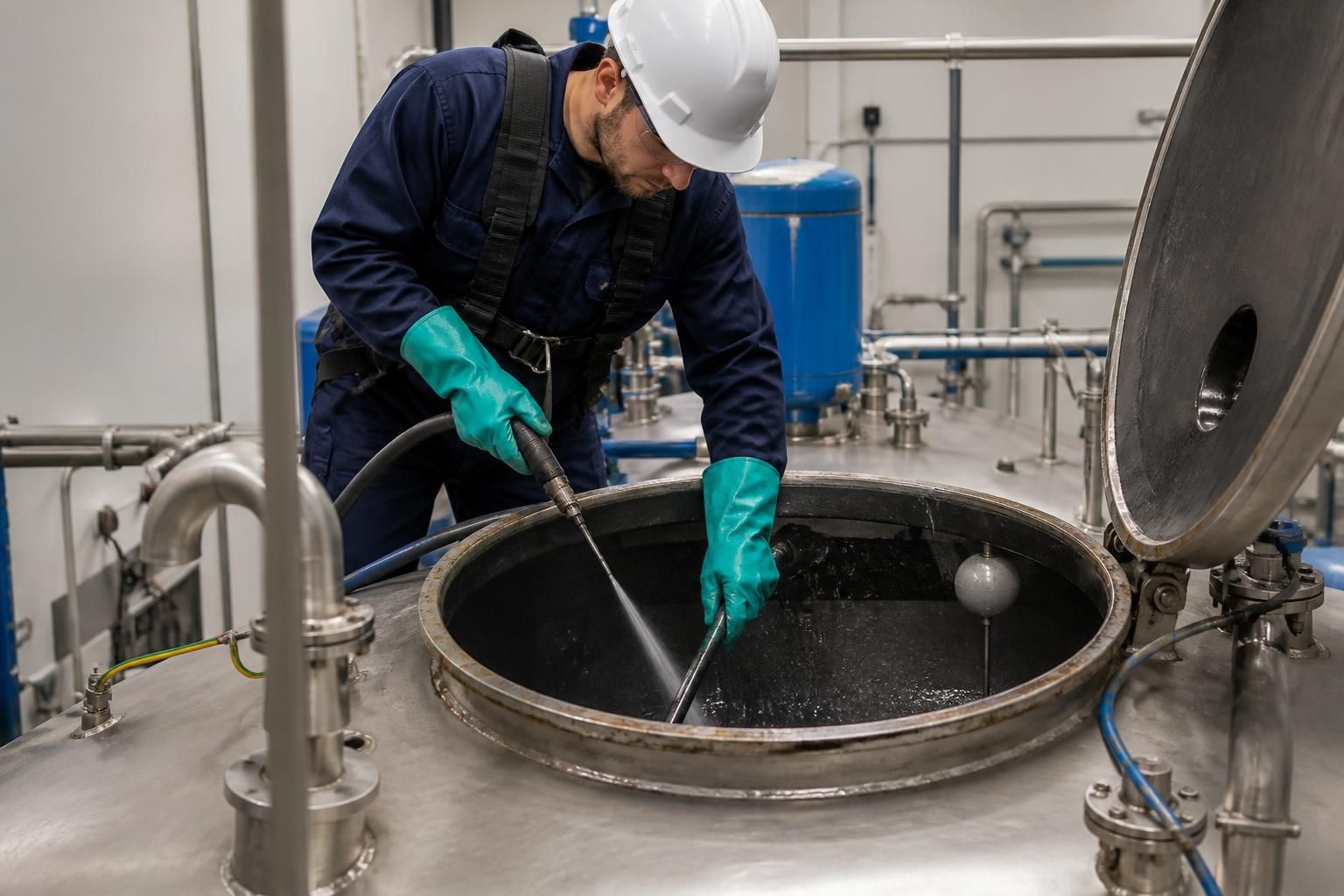
An engagement covers planning around the tank’s design, access arrangements and operational requirements. Technicians inspect accessible surfaces, remove scale, sediment and biofilm, apply an appropriate disinfection method, and return the system to service in a controlled manner.
For organisations installing water tank systems, cleaning and disinfection should form part of commissioning rather than an afterthought. Records of findings, actions and recommendations give facilities teams a clear basis for monitoring and future maintenance decisions.
Tank-Specific Assessment
The cleaning approach is informed by the tank’s construction, condition, access requirements and role within the hot-water system.
Controlled Preparation
Operational arrangements are considered before work begins so the tank can be taken out of service and made accessible in a managed way.
Hygiene Treatment
The engagement addresses physical contamination and microbial risk within the storage vessel using methods appropriate to the system.
Legionella Risk Reduction
Cleaning and disinfection form part of a risk-based water safety approach for organisations responsible for hot-water assets.
Compliance Evidence
Clear service records support internal audits, ongoing monitoring and decisions about future tank maintenance.
Evidence and Outputs from Hot Water Tank Disinfection
A professional hot-water tank cleaning service should produce more than a clean vessel: it should provide competent assessment, clear work records, evidence of disinfection, and practical recommendations for ongoing water safety management and compliance review.
Pre-cleaning tank assessment
The service should start with an assessment of the hot-water storage tank, associated fittings and accessible system information. This helps identify visible deposits, condition concerns and any factors that may affect the cleaning and disinfection work.
Planned cleaning and disinfection
Cleaning removes accumulated sediment and deposits before disinfection is carried out. Separating these stages is important because surface contamination can reduce the effectiveness of a disinfection procedure.
Competent hygiene procedures
Work should be undertaken by personnel familiar with hot-water storage systems, legionella control and water hygiene requirements. A structured method helps manage system access, operational controls and safe reinstatement after the tank has been treated.
Disinfection records
A completed service record should identify the tank or system treated, the work undertaken and the relevant checks made during the process. This creates a clear account of the intervention for internal water safety records and compliance review.
Water testing evidence
Where testing is required by the risk assessment or the system circumstances, sampling can provide supporting evidence after disinfection. Blue Fish provides UKAS-accredited water testing, helping organisations use documented analytical results alongside their cleaning records.
Condition and remedial findings
Cleaning may reveal corrosion, damaged components, restricted access or other defects that require attention. Findings should be recorded separately from the cleaning work, with practical recommendations to help the responsible person decide whether remedial action is needed.
Compliance-focused reporting
The final documentation can support legionella control records, audit preparation and review of the organisation’s water safety arrangements. It should give the responsible person enough information to demonstrate what was completed and identify any follow-up actions.
Questions to Ask Before Commissioning Hot Water Tank Cleaning
What does hot water tank cleaning and disinfection involve?
Hot-water tank cleaning should cover isolation, safe access, removal of scale and sediment, compatible disinfection, flushing, and verification, with methods selected for the system’s materials, design, and intended operational use.
Read moreWhat competence should a hot water tank cleaning contractor demonstrate?
A competent contractor should demonstrate relevant water hygiene training, risk assessment capability, safe chemical handling, confined-space awareness where applicable, and understanding of hot-water systems, records, and verification requirements in practice.
Read moreWhat records should hot water tank cleaning produce?
Records should identify the tank, work scope, dates, personnel, products, concentrations, contact times, flushing, verification results, defects, and recommendations, creating an auditable basis for compliance decisions and future maintenance planning.
Read moreHow can hot water tank cleaning minimise disruption to operations?
Minimise disruption by coordinating access, notifying affected users, scheduling work during lower-demand periods, protecting critical processes, arranging temporary hot-water provision where necessary, and confirming safe system reinstatement before use resumes.
Read moreHow often should hot water tanks be cleaned and disinfected?
Cleaning frequency should follow the site-specific risk assessment, considering tank condition, water turnover, temperature control, usage, contamination history, and system changes, and review it after incidents or significant alterations occur.
Read moreHow Hot Water Tank Cleaning Is Managed
Hot-water tank cleaning and disinfection is planned around the tank’s design, condition and connection to the wider water system. Before work begins, the scope, access requirements, isolation arrangements and any effects on operations should be confirmed so that the work can be carried out in a controlled manner.
Findings should be explained in practical terms, including visible defects, deposits or conditions that may affect hygiene. Blue Fish provides clear advice on any further action, distinguishing essential remedial work from longer-term maintenance considerations so that clients can make informed decisions about their water safety arrangements.
What is confirmed before cleaning?
The agreed scope should identify the tank or tanks involved, access arrangements, isolation points, drainage requirements and any relevant operational constraints. The relationship between the storage vessel, distribution pipework and other system components is also considered so that the work is properly defined and responsibilities are clear.
Once the work and findings have been reviewed, the next step is to agree any necessary corrective action and record it within the organisation’s wider water safety arrangements. This may include follow-up monitoring, repairs or a review of cleaning intervals where the tank’s condition or use has changed.
Blue Fish can provide practical guidance on interpreting the results, helping responsible persons decide what should happen next without treating every finding as an immediate replacement requirement.
Discuss Your Hot Water Tank Cleaning Requirements
Discuss your hot-water tank cleaning requirements with Blue Fish to clarify the system, proposed scope and documentation needed, and confirm suitability. Provide relevant tank details and existing records to help agree the next step.