
Commercial Water Softening & Conditioning
Commercial water softening and conditioning manage dissolved minerals and other factors that affect water quality in business premises. Blue Fish Water Management Ltd provides proportionate advice, system assessment and testing to support suitable treatment decisions and water hygiene compliance.
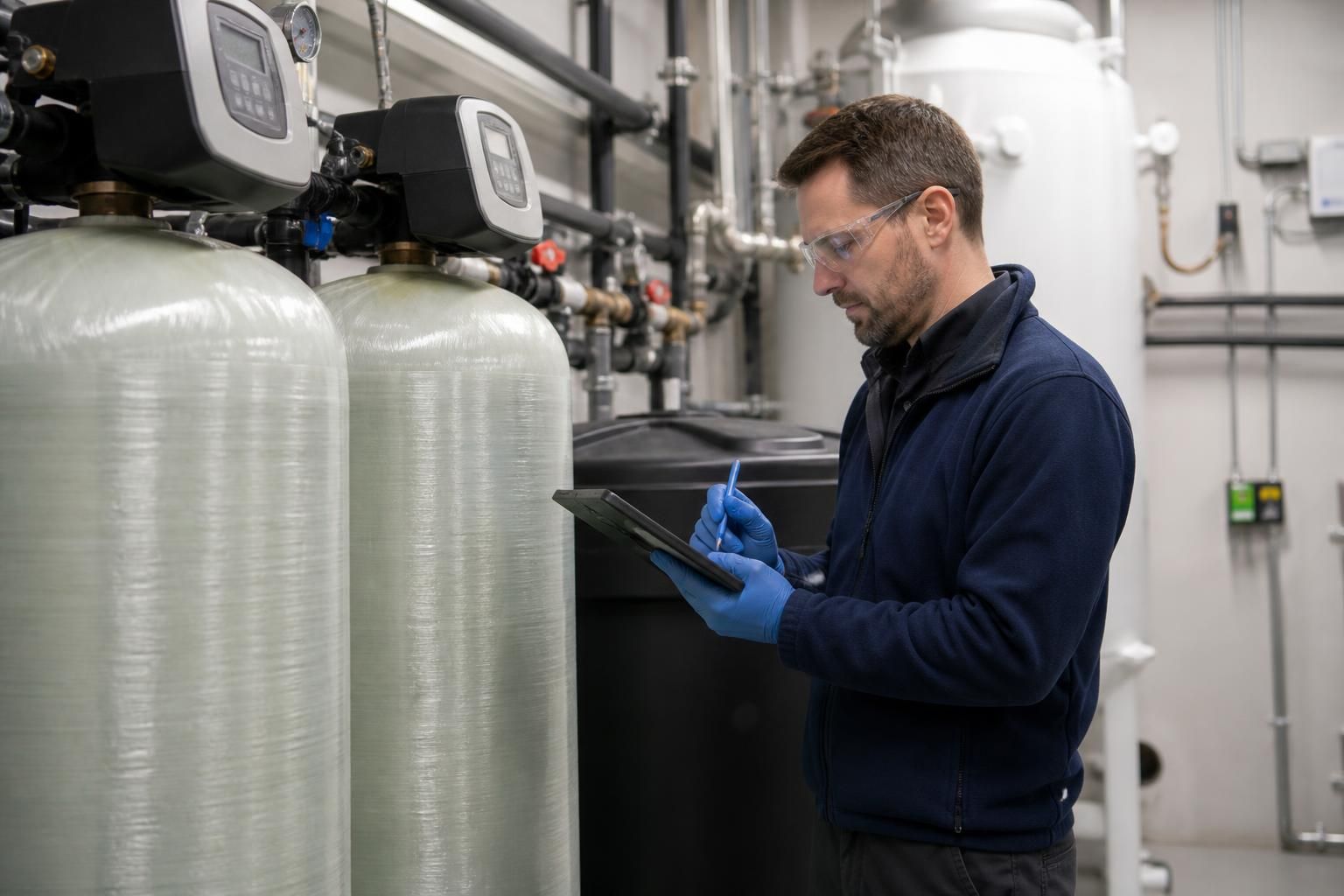
Water Softening and Conditioning Options Compared
The right approach depends on minerals present, intended water use, equipment sensitivity and management requirements. Comparing a commercial water conditioner, a commercial water softener system and water softener testing helps define scope and the level of ongoing control.
Commercial Water Conditioners
Conditioners are suited to applications where the objective is to manage scale formation or alter water characteristics without removing all dissolved hardness. Their suitability depends on the incoming water, equipment affected and the treatment method used.
Commercial Water Softener Systems
A commercial water softener system is appropriate where hardness reduction is required for process water, hot-water equipment or other sensitive installations. It normally needs defined operating controls, suitable sizing and planned maintenance to remain effective.
Point-of-Use Treatment
Treatment at selected outlets or equipment can be considered when only specific processes are affected by hard water. This can limit the treatment scope, but the individual outlets, usage patterns and hygiene controls still need to be assessed.
Site-Wide Treatment
A centralised softening or conditioning arrangement treats water for multiple outlets or systems. It may be suitable where hardness affects several parts of a building, provided the system is correctly specified and integrated with wider water management procedures.
Water Softener Testing and Monitoring
Testing helps establish whether a softener or conditioner is operating as intended and whether treated water remains suitable for its use. Monitoring can identify changes in performance and support documented management of the installation.
What Commercial Water Softening Support Includes
Support can include reviewing existing treatment arrangements, interpreting water quality results, checking how equipment is maintained, and identifying control measures for scale and mineral-related issues. Recommendations are documented to support operational decisions and ongoing water hygiene management.
Water Quality Assessment
Assessment considers hardness, dissolved minerals and other relevant water quality characteristics to establish whether softening or conditioning is appropriate for the premises and its water systems.
Treatment Suitability Review
Existing equipment and proposed treatment approaches are reviewed against system requirements, water use, occupancy and operational constraints, helping ensure that recommendations are proportionate and technically suitable.
Scale Risk Control
Advice identifies where mineral deposition may affect appliances, heat-exchange equipment, pipework or water-using processes, with control measures selected according to the level and nature of the risk.
Equipment and System Integration
Softening and conditioning arrangements are considered alongside storage, distribution and other water hygiene controls, so treatment does not sit in isolation from the wider system.
Maintenance and Control Checks
Support can define the checks, servicing considerations and operational records needed to demonstrate that treatment equipment remains controlled and suitable for continued use.
Documented Recommendations
Findings and recommendations are recorded clearly, providing an auditable reference for facilities teams, contractors and compliance reviews connected with water treatment and hygiene management.
Which Water Softening Support Is Right for Your Business?
Does Your Commercial Water Softener Need Testing?
Begin with system history, water characteristics, equipment condition and management duties. Testing may clarify mineral content, while specialist review helps determine whether adjustment, maintenance or replacement best suits operational requirements.
Read moreWhen Does a Business Need Commercial Water Conditioning?
Conditioning may be appropriate where hardness causes scale, affects heating efficiency, or complicates process water use. Review should consider operational impact, treatment objectives, monitoring requirements and statutory water hygiene responsibilities.
Read moreWhat Should a Commercial Water Softener Maintenance Plan Include?
A maintenance plan should define inspection intervals, regeneration or cleaning procedures, salt and consumables checks, fault reporting, records, responsible personnel, escalation arrangements, and review of treatment performance against agreed objectives.
Read moreWho Is Responsible for Managing a Commercial Water Softener?
Responsibility should sit with a named duty holder who coordinates servicing, records decisions, reviews test results and escalates defects. Contractors provide technical input, but management retains oversight of compliance requirements.
Read moreWhat Should a Commercial Water Conditioning Review Assess?
A conditioning review should assess water hardness, inlet and outlet quality, equipment suitability, bypass arrangements, chemical or salt controls, discharge considerations, monitoring evidence, and alignment with site risk assessment requirements.
Read moreQuestions to Ask Before Proceeding
Before selecting or changing a commercial water softener system, establish what the proposed work will cover, which parts of the water system may be affected, and how the treatment objective will be assessed. Ask who will carry out the work, what relevant competence they hold, and whether the recommendations are based on current water quality information and site conditions.
Clarify what evidence will be provided, how findings and actions will be reported, and which timescales apply to assessment, installation, testing or remedial work. The agreement should also identify who is responsible for routine checks, servicing, salt or consumable management, record keeping, escalation of faults and reviewing the arrangement when site use or water quality changes.
What should the treatment achieve?
Ask whether the priority is reducing hardness and scale formation, managing a specific water quality concern, protecting equipment, or supporting a wider water hygiene control programme. Confirm which outlets and processes require treated water, which require untreated or partially treated water, and how the result will be assessed using suitable site information and water quality evidence.
Once these points have been answered, the proposed treatment can be considered against the current water quality information, system design and site risk assessment. This helps distinguish a genuine water treatment requirement from equipment that may be unsuitable, unnecessary or inadequately controlled.
Blue Fish Water Management Ltd can help interpret the available information and identify practical next steps, including whether further assessment, testing or remedial action is appropriate before a commercial water softener system is selected or changed.
Discuss Your Water Softening Requirements
Discuss your commercial water softening or conditioning requirements with Blue Fish Water Management Ltd. We can review the available information, explain relevant considerations and help identify a proportionate next step for your premises and water management arrangements.