
Cold Water Tank Cleaning Services
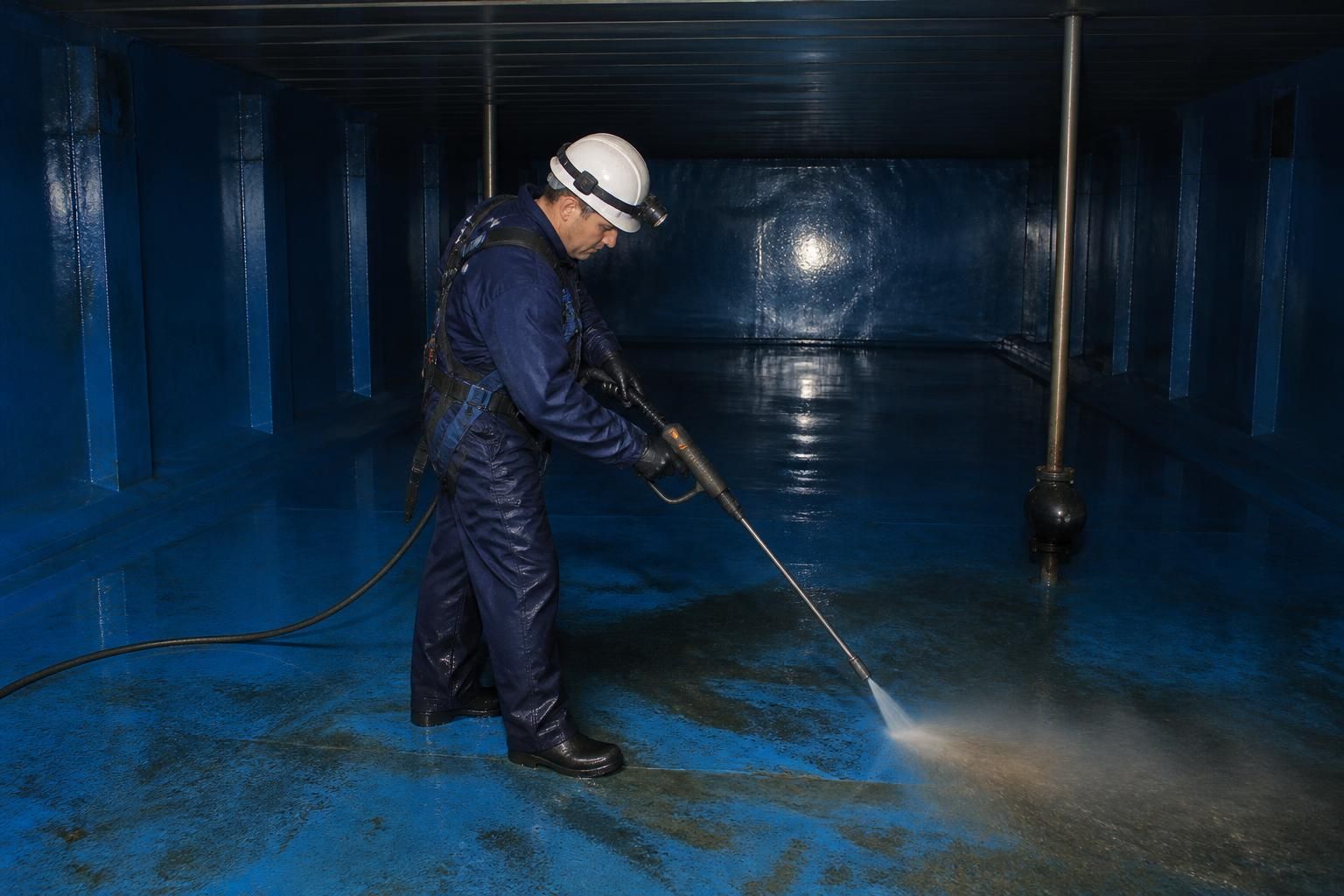
Cold water tank cleaning services remove sediment, scale and contamination from storage tanks serving commercial, industrial and domestic properties nationwide. Planned cleaning helps maintain water quality, support legionella control and provide documented evidence for ongoing UK water safety compliance.
Water Safety
Cold water tank cleaning supports water safety, clarifies UK responsibilities, and gives dutyholders a documented basis for proportionate remedial decisions.
What the Cleaning Service Covers
Cold water tank cleaning is a controlled maintenance process that examines the tank, removes deposits, disinfects accessible surfaces and returns the installation to suitable service. Treatment is adapted to the tank’s design, stored-water use and observed condition.
The engagement may include pre-work checks, safe access arrangements, cleaning records, post-work observations and recommendations for any follow-up maintenance or remedial action.
Tank Condition Review
The service begins with checks of the tank’s accessible condition, design and stored-water use to determine suitable cleaning controls.
Deposit Removal
Sediment, scale and other removable deposits are cleared from the tank and accessible surfaces as part of the cleaning process.
Surface Disinfection
Accessible internal surfaces are disinfected using a method suited to the installation and its observed condition.
Documented Completion
Cleaning records and post-work observations provide clear evidence of the work completed and the tank’s condition at completion.
Follow-Up Recommendations
Where cleaning identifies defects or wider maintenance needs, the engagement can record proportionate recommendations for remedial action.
Practical Outputs from Cold Water Tank Cleaning
Effective cold water tank cleaning services combine competent personnel, suitable methods and clear completion records. Clients should receive findings on tank condition, any limitations affecting the work, and practical information to support planned maintenance and compliance decisions.
Competent Cleaning Planning
The work is planned around the tank’s construction, access arrangements, connected services and condition. This helps ensure the cleaning method is suitable for the installation and aligned with the site’s water safety controls.
Pre-Work Condition Findings
Before cleaning, relevant observations can be recorded, including visible sediment, scale, corrosion, damage or defects affecting the tank and its fittings. These findings help distinguish cleaning requirements from wider remedial needs.
Controlled Removal of Contamination
Cleaning removes accumulated sediment, scale and other contamination using methods appropriate to the storage tank and the surrounding system. Work is carried out with due regard to protecting water quality and avoiding unnecessary disruption to connected services.
Post-Cleaning Inspection
The tank and accessible components can be checked after cleaning to identify remaining defects, deterioration or conditions that may affect future water hygiene management. Any limitations on the inspection should be noted clearly.
Completion Documentation
Clients receive a clear record of the work completed, the tank or system covered, relevant findings and any limitations. This provides useful evidence for maintenance records, internal reviews and compliance audits.
Practical Remedial Recommendations
Where cleaning identifies defects or conditions requiring further attention, recommendations can be set out in practical terms. This supports proportionate decisions about repairs, replacement, monitoring or inclusion in a wider legionella control programme.
Questions to Ask About Cold Water Tank Cleaning
When should cold water tanks be cleaned?
Before commissioning, confirm the scope covers inspection, isolation, draining, physical cleaning, disinfection, refilling and verification, with responsibilities, access requirements, risk controls and completion documentation clearly formally agreed before work begins.
Read moreHow is cold water tank cleaning carried out?
A competent technician isolates the tank, drains it, removes deposits, cleans internal surfaces, disinfects appropriately, then refills and records observations, corrective actions and verification results for the client’s compliance records.
Read moreIs cold water tank cleaning required by law?
Legislation does not prescribe a universal cleaning interval, but dutyholders must manage risks under health and safety requirements. Cleaning may be necessary where assessment identifies contamination, deterioration or unsafe conditions.
Read moreHow do you choose a cold water tank cleaning service?
Assess providers by documented competence, clear method statements, suitable risk controls, tank access planning, disinfection and verification arrangements, plus reporting that identifies defects and supports ongoing water safety decisions.
Read moreWhat happens if a cold water tank is not cleaned?
Without cleaning, sediment and scale can accumulate, shelter contamination and reduce usable capacity. Deteriorating tank surfaces may also complicate inspection, increase maintenance needs and undermine overall confidence in water quality.
Read moreWhat to Expect from the Cold Water Tank Cleaning Process
Cold water tank cleaning services begin with a review of the tank’s use, configuration and relevant site controls. The work is then planned around safe isolation, suitable access and the condition of the storage arrangement, with any restrictions identified before cleaning starts.
After the work, advice should distinguish between observations, completed actions and recommendations for further attention. This gives dutyholders a clear record of what the cleaning addressed, what remains outside its scope and which findings may require separate maintenance or risk assessment.
Understanding the tank and its role
The review considers the tank’s location, connections, condition as previously recorded and relationship to the wider water system. It also identifies information that may affect the work, such as access arrangements, isolation requirements or known system issues. Where information is incomplete, this can be recorded as a limitation rather than treated as an assumption.
Once the work has been reviewed, any remaining concerns can be considered alongside the wider water system and existing control measures. Where cleaning identifies defects, restricted access or other issues beyond its scope, these can be referred for appropriate remedial work or further assessment.
This provides a clear basis for deciding whether the tank can return to normal service, requires additional attention or should be included in a revised maintenance plan.
Discuss Your Cold Water Tank Cleaning Requirements
If you are reviewing a tank’s cleaning requirements, discuss the arrangement with Blue Fish Water Management Ltd. Share relevant site information to confirm suitability, clarify the proposed scope and agree the next practical step.