
Pool & Swimming Pool Chlorination
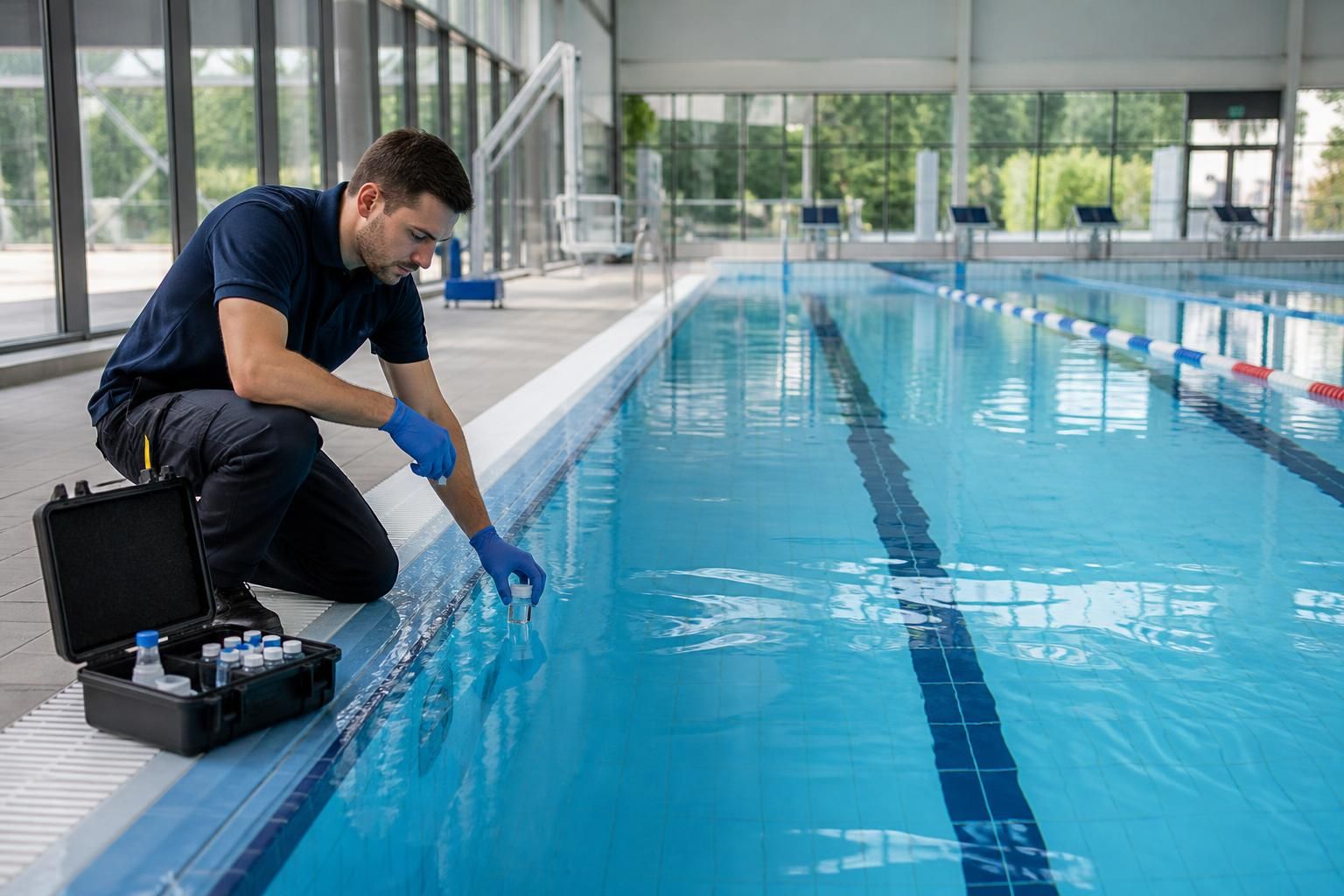
Pool chlorination is the controlled use of chlorine to disinfect swimming-pool water, helping manage harmful microorganisms and maintain suitable bathing conditions. Blue Fish Water Management assesses treatment requirements, applies appropriate procedures and supports operators with practical water-safety guidance.
Pool Chlorination Service Specification
A properly managed pool chlorination programme brings together site assessment, dosing requirements, water-quality checks, operational records and verification. The specification below outlines the technical activities, compliance considerations and control measures used to maintain consistent, documentable pool hygiene.
Pool System Assessment
The specification starts with a review of the pool, circulation arrangement, water-treatment equipment and operating controls. This establishes the factors that affect chlorine demand, distribution and overall disinfection performance.
Chlorine Dosing Requirements
Chlorine dosing is considered in relation to pool usage, water volume, circulation and the condition of the treatment system. The aim is to support a controlled and consistent disinfectant level rather than relying on unverified dosing assumptions.
Water-Quality Parameters
Routine checks consider chlorine and pH alongside relevant operating conditions that can influence treatment effectiveness. Results provide an evidence base for adjusting controls and identifying deterioration in water quality.
Equipment and Plant Controls
Dosing points, chemical handling arrangements, pumps, controllers and associated plant are reviewed as part of the management approach. Defects, fouling or poor adjustment can be recorded for corrective maintenance or remedial work.
Sampling and Testing
Water samples can be taken for suitable laboratory analysis where additional verification is required. Blue Fish provides UKAS-accredited water testing as part of its wider water hygiene service capability, with results used to support documented control decisions.
Records and Compliance Evidence
A properly managed programme retains monitoring results, corrective actions, maintenance information and relevant test reports. These records help operators demonstrate that pool chlorination controls have been applied, reviewed and followed up.
Pool Chlorination: Responsibilities, Compliance and Results
In a chlorine swimming pool, free chlorine is the active disinfectant available to control microorganisms, while combined chlorine is chlorine that has reacted with contaminants and may contribute to odour or irritation. pH affects chlorine performance, so readings should be interpreted together rather than treating chlorine concentration as an isolated result. Water clarity, circulation, filtration and bather loading also influence how effectively disinfection is maintained.
The pool operator remains responsible for following the site’s water-safety procedures, keeping suitable records and acting on results that fall outside the specified operating range. Results should be considered as trends as well as individual readings: a declining disinfectant level, rising combined chlorine or recurring pH movement can indicate a dosing, circulation, filtration or contamination issue that requires investigation and documented corrective action.
What determines the dosing method?
Manual dosing can be suitable for smaller or less heavily used pools when procedures and checks are applied consistently. Automatic systems measure selected water-quality parameters and adjust chemical feed, but they still require calibration, maintenance and independent verification. Any dosing arrangement should be assessed against the pool’s design, operating conditions and risk assessment rather than selected solely on equipment type.
Before arranging pool chlorination, the treatment scope should be matched to the pool design, circulation and filtration plant, dosing arrangements, usage patterns and existing water-quality records. This establishes whether the requirement is routine operational control, investigation of recurring results or corrective treatment following a specific issue.
Blue Fish Water Management can review the available information, identify any gaps in the control process and set out practical actions for the responsible operator. The resulting approach should make clear what is to be tested, how findings will be assessed and which further measures are needed to maintain suitable swimming-pool water quality.
Pool Chlorination for Different Facilities and Operating Conditions
Pool chlorination requirements differ between leisure centres, hotels, schools, health clubs and other commercial facilities. The appropriate approach depends on pool configuration, usage intensity, water chemistry, contamination history and the level of operational support required.
Leisure and fitness facilities
Public leisure centres, gyms and health clubs may operate several pools with different usage patterns. Chlorination arrangements should be considered for each basin, taking account of its design, dosing equipment and operating profile rather than applying one assumption across the whole site.
Hotel and guest accommodation pools
Hotel pools require chlorination controls that fit around changing occupancy and the responsibilities of the facilities team. Clear procedures for checking disinfectant and pH, recording results and escalating abnormal readings help maintain consistent operational control.
School and education pools
School pools need a defined approach that reflects timetabled use, periods of lower activity and the people responsible for day-to-day checks. Chlorination procedures should be practical for the site team and supported by clear records and corrective-action steps.
Multiple-pool sites
Where a facility contains more than one pool, each basin may have different circulation arrangements, water temperatures, dosing demands and usage patterns. Reviewing them separately helps identify whether the existing chlorination controls are suitable for each system.
New or recommissioned pool systems
Newly installed or recommissioned pools need chlorination arrangements to be checked against the pool plant, dosing setup and operating procedures before normal use. Establishing appropriate testing and record-keeping processes helps the operator identify problems during the early operating period.
Pools with recurring control issues
Repeatedly low disinfectant readings, elevated combined chlorine or unstable pH can indicate a wider control problem rather than an isolated result. A structured review can help distinguish between dosing faults, plant limitations, testing issues and operational practices requiring attention.
Sites requiring operator support
Some pool operators need more than treatment work alone and may require help interpreting results, reviewing procedures or clarifying responsibilities. The scope can therefore be aligned with the site team’s existing knowledge, records and capacity to manage ongoing chlorination controls.
Technical Standards for Pool Chlorination
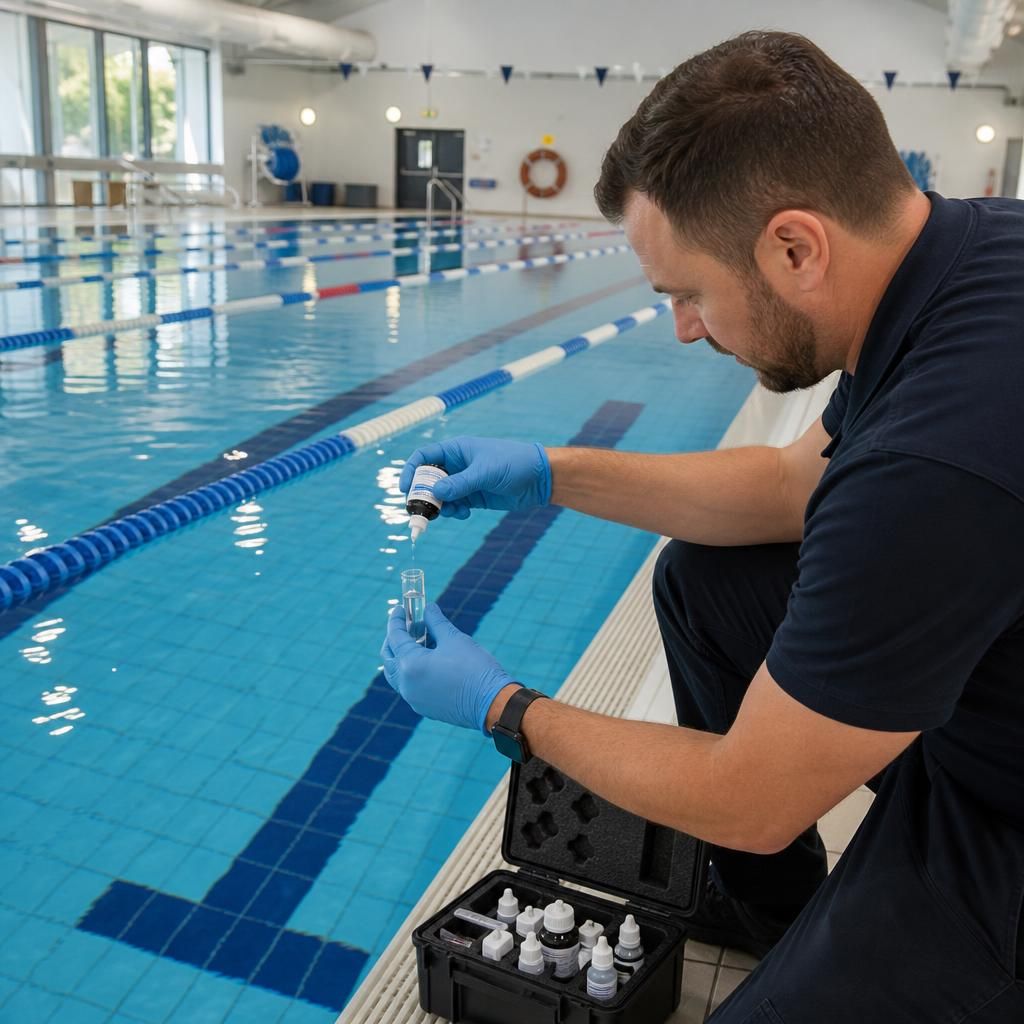
Technical standards for pool chlorination are the documented methods and checks used to confirm that disinfection is properly controlled, rather than relying on a single chlorine reading. Blue Fish Water Management considers the relationship between dosing, circulation, filtration, pH and sampling when reviewing a swimming-pool system.
Experienced personnel assess site information, operating records and test results before recommending treatment or corrective action. Where laboratory analysis is required, UKAS-accredited water testing supports dependable interpretation of microbiological and chemical findings. This evidence-based approach helps distinguish an isolated result from a wider control weakness.
Quality controls include clear sampling arrangements, traceable reporting and practical recommendations linked to the pool’s configuration and use. Clients receive a defined record of findings and actions, supporting consistent management and informed decisions by the responsible operator. Follow-up work can then be prioritised according to the identified water-safety risk.
Questions to Ask Before Appointing a Pool Chlorination Provider
What competence should a pool chlorination provider demonstrate?
Ask for evidence of relevant pool-water competence, documented procedures, clear limits of responsibility, and reports that identify findings, corrective actions, required follow-up, and operator duties before appointment and after treatment.
Read moreWhat accreditation should a pool chlorination provider hold?
Ask which accreditation applies to the proposed testing or inspection, verify its scope and current status, and confirm reports identify the accredited activities rather than implying every service is accredited.
Read moreHow will the provider determine the correct pool chlorination method?
They should review pool layout, volume, circulation, filtration, dosing equipment, bather loading, water-quality history and contamination risks, then specify treatment, sampling points, controls and corrective measures required on site.
Read moreWhat follow-up support is included after pool chlorination?
Confirm whether follow-up includes reviewing post-treatment results, interpreting trends, updating control measures, advising on defects, and agreeing responsibilities for repeat testing, remedial work and ongoing monitoring where required by operators.
Read moreWhat should a pool chlorination provider include in its report?
A report should identify the pool and sampling date, record locations, test parameters, results and units, explain relevant limits or deviations, and distinguish observations from recommendations requiring operator action clearly.
Read moreDiscuss Your Pool Chlorination Requirements
Discuss your swimming-pool chlorination requirements with Blue Fish Water Management to clarify the appropriate scope, review any available records and identify practical next steps. Contact the team for informed advice and a tailored quotation suited to your facility.