
GRP Water Storage Tank Disinfection
GRP (glass-reinforced plastic) water storage tank disinfection controls contamination in tanks serving commercial, industrial and domestic water systems. Blue Fish Water Management provides planned treatment to help responsible businesses restore hygienic, compliant storage safely.
Safe Water
Understand how GRP water storage tank disinfection supports safe water systems, UK responsibilities, decisions and action when contamination risks arise.
What GRP Tank Disinfection Includes
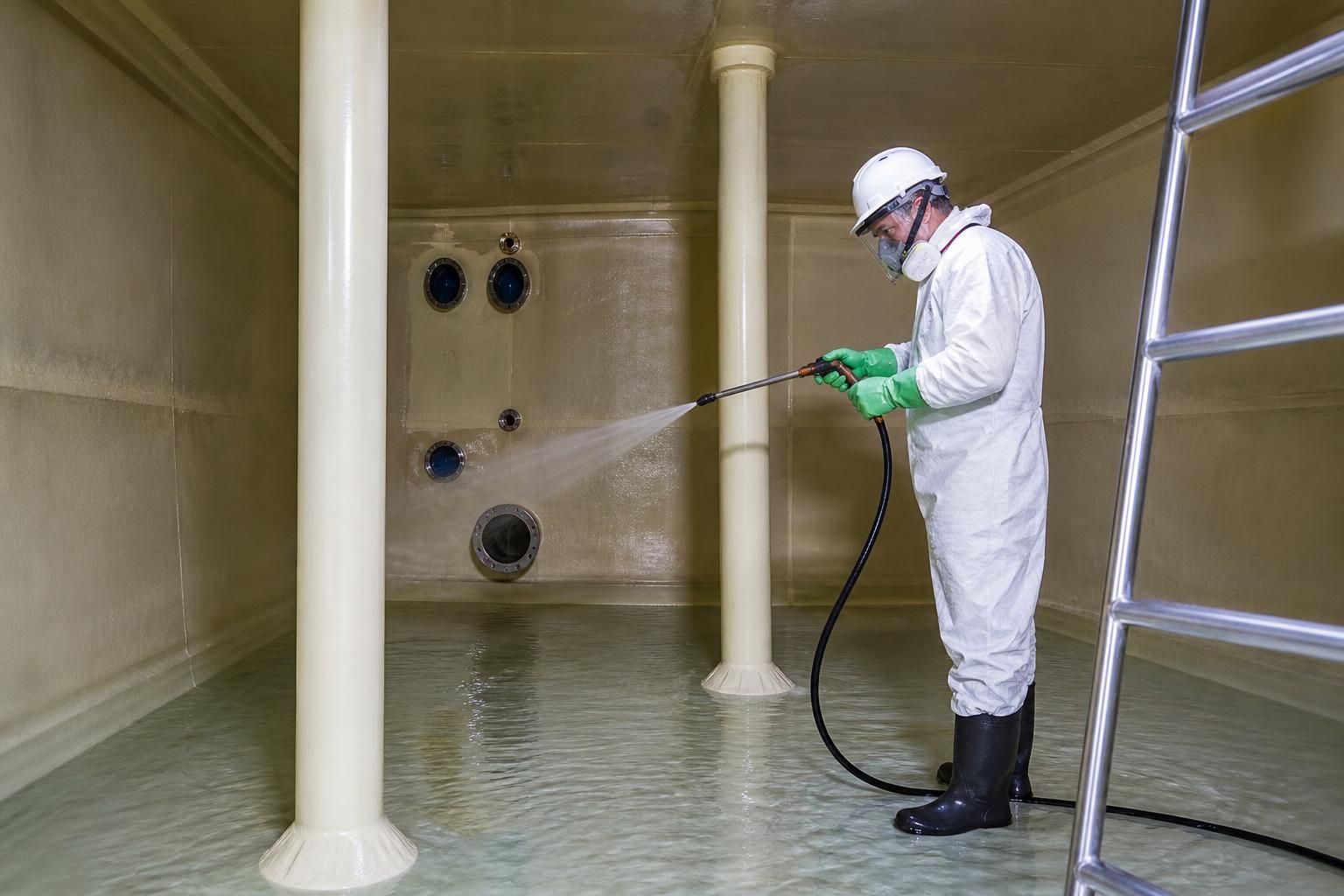
GRP water storage tank disinfection combines inspection, deposit and biofilm removal, chemical treatment, and controlled rinsing. The method considers the tank’s condition, configuration and connected pipework.
The engagement can include a treatment plan, post-disinfection water testing where appropriate, and records for the water hygiene file. These provide a clear basis for deciding whether the system can return to service.
Tank condition assessment
The GRP tank is inspected for deposits, biofilm, damage, access constraints and features that may affect the disinfection method.
Deposit and biofilm removal
Accumulated deposits and biofilm are removed as part of the preparation needed before chemical treatment.
Controlled chemical treatment
A planned chemical disinfection is applied with regard to the tank’s construction, condition and intended use.
Rinsing and system checks
The tank and relevant connected pipework are rinsed and checked so the system can be assessed before returning to service.
Post-treatment water testing
Water samples can be arranged after disinfection where appropriate, providing evidence to support the next operational decision.
Clear compliance records
Treatment details, observations and relevant test results can be recorded for inclusion in the water hygiene file.
Key Deliverables for GRP Tank Disinfection
For a GRP tank, the output should be more than completed treatment: competent work should leave an auditable account of decisions, controls applied, observations made and any restrictions or corrective actions identified before the installation is accepted for continued use.
Pre-treatment tank assessment
The work should begin with a documented review of the GRP tank, including its condition, access arrangements, connections, outlets and any visible defects that could affect safe disinfection or subsequent use.
Defined disinfection method
A clear method statement should set out the treatment approach, isolation requirements, control measures and checks needed to disinfect the tank without compromising connected water systems or exposing personnel to avoidable risk.
Condition and defect observations
The technician should record relevant findings such as damaged surfaces, defective covers, sediment, unsuitable fittings or other hygiene concerns. These observations help distinguish a disinfection need from wider remedial work.
Water quality evidence
Where sampling is required, post-treatment water testing provides objective evidence for assessing whether the tank is suitable for return to service. Results should be linked to the tank, sampling point and relevant records.
Completion and compliance records
The completed documentation should identify the tank treated, date of work, treatment controls, inspection findings, test results and any limitations. It should also state outstanding actions or restrictions so responsible persons can manage the installation appropriately.
Practical follow-up recommendations
Advice should address the issues that may allow contamination to recur, such as poor tank hygiene, damaged components or inadequate inspection arrangements. Recommendations can then inform planned monitoring, maintenance or remedial works.
Questions to Ask About GRP Water Storage Tank Disinfection
What does GRP water storage tank disinfection involve?
GRP tanks require a compatible disinfection method, inspection for surface damage, controlled chemical contact, thorough rinsing, and verification that residuals and water quality meet requirements before recommissioning of the system.
Read moreAre GRP water storage tanks suitable for chemical disinfection?
Generally, yes. GRP is commonly compatible with controlled chemical treatment, but the tank’s condition, lining, fittings, chemical concentration and contact time must be carefully assessed before treatment begins.
Read moreWhat risks can contamination pose in a GRP water storage tank?
Contamination can allow Legionella and other microorganisms to multiply, potentially compromising water safety and causing illness. Sediment, biofilm and debris may also obstruct outlets, impair inspection and complicate corrective treatment.
Read moreWhat should a GRP water storage tank disinfection record include?
A record should identify the tank, assessment findings, date, responsible personnel, method, chemicals and concentrations, contact time, rinse results, sample results, authorisation, outstanding defects and recommissioning decision, with evidence appended.
Read moreHow is GRP water storage tank disinfection verified before recommissioning?
Verification should combine inspection, documented rinse and disinfectant-residual checks, and appropriately timed water-quality sampling. Results must be assessed against acceptance criteria, with any defects resolved before authorised return to service.
Read moreWhat to Expect from GRP Water Storage Tank Disinfection
GRP water storage tank disinfection is a controlled process for reducing contamination within glass-reinforced plastic tanks and associated water systems. The appropriate method depends on the tank’s condition, access, configuration and the nature of the hygiene concern, so treatment should follow an assessment rather than a fixed routine.
Blue Fish Water Management explains the proposed scope, precautions and any limitations before work begins. Findings are discussed clearly after the tank has been examined, including defects, access issues or further remedial work that could affect safe return to service.
Agreeing the work
Before work begins, Blue Fish Water Management reviews the relevant tank and system information, including access arrangements, isolation requirements and any known contamination issue. The agreed scope should identify the areas to be treated, precautions required and limitations that could affect the work or the tank’s return to service.
Once disinfection is complete, the findings and any test results can be used to determine whether the GRP water storage tank is suitable for return to service or whether further action is required. Any restrictions, remedial recommendations or monitoring needs should be addressed before the system is placed back into use.
Blue Fish Water Management can explain the outcome to the responsible person and support the next stage with practical compliance advice, follow-up monitoring or remedial works where appropriate. This gives the business a clear basis for documenting the decision and maintaining ongoing control of water hygiene risks.
Discuss Your GRP Water Storage Tank Disinfection Requirements
Discuss your GRP water storage tank disinfection requirements with Blue Fish Water Management. Share the tank’s use, condition and access arrangements so Blue Fish Water Management can assess the proposed approach, confirm suitability and agree the next practical step.