
Mains Chlorination for Safe Water Systems
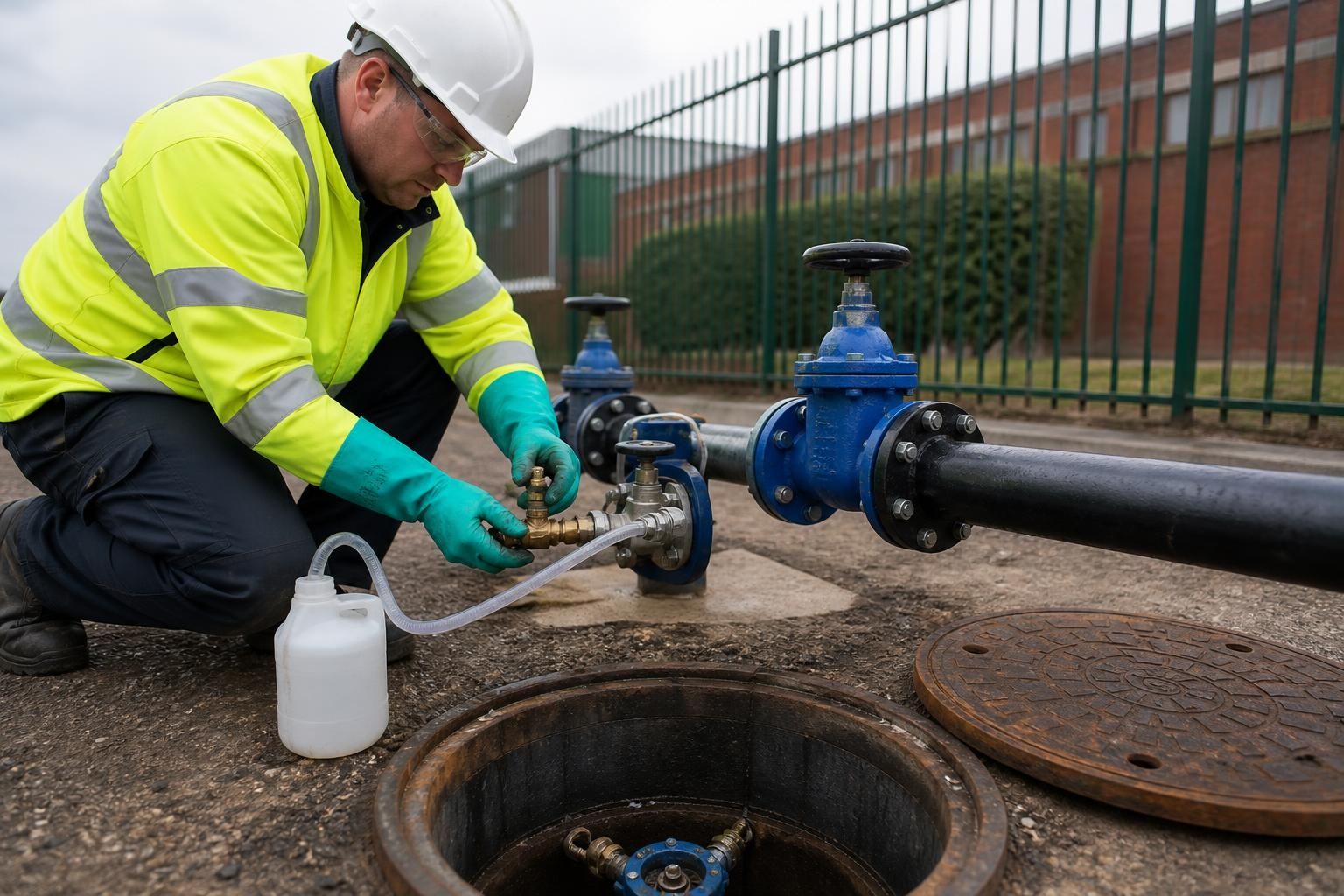
Mains chlorination is the controlled dosing of chlorine into newly installed, altered or contaminated water mains to disinfect internal surfaces. Blue Fish Water Management supports contractors, facilities teams and duty holders with evidence-led procedures that help demonstrate safe, compliant commissioning.
Compare Mains Chlorination Options
The appropriate mains chlorination approach depends on the system’s condition, project scope and commissioning requirements. Comparing targeted, full-system and remedial options helps duty holders select a proportionate process, define responsibilities and identify the evidence needed for compliance.
New-Main Commissioning
Used for newly installed water mains before connection or handover. The process covers the relevant pipework and associated fittings, with flushing, chlorine dosing, contact and verification arranged around the construction programme.
Sectional Chlorination
A targeted approach for a defined branch, extension or altered section of mains. It limits the work to the affected area where the rest of the system is demonstrably suitable, reducing disruption while retaining a clear commissioning record.
Full-System Chlorination
Appropriate where contamination may affect interconnected mains or the system boundary cannot be reliably isolated. It requires broader coordination of outlets, isolation points, flushing arrangements and sampling to assess the system as a whole.
Remedial Re-Chlorination
Used when verification identifies unsatisfactory results or when contamination is suspected after installation, alteration or an incident. Further investigation, corrective work and repeat disinfection may be needed before the mains can be accepted.
Staged Project Chlorination
Suitable for phased developments or complex installations brought into service in sections. Each stage is managed against defined boundaries and records, helping contractors and duty holders track which mains have been treated, tested and released.
What Mains Chlorination Includes
A structured mains chlorination programme covers preparation of the pipework, controlled dosing, contact time, flushing, sampling and documented verification. It also clarifies site responsibilities and identifies any follow-up action needed before the system is returned to service.
Pipework Preparation
The mains are reviewed for configuration, access points, isolation arrangements and construction debris before disinfection begins. Preparation helps ensure chlorine reaches the internal surfaces rather than being obstructed by sediment or trapped water.
Controlled Chlorine Dosing
Chlorine is introduced in a controlled manner appropriate to the mains configuration and condition. The process is managed to support consistent disinfectant distribution while protecting connected equipment and maintaining clear site controls.
Contact Time Control
The disinfectant is retained in the isolated mains for the required contact period. This stage is monitored as part of the procedure, with the system kept out of service until the planned disinfection process has been completed.
Flushing and System Recovery
Following contact, the mains are flushed in a controlled sequence to remove disinfectant and displaced materials. Discharge arrangements, downstream connections and any precautions needed during recommissioning are considered.
Verification Sampling
Samples are taken from suitable points after flushing to assess whether the mains are ready for use. Testing provides objective evidence for the commissioning record and can identify the need for further investigation or treatment.
Records and Handover
The completed work is recorded with relevant site details, procedure information, sampling results and any outstanding actions. This gives contractors, facilities teams and duty holders a clear evidence trail for handover and compliance management.
Mains Chlorination Questions and Answers
When is mains chlorination required?
Suitability depends on pipework history, contamination risk, test results and commissioning requirements. A competent specialist can review records, define responsibilities and recommend proportionate verification for duty holders before handover.
Read moreWhat does mains chlorination involve?
Work typically includes reviewing design information, isolating sections, calculating dose, introducing disinfectant safely, monitoring conditions, managing affected water, and recording results for handover and compliance for responsible parties on site.
Read moreWhat happens after an unsatisfactory mains chlorination result?
An unsatisfactory result should trigger investigation of sampling, laboratory findings, disinfection conditions and site records. Further corrective work and repeat verification may be needed before responsible parties accept the system.
Read moreWho should arrange mains chlorination for a new water main?
The main contractor or project developer usually coordinates chlorination, with the water undertaker and competent specialists where required. The duty holder should confirm responsibilities, records and acceptance requirements before commissioning.
Read moreWhat records should mains chlorination provide?
Records should include the disinfection method, dose calculations, contact conditions, flushing details, sample identifiers, laboratory results, deviations, corrective actions and approval signatures, creating an auditable commissioning trail for relevant stakeholders.
Read moreWhat to Clarify Before Mains Chlorination
Before proceeding, confirm which sections of the mains are included, why chlorination is required and who is responsible for isolations, access and site coordination. Ask how the work will be carried out by competent personnel, what information is needed about the installation and how potential risks to connected equipment or users will be controlled.
Agree what evidence will be supplied, including records of the work, sample results and any recommendations arising from the findings. Clarify the reporting format, expected timescales, arrangements for addressing unsatisfactory results and the ongoing responsibilities for monitoring, maintenance and future alterations to the water system.
What should the scope define?
Ask for a marked-up drawing, schematic or other clear record identifying the sections to be treated, isolation points, access locations and any parts excluded from the work. Clarify whether the activity relates to a new installation, an alteration, suspected contamination or another defined trigger, and establish how interfaces with existing supplies will be managed.
Once these points are settled, the available system information can be reviewed against the proposed disinfection method. Any constraints, such as sections that cannot be isolated or components requiring protection, should be resolved before the work is authorised.
This provides a clear basis for coordinating the activity and accepting the disinfected main back into use. Blue Fish Water Management can advise on technical requirements and help interpret the outcome where further action is indicated.
Discuss Your Mains Chlorination Requirements
If you need to clarify whether mains chlorination is appropriate for a particular installation, contact Blue Fish Water Management to discuss the circumstances, available information and the practical next step for your project.