
Water Hardness & TDS Testing
Water hardness and total dissolved solids (TDS) testing measures dissolved minerals and other substances in water systems. Blue Fish Water Management provides evidence-based checks for industrial and commercial sites, supporting informed treatment decisions, system monitoring and water quality compliance.
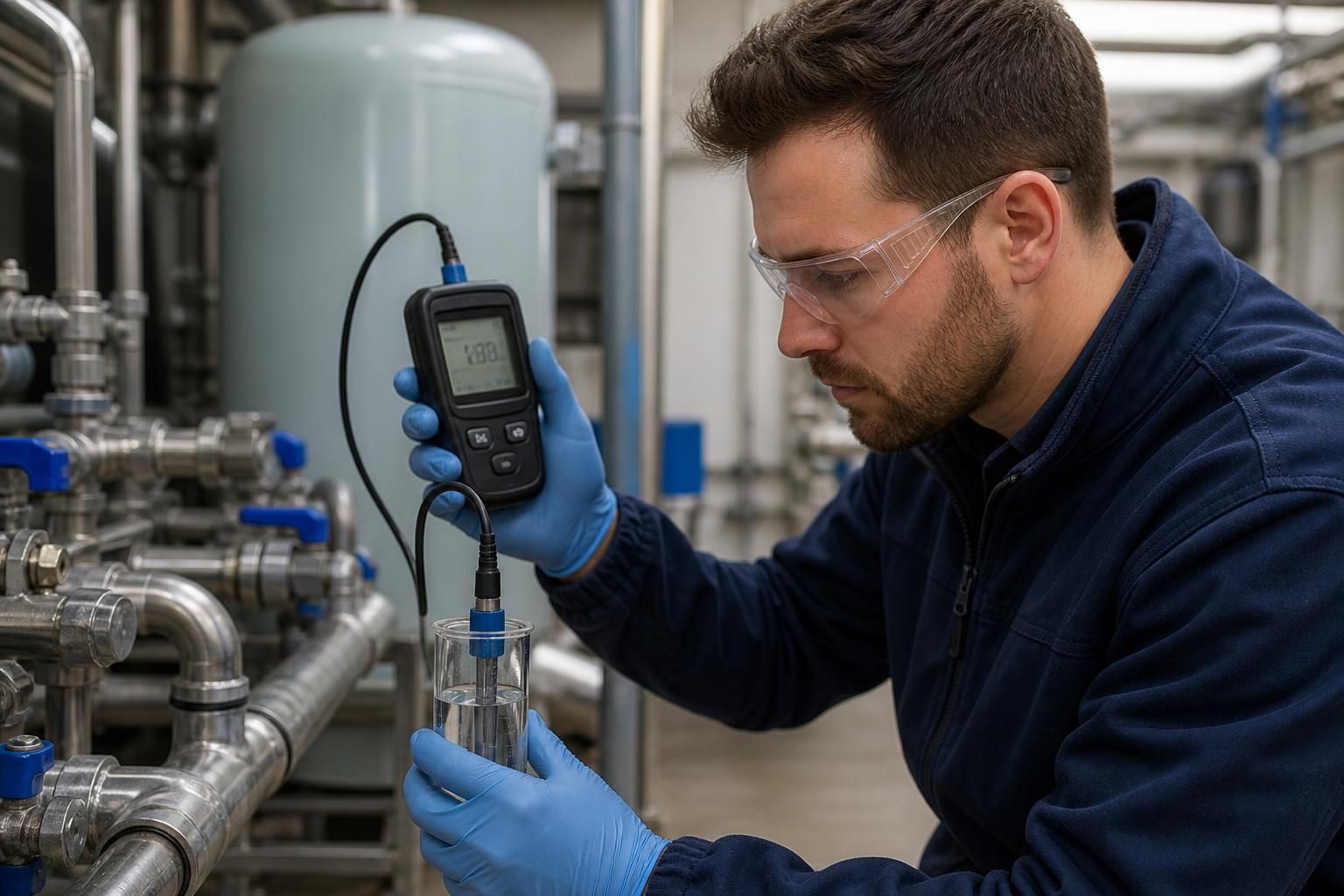
Choose the Right Level of Hardness and TDS Testing
Hardness and TDS testing can be undertaken as a straightforward field check, a laboratory-led investigation or part of wider system monitoring. The appropriate approach depends on the water source, operational risks, treatment arrangements and compliance evidence required.
Rapid field screening
Portable meters and field test kits provide an initial indication of hardness or TDS at selected outlets. This approach is suitable for routine checks, outlet comparisons and identifying changes that may require further investigation.
Laboratory analysis
Laboratory-led testing provides documented results where greater analytical confidence or formal water quality evidence is required. It is appropriate for investigations, compliance records and decisions that cannot rely on an indicative field reading alone.
Source and outlet comparison
Testing water at the source, after treatment and at representative outlets helps show how hardness and dissolved solids change through the system. Comparing locations can help distinguish source conditions from treatment or distribution effects.
Treatment performance verification
Pre- and post-treatment testing can be used to assess whether equipment such as softening or filtration processes is changing water chemistry as intended. Results can inform treatment review, maintenance and operational decisions.
Trend monitoring
Repeated hardness and TDS measurements at defined sampling points create a record of changing water chemistry. Trend data can support system monitoring, identify emerging variation and provide evidence for planned follow-up testing.
What a Hardness and TDS Testing Programme Includes
A practical programme should define sampling points, test methods, recording requirements and review criteria. It should also distinguish routine checks from investigation, so changes in hardness or TDS can be assessed against operational context and appropriate action.
Defined Sampling Points
Sampling locations are selected to reflect the incoming supply, treated water, storage arrangements and points of use relevant to the site. Consistent locations make results easier to compare over time and help identify changes within the system.
Hardness Measurement
Hardness testing assesses dissolved calcium and magnesium, with results recorded in a suitable unit for the system and reporting requirements. The findings can inform scale-control decisions, water treatment settings and investigations into deposits or reduced equipment performance.
TDS Assessment
Total dissolved solids testing provides an overall indication of dissolved material in the sample. TDS results are interpreted alongside the system type, source water and treatment regime rather than being treated as a standalone measure of water quality.
Trend Monitoring
Results are recorded in a structured format so changes in hardness and TDS can be compared between sampling points and review periods. Trends may help distinguish normal variation from a developing change in supply, treatment performance or system condition.
Review and Reporting
A clear report sets out the samples tested, methods used, results obtained and any relevant observations. Where findings fall outside defined control criteria, the review can identify whether further sampling, technical investigation or remedial action is appropriate.
Water Hardness & TDS Testing: Common Questions
What does a total hardness test of water reveal?
Hardness testing quantifies calcium and magnesium, while TDS testing estimates total dissolved material. Results help identify scaling potential, treatment requirements and changes requiring further investigation by responsible site teams.
Read moreWhich hard water test is suitable for a commercial water system?
Selection depends on the system and purpose: field hardness kits suit routine screening, while laboratory analysis provides defensible results for investigations, treatment verification, documented compliance decisions and trend review.
Read moreWhen should a water hardness test be repeated?
Repeat testing after treatment changes, abnormal results, significant alterations to system operation, or a scheduled monitoring interval. Compare findings with previous records to identify persistent change and guide further investigation.
Read moreWhat should a business do after an unexpected water hardness result?
Check the sample handling and test method first. Then, confirm the sampling point, review recent treatment or operational changes, and escalate persistent or material deviations for investigation and documented action.
Read moreWho should oversee hardness and TDS testing in a commercial water system?
A competent water hygiene lead or suitably trained site manager should coordinate sampling, records, method selection and escalation, with specialist input where results affect treatment or compliance.
Read moreWhat to Clarify Before Water Hardness & TDS Testing
Agree the testing purpose and boundaries
Confirm whether testing covers incoming supply, storage, distribution, process water or specific outlets, and identify any locations that must be compared. Establish whether hardness means total hardness, calcium hardness or another defined measure, and whether TDS will be measured directly or estimated from conductivity. The agreed scope should explain how each result will be used and which findings require further assessment.
Once the testing approach has been agreed, the results should be interpreted alongside the system’s design, treatment regime and operating conditions. A single reading may identify a change, but trend information is often more useful for distinguishing normal variation from a developing water quality issue.
Where results indicate a need for action, Blue Fish Water Management can help assess the findings and determine whether further investigation, treatment adjustment or continued monitoring is appropriate. This provides a clear basis for maintaining water quality records and reviewing the effectiveness of controls.
Discuss Your Water Hardness & TDS Testing Requirements
Discuss your water hardness or TDS testing requirements with Blue Fish Water Management. We can help you identify an appropriate testing scope, clarify the information needed and determine a practical next step for your site.