
Chlorine Monitoring & Control
Chlorine monitoring and control measures disinfectant levels in commercial, industrial and domestic water systems, helping responsible organisations identify variation, maintain effective treatment and support water hygiene compliance through appropriate testing, dosing adjustment, records and corrective action.
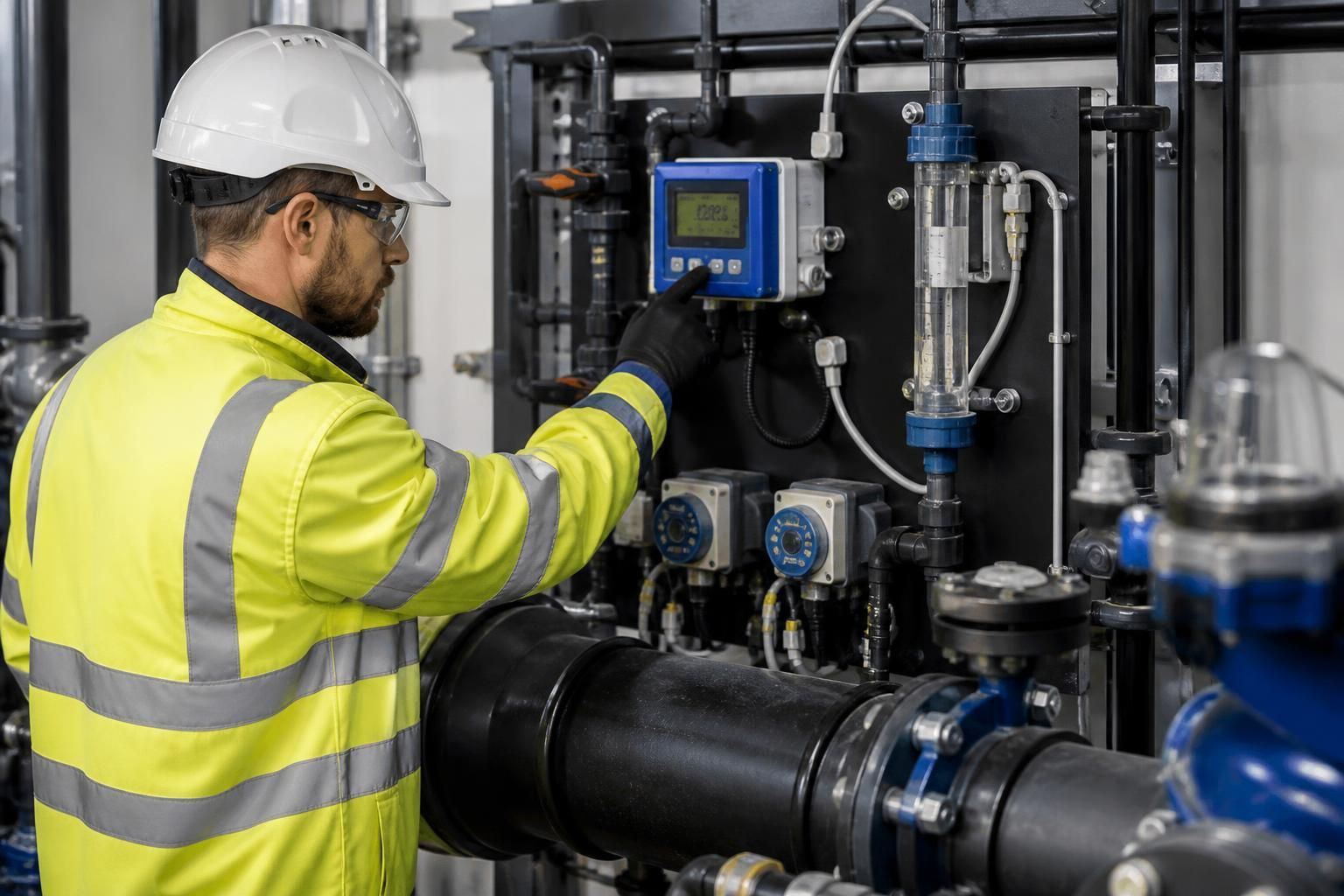
Compare Chlorine Monitoring & Control Approaches
Chlorine monitoring and control can range from periodic manual checks to continuous online measurement linked to dosing equipment. The appropriate approach depends on system complexity, risk profile, required evidence, operational oversight and how quickly changes must be identified and managed.
Periodic Manual Checks
An operator measures chlorine residual at defined points using a suitable field test method and records the result. This can suit smaller or less complex systems where conditions are stable and a responsible person can complete checks consistently.
Scheduled Sampling and Laboratory Testing
Routine samples are collected for analysis where documented evidence, independent testing or wider water-quality information is required. This approach is useful for compliance programmes and systems where decisions should be supported by traceable test results.
Portable Instrument Monitoring
Portable meters provide more consistent readings than basic visual or colour-comparison checks and can support investigations across multiple outlets or plant areas. They are suitable where operators need greater measurement confidence without installing fixed equipment.
Continuous Online Monitoring
Fixed sensors monitor chlorine levels at selected points and can show variation between routine visits. This is more appropriate for larger, complex or higher-risk systems where changes need to be identified promptly and ongoing records are important.
Monitoring Linked to Dosing Control
Online measurements can be connected to dosing equipment so that chemical feed is adjusted in response to measured conditions, subject to suitable limits, alarms and verification. This approach requires stronger technical oversight and is intended to maintain more consistent treatment while reducing reliance on manual adjustment.
Exception-Based Review and Corrective Action
Results are assessed against defined operating parameters, with unusual readings triggering investigation, repeat testing, dosing review or remedial work. This approach can be applied alongside manual or automated monitoring to turn measurements into documented water hygiene control.
What Chlorine Monitoring & Control Includes
A practical chlorine monitoring and control programme should connect measurement methods with defined responsibilities and usable records. Blue Fish Water Management reviews sampling points, instrument readings, dosing settings, trend information and follow-up actions so abnormal results are not overlooked.
Defined Monitoring Points
Monitoring locations are selected to represent the water system properly, helping readings reflect conditions at relevant storage, treatment and outlet points rather than relying on a single measurement.
Disinfectant Level Checks
Testing examines chlorine levels using methods appropriate to the system and monitoring plan. Results can then be compared consistently between sampling points and assessment periods.
Dosing Adjustment
Measured results are considered alongside dosing settings and system conditions. Where readings indicate variation, dosing equipment and control settings can be reviewed as part of the corrective process.
Trend Review
Recorded results are reviewed for sustained movement, recurring variation or isolated readings that require further investigation. Trend information supports proportionate decisions rather than relying on one result alone.
Corrective Action Routes
The programme sets out what should happen when results fall outside the organisation’s defined control range, including investigation, remedial action, repeat checks and escalation where appropriate.
Traceable Records
Clear records link each result to its sampling point, date, method, responsible person and follow-up action. This provides useful evidence for internal review, compliance audits and ongoing water hygiene management.
Choosing the Right Chlorine Monitoring & Control Support
When is continuous chlorine monitoring appropriate for a water system?
Monitoring-only support may suit stable systems with competent staff; integrated monitoring, dosing adjustment and corrective-action support is more appropriate where risks, responsibilities or compliance evidence are complex or changing frequently.
Read moreWhich chlorine monitoring method suits our water system?
Free chlorine testing suits routine verification; online sensors support continuous trend data, while manual checks remain useful for validation. Selection should reflect system complexity, risk, and documented operational controls requirements.
Read moreWhat evidence should a chlorine monitoring programme provide?
Evidence should include dated test results, instrument calibration records, dosing changes, alarm investigations, remedial actions, responsible personnel and review outcomes, creating an auditable link between readings and decisions over time.
Read moreWho should be responsible for reviewing chlorine monitoring results?
Responsibility should sit with a named competent person who reviews trends, investigates exceptions, confirms corrective actions, and escalates unresolved risks, while management retains oversight of compliance decisions through documented follow-up.
Read moreWhat should chlorine monitoring alarms trigger?
Alarms should prompt immediate verification of the reading, assessment of affected outlets or plant, checking of dosing and instrumentation, and proportionate escalation where disinfectant control cannot be confirmed by staff.
Read moreQuestions to Ask About Chlorine Monitoring & Control
Before proceeding, clarify which parts of the water system require chlorine monitoring, which parameters will be measured, and how control limits will be set. The proposed method should suit the system’s design and use, with clear arrangements for alarms, abnormal readings, equipment faults and escalation.
Ask how competence will be demonstrated, what evidence will be supplied, and how findings will be reported to the responsible person. Confirm the expected timescales for surveys, installation, commissioning and follow-up, together with who will maintain equipment, review results, authorise adjustments and retain the supporting records.
Agree the monitoring scope before work begins
The proposal should identify relevant treatment equipment, storage vessels, distribution routes, return loops and representative outlets, where applicable. Confirm whether the programme covers free chlorine, total chlorine or other associated parameters, and ask why each sampling or instrument location provides useful control information. A clear scope helps distinguish routine monitoring from additional checks required after changes, faults or abnormal results.
Once the scope and responsibilities are agreed, the next step is to obtain a documented monitoring and control plan for approval. This should show how the chosen approach will operate in the actual water system, including the basis for any control limits and the evidence that will demonstrate effective implementation.
Before work begins, ensure the responsible person can use the resulting information to make informed decisions about continued operation, investigation and remedial action. A clear handover should leave the organisation with an understandable record of the system’s control arrangements and the information needed to review them over time.
Discuss Your Chlorine Monitoring & Control Requirements
Discuss your water system with Blue Fish Water Management to identify a proportionate chlorine monitoring and control approach. Receive practical advice on suitable measurement, review and follow-up arrangements, based on the system’s operational needs and compliance considerations.