
Reverse Osmosis & UV Water Testing
Reverse osmosis and ultraviolet (UV) treated water testing checks whether purification equipment is producing water of the required quality and whether disinfection remains effective. Blue Fish Water Management helps businesses choose laboratory analysis and compliance support for their systems.
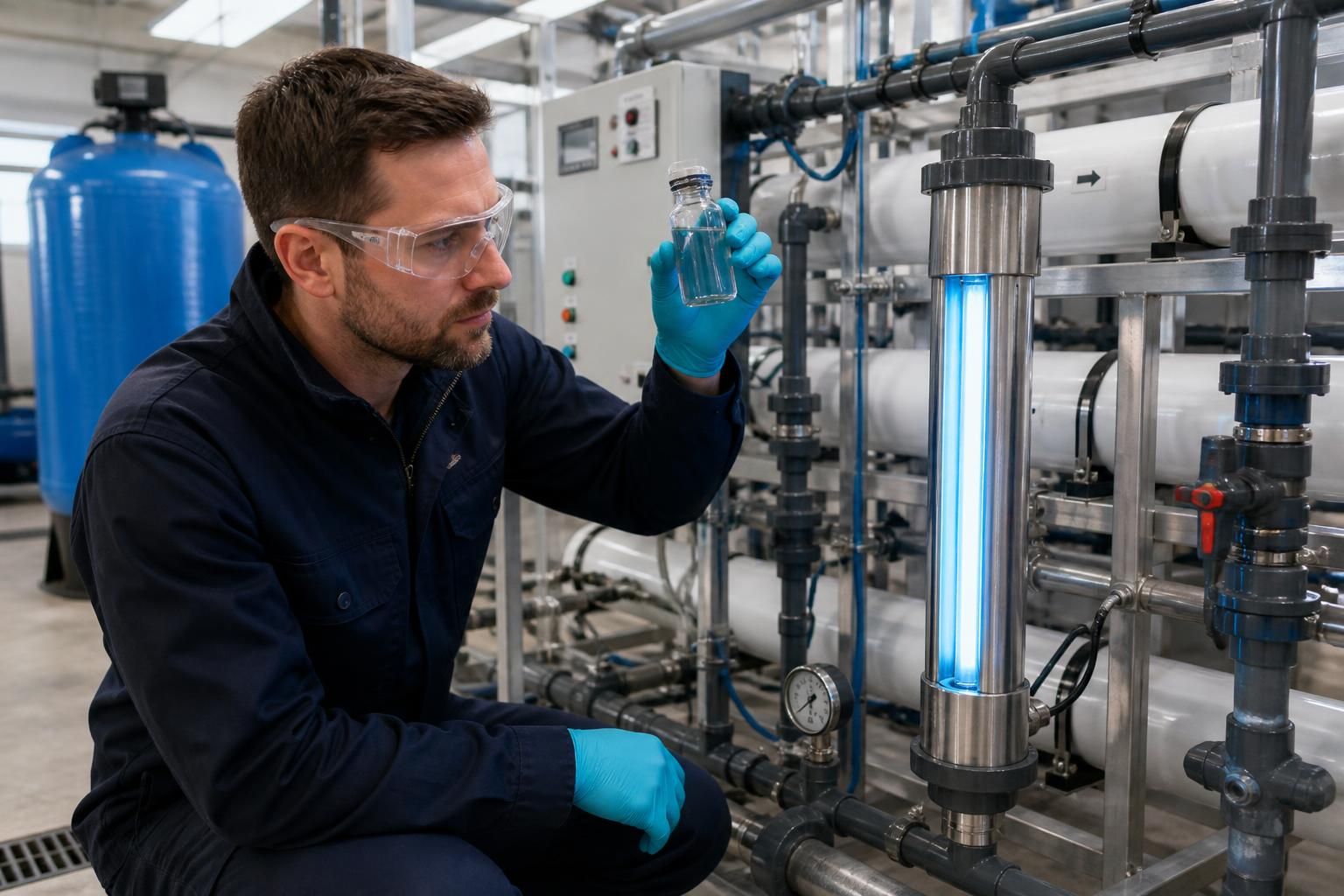
Choosing the Right Reverse Osmosis and UV Water Testing Approach
Which reverse osmosis or UV water testing approach suits your business?
Laboratory analysis provides defensible results for compliance; on-site screening offers rapid indication. Choose according to system condition, sampling scale, required certainty, reporting timescales, available budget and operational priorities where relevant.
Read moreWhat should reverse osmosis and UV treated water testing measure?
Testing may assess conductivity, total dissolved solids, chemical contaminants, microbiological quality, and UV performance indicators such as transmittance. The selected panel should reflect feedwater risks, treated-water use and control requirements.
Read moreHow does compliance testing differ from routine checks?
Compliance testing documents whether treated water and equipment meet specified standards, while routine checks track ongoing performance. Compliance requires documented methods and traceable results; routine checks identify changes requiring investigation.
Read moreHow should businesses compare reverse osmosis and UV testing options?
Compare methods by sample type, output use, system complexity and evidence required. Laboratory testing suits formal records; validated on-site checks support operational decisions, subject to documented procedures and defined controls.
Read moreHow does system condition influence reverse osmosis and UV testing choice?
Clean, stable systems may suit routine monitoring, whereas fouling, damaged membranes, poor UV transmission or inconsistent results justify diagnostic laboratory analysis and inspection before selecting intensified ongoing checks and controls.
Read moreA Practical, Tailored Approach to RO and UV Water Testing
Blue Fish Water Management combines sector experience with pragmatic assessment of reverse osmosis and UV-treated water systems. Recommendations are tailored to the installation, its use and compliance needs, supporting informed decisions and long-term client relationships.
Results interpreted in context
Test results are considered alongside the RO or UV system, its operating conditions and how the treated water is used. This gives businesses practical information rather than isolated laboratory data.
Recommendations matched to the installation
Blue Fish Water Management avoids one-size-fits-all advice. Sampling and follow-up recommendations are shaped around the equipment, site requirements and relevant compliance considerations.
Clear compliance support
Testing findings can inform monitoring records, audits and remedial decisions. The emphasis is on clear explanations that help responsible persons understand what action, if any, is appropriate.
Experience across business sectors
Knowledge of domestic, industrial and commercial water systems helps Blue Fish Water Management assess RO and UV-treated water in relation to the environments in which they operate.
Consistent national coverage
Businesses with sites in different parts of the UK can access a consistent approach to RO and UV water testing through a national service, while recommendations remain specific to each installation.
Advice built around lasting relationships
Blue Fish Water Management focuses on useful, pragmatic guidance that supports ongoing water hygiene management, not just a single test report. This helps establish informed working relationships with clients.
What Effective RO and UV Testing Covers
A properly managed programme produces documented evidence about the condition of water after reverse osmosis treatment and UV disinfection. It can include a defined sampling plan, suitable sample identification, laboratory analysis and a clear explanation of what the results indicate for the system and its intended use.
Assessment can also bring together equipment observations, test results, maintenance records and monitoring requirements. Where findings identify a concern, the report can support practical follow-through, such as reviewing operating controls, arranging further investigation or recording remedial actions for future verification.
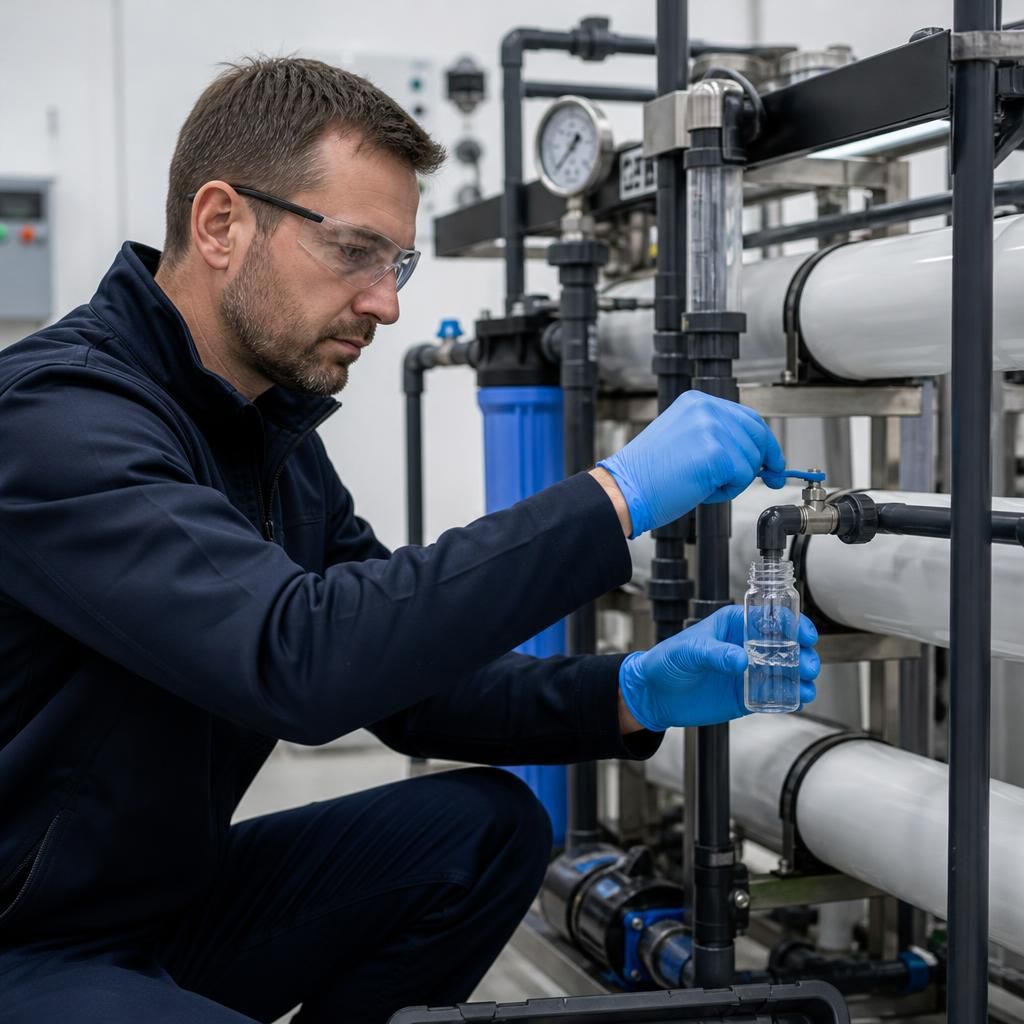
Sampling at Defined Control Points
Sampling should reflect how the reverse osmosis and UV system operates, with suitable points identified before testing begins. Samples may be taken from treated-water outlets, storage vessels or downstream distribution points, depending on the system design and the question being investigated.
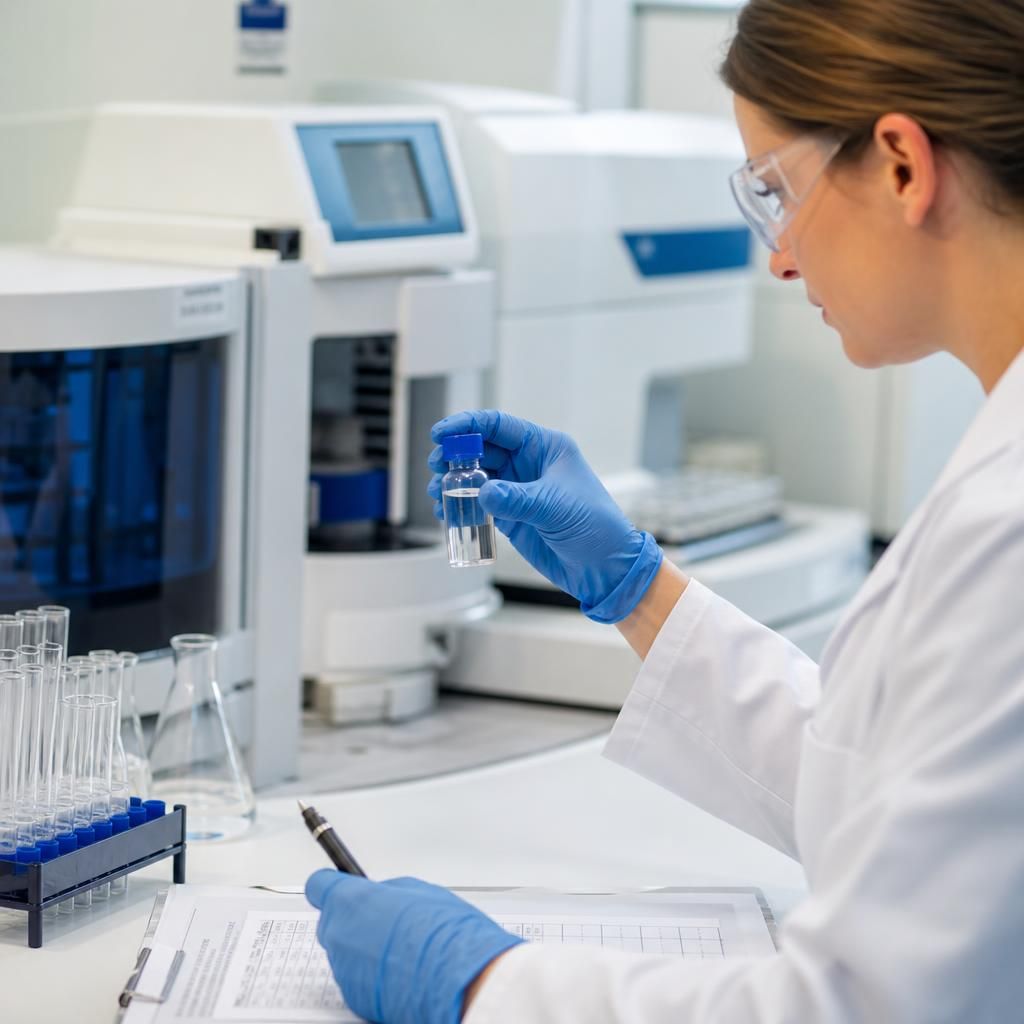
Laboratory Analysis of Treated Water
Laboratory analysis provides evidence of the water quality after treatment. The parameters selected should relate to the system, its intended use and any relevant compliance requirements, rather than relying on a one-size-fits-all test schedule.
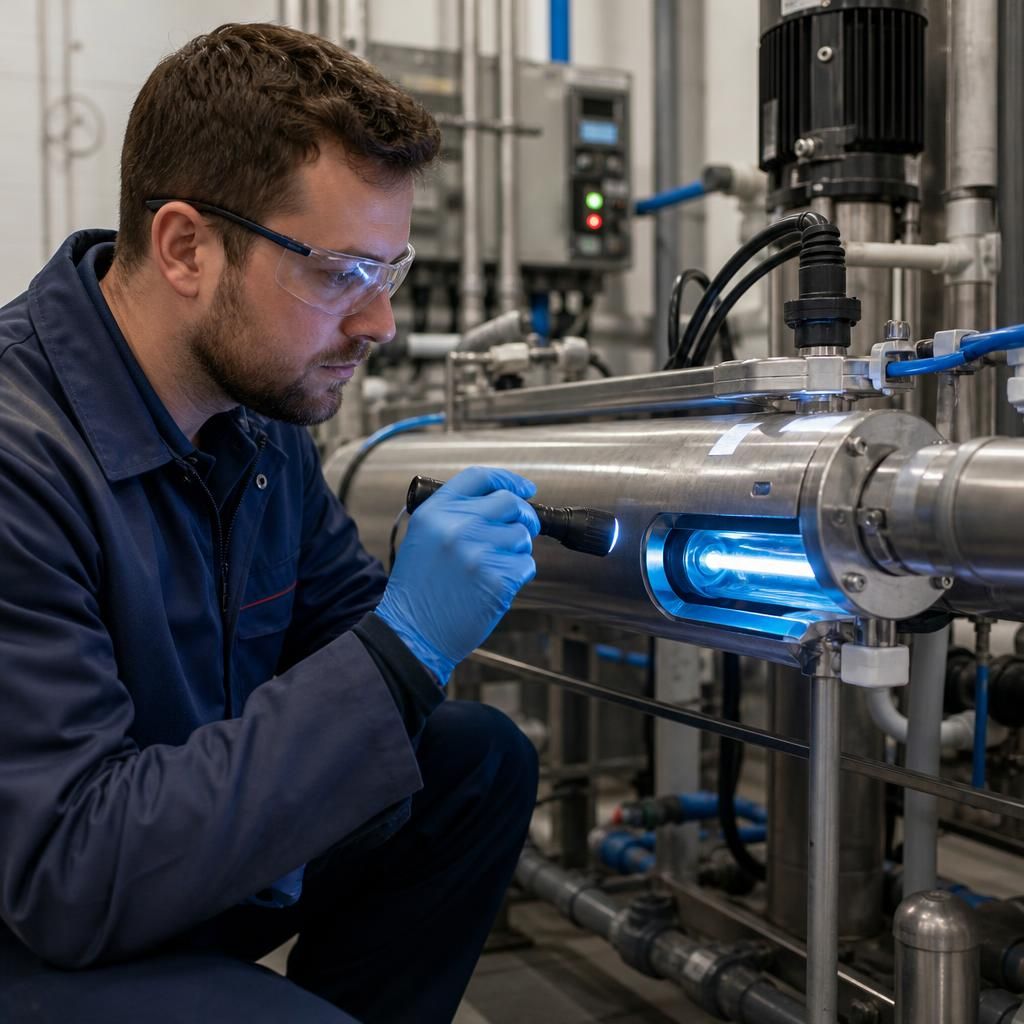
Checking UV Disinfection Performance
UV testing considers whether the disinfection stage is operating as intended. Results can be assessed alongside equipment observations, operating controls and maintenance information to identify issues that may affect treatment performance.
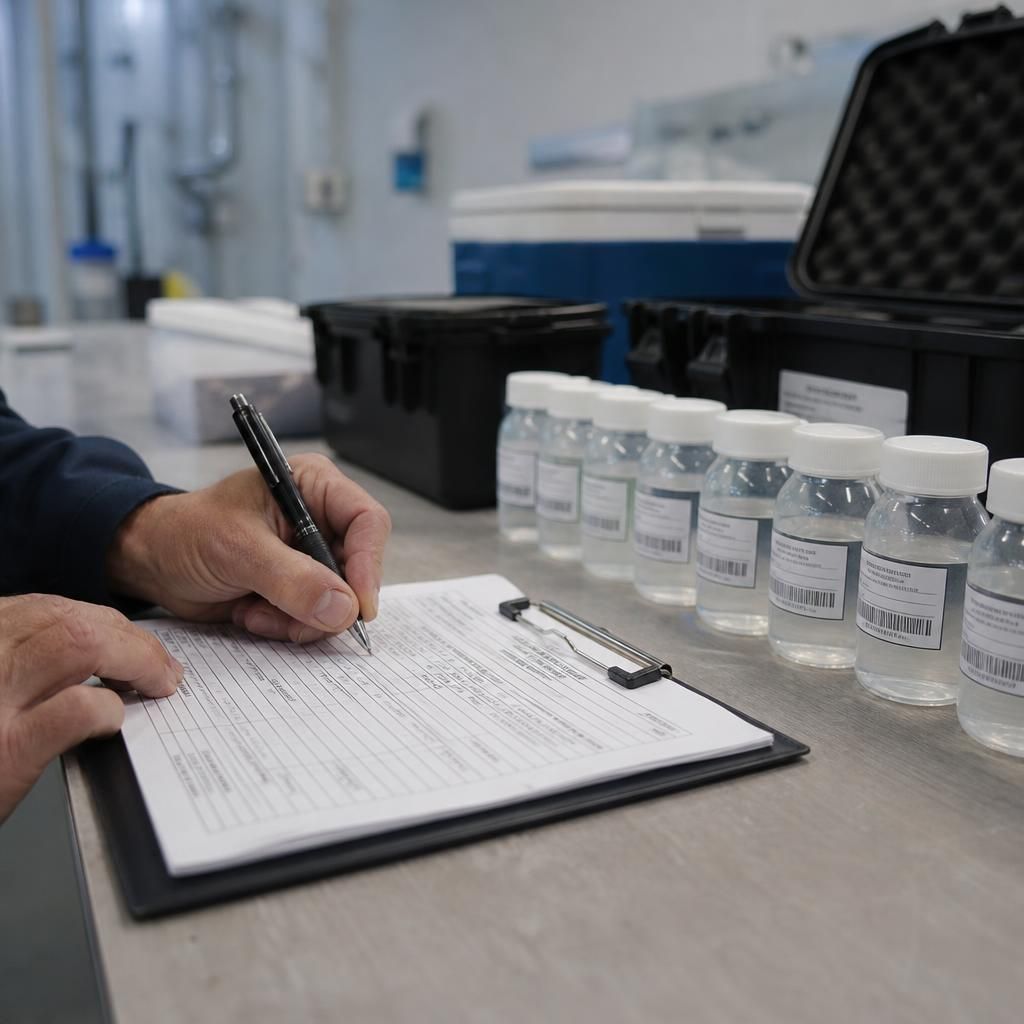
Traceable Sample Records
Clear sample identification links each laboratory result to its collection point, date and system context. This creates a reliable audit trail and helps distinguish an isolated result from a developing water quality trend.
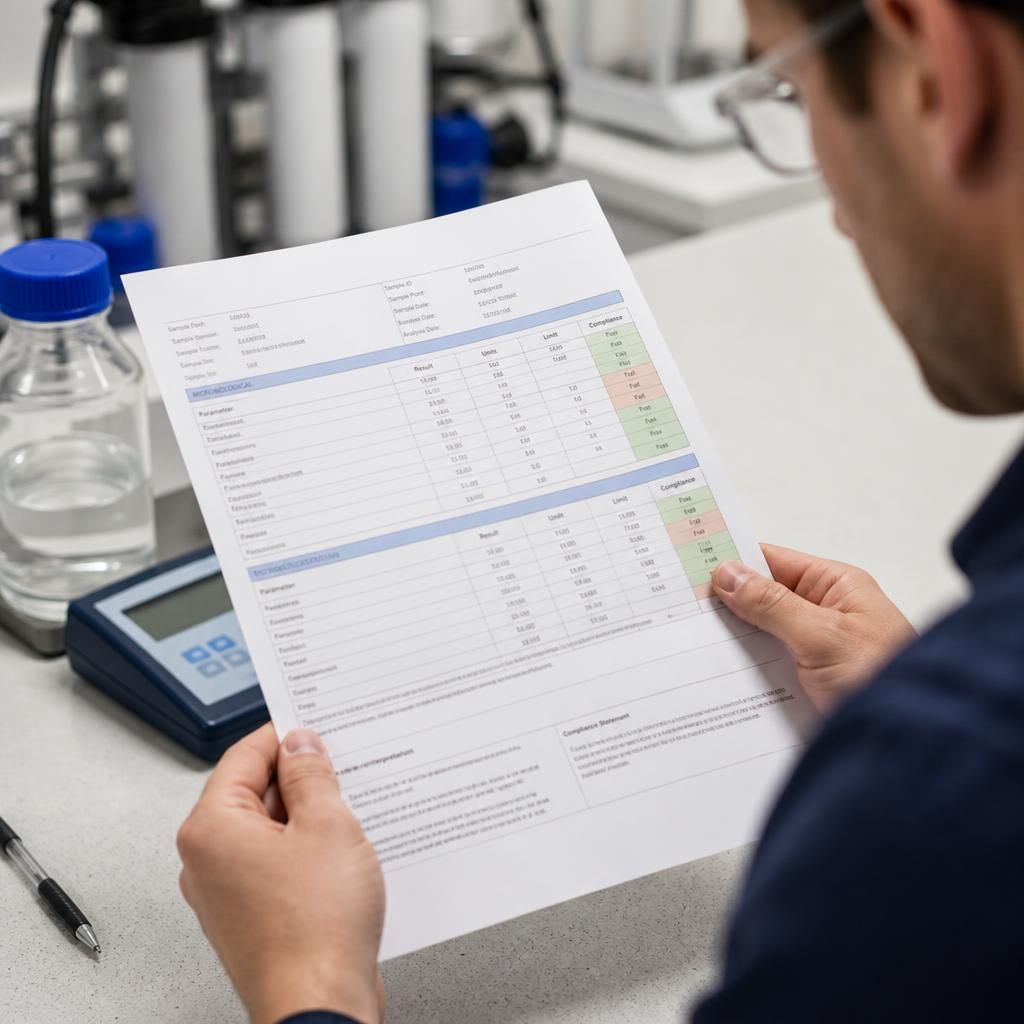
Results Explained in Context
A useful report does more than list analytical results. It explains what the findings indicate for the reverse osmosis and UV-treated water system, highlights results requiring attention and records the evidence used to reach the assessment.
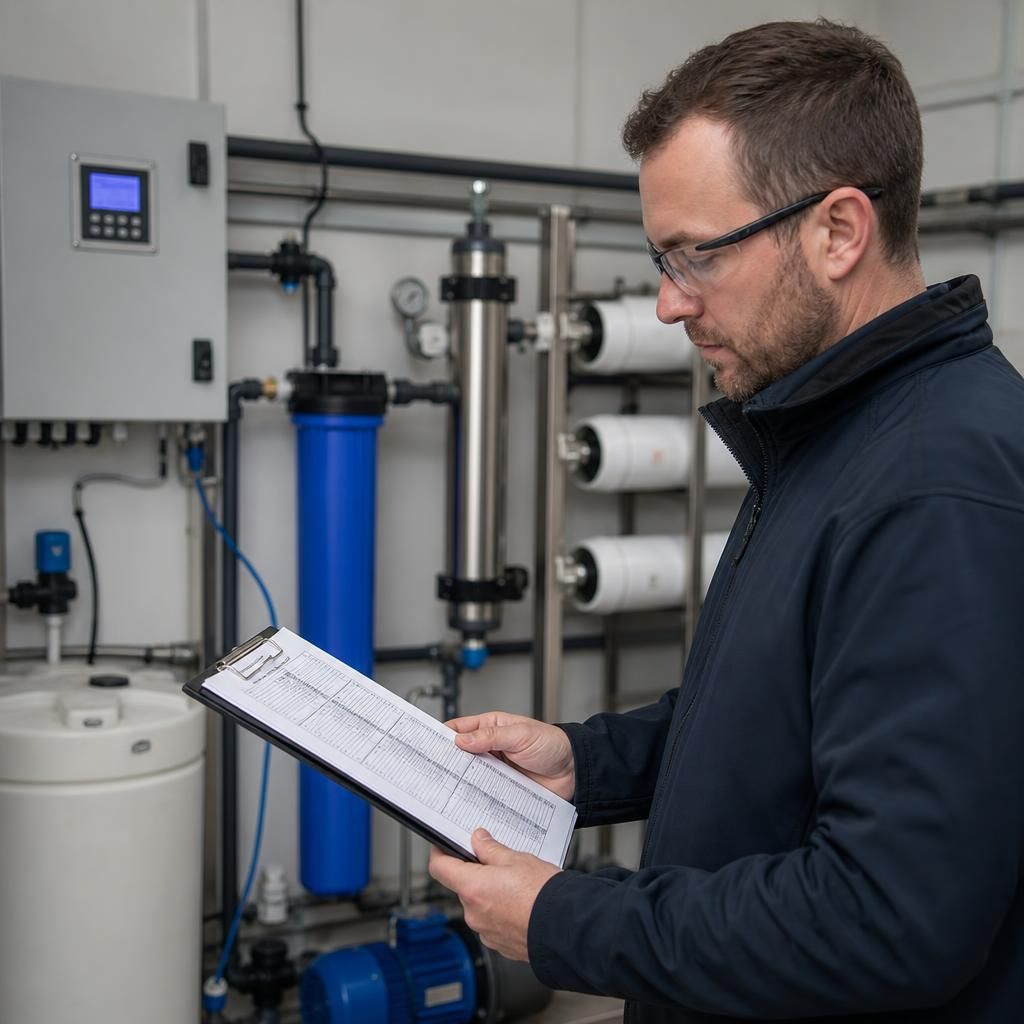
Monitoring and Practical Follow-Through
Testing is most useful when connected to ongoing system management. Findings can inform monitoring requirements, operating-control reviews, further investigation and the recording of remedial actions for later verification.
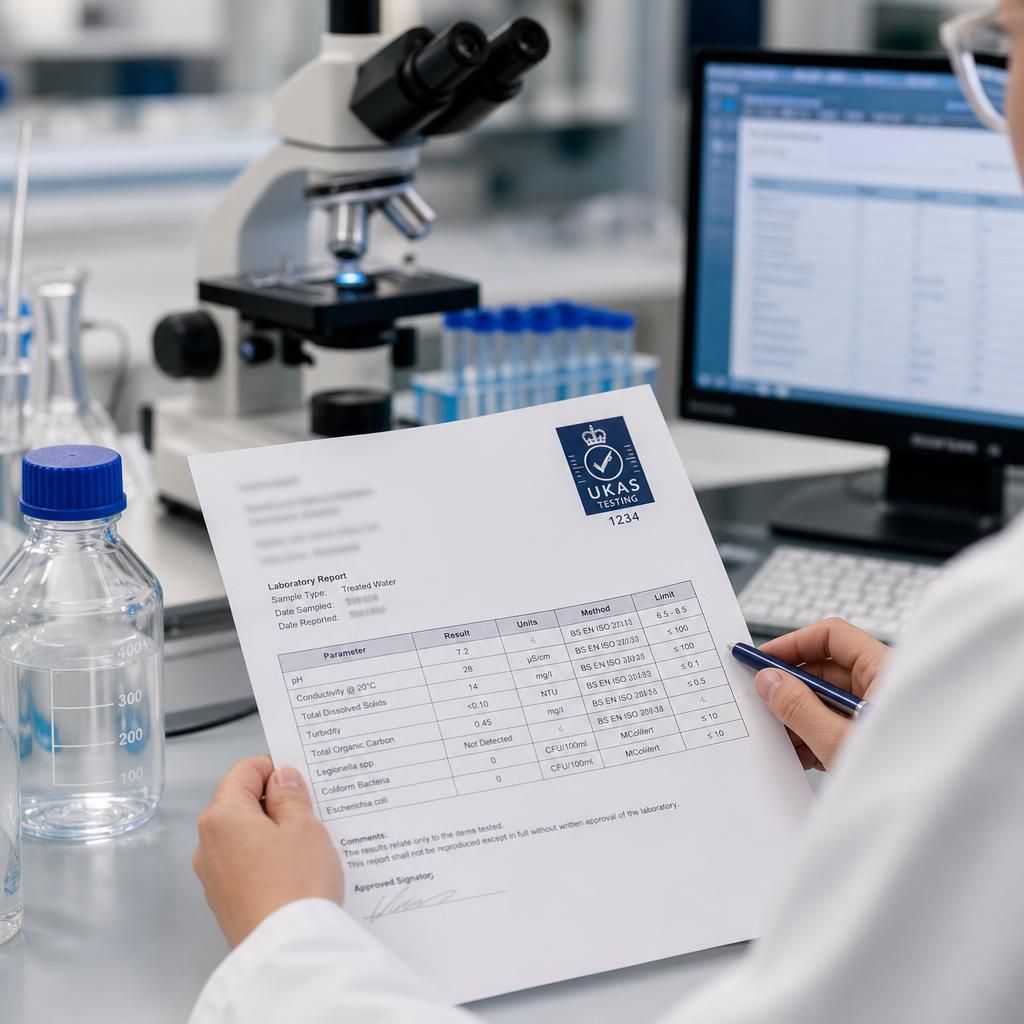
Evidence for Compliance Records
UKAS-accredited water testing can provide formal laboratory evidence for a managed water hygiene programme. Combining those results with sampling information, equipment records and assessment notes supports clearer compliance documentation.
Choosing a Reverse Osmosis and UV Water Testing Provider
Reverse osmosis and UV treated water testing verifies that treated water meets the specification required for its intended use and that the treatment process is being controlled appropriately. Before appointing a provider, ask about relevant experience with commercial reverse osmosis systems and UV disinfection, the laboratory’s accreditation, the parameters included in the analysis, and whether the proposed scope reflects the equipment, source water and risks present.
Clarify how samples will be identified and handled, who is responsible for access, system information and follow-up actions, and when results and interpretation will be provided. A suitable service should explain reporting arrangements, recommendations for further testing or corrective work, ongoing monitoring options and the basis of its costs, so you can compare value rather than selecting a package by test count alone.
What evidence demonstrates suitable expertise?
Look for relevant experience with the type of purification equipment, source water and intended application involved at your site. Ask whether the person reviewing the findings understands issues such as membrane performance, UV disinfection controls, sample integrity and the relationship between test results and operational conditions. Clear responsibility for technical interpretation is important because laboratory data alone may not explain why a result has changed.
Use the provider’s answers to record the agreed testing objectives, decision criteria and responsibilities before work begins. This gives everyone a clear basis for judging whether the reverse osmosis and UV treatment is performing as intended.
Once the scope and costs are clear, request a written proposal that reflects the actual system and its use. After testing, review the findings with the relevant person responsible for water safety so any change to controls, maintenance or further investigation is properly documented.
Discuss Your Reverse Osmosis and UV Testing Requirements
Discuss your system, intended use and testing objectives with Blue Fish Water Management. We can clarify the appropriate scope, explain proportionate options and prepare a tailored quotation or agreed next step, without committing you to unsuitable testing.