
UKAS Water Testing for Hot Water Cylinders
UKAS water testing for hot water cylinders examines stored water for legionella and other indicators of risk. For organisations managing tank-based systems, results support evidence-led compliance decisions, corrective action and ongoing water hygiene control.
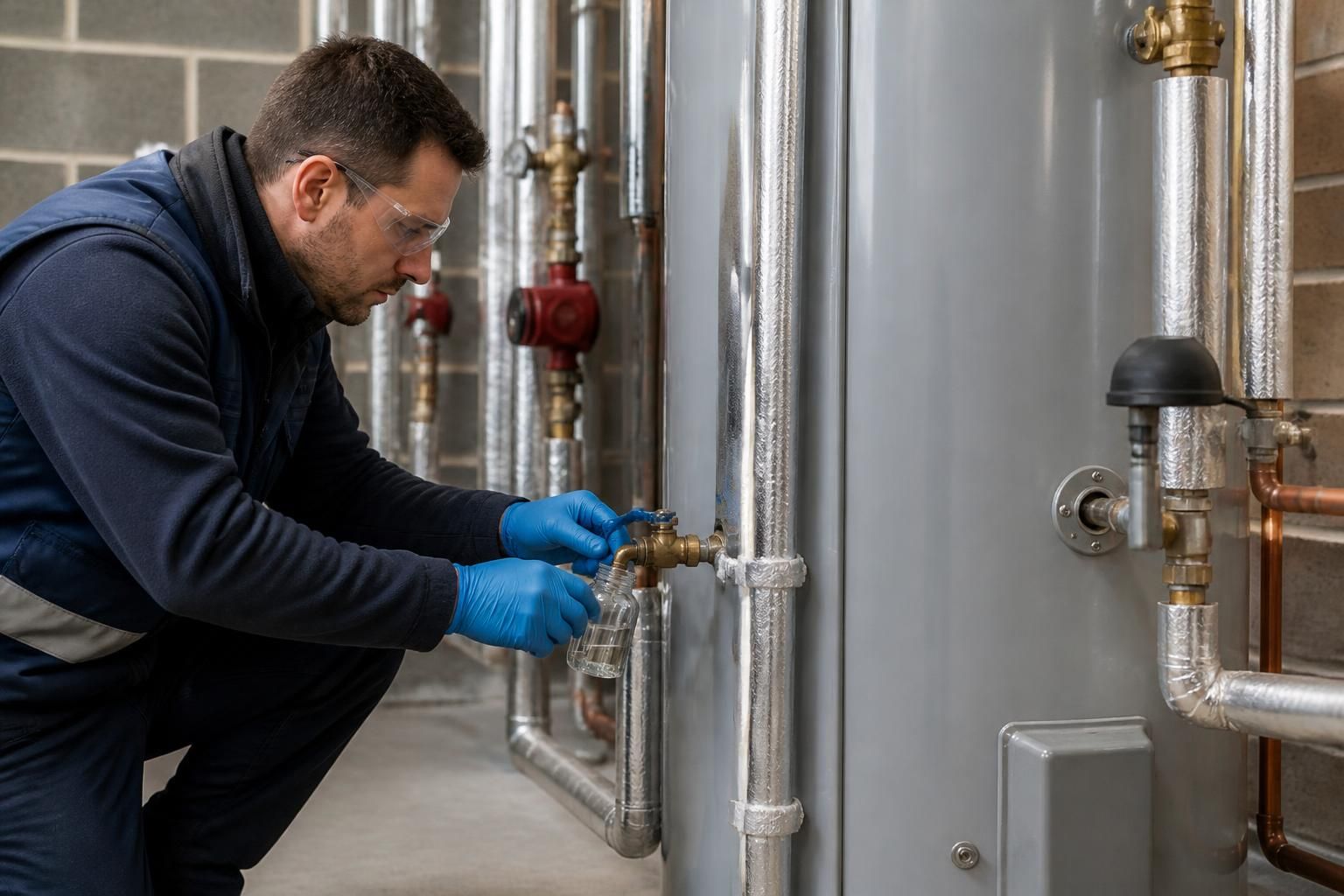
Which UKAS Water Testing Approach Suits Your Hot Water Cylinder System?
Choosing an approach depends on why samples are required, how the cylinder system is operated and what decisions results must inform. The options below distinguish focused sampling, broader assessment and follow-up investigation by scope, involvement and outcome.
Targeted Compliance Sampling
A focused set of samples is appropriate when a defined point of the hot water cylinder system needs verification, such as stored water or a representative outlet. UKAS-accredited laboratory analysis provides documented results for reviewing control measures and compliance records.
Cylinder and Outlet Assessment
Sampling both the stored water and selected outlets gives a broader view of conditions within a cylinder-fed system. This approach suits organisations checking whether risk controls are working across the distribution network, rather than examining one isolated location.
Investigative Sampling
Additional or more targeted samples may be suitable where an initial result, operational change or observed concern requires clarification. The findings help identify where corrective action or further technical investigation should be directed.
Repeat Monitoring Programme
Planned repeat testing is suited to systems requiring ongoing evidence of water hygiene control. Comparing results over time can support review of management measures, highlight changes in risk and inform decisions about continued monitoring.
What UKAS Water Testing for Hot Water Cylinders Includes
A cylinder sampling programme should connect site observations with representative samples, documented handling and a report that distinguishes findings from required actions. This supports proportionate decisions about remedial work, resampling and ongoing control of the installation.
Cylinder and temperature checks
The assessment records relevant cylinder details, outlet configuration and temperature-control observations so laboratory results can be considered alongside the conditions that influence water safety.
Representative water samples
Samples are selected from appropriate points associated with the hot water cylinder, helping the results reflect the system under review rather than an isolated outlet.
Traceable sample records
Sample identifiers, locations and relevant site information are documented to maintain a clear link between each water sample, the installation and the final test report.
UKAS-accredited laboratory analysis
Samples are submitted for analysis through a UKAS-accredited testing process for legionella and other specified indicators, providing results suitable for formal water hygiene records.
Evidence-led reporting
The report sets out the findings in a structured format, separating laboratory results and site observations from recommendations for investigation, remedial work or continued control.
Resampling and control review
Where results or site conditions require further assurance, the findings can inform a proportionate resampling plan and review of the cylinder’s ongoing monitoring arrangements.
Questions About UKAS Water Testing for Hot Water Cylinders
Which hot water cylinder systems need UKAS water testing?
UKAS-accredited laboratory analysis provides defensible results for sampled cylinder water, while competent interpretation relates findings to system design, control measures, exposure routes and proportionate follow-up actions for responsible organisations.
Read moreWhat does UKAS water testing examine in hot water cylinder systems?
Testing examines sampled cylinder water for Legionella and other microbiological indicators, alongside relevant physical and chemical parameters, enabling laboratories and competent advisers to assess potential control failures within the systems.
Read moreHow are hot water cylinder samples selected for UKAS laboratory testing?
Sampling points should reflect cylinder configuration, stored-water temperatures, outlets, return routes and potential exposure. Competent planning may include representative sentinel and distal locations, with site-specific additions where the risk justifies.
Read moreWhen should organisations arrange UKAS water testing for cylinder systems?
Arrange testing when commissioning, altering, or recommissioning a cylinder system, after control failures, during investigations, or where risk assessments identify uncertainty requiring microbiological evidence for compliance decisions and corrective planning.
Read moreHow should organisations interpret UKAS water testing results for cylinder systems?
Interpretation should compare findings with sample locations, system controls, exposure pathways and previous records. Competent advice then classifies significance, identifies corrective actions, and sets proportionate resampling or ongoing monitoring requirements.
Read moreWhat to Clarify Before Cylinder Water Sampling
Check the locations and system boundaries
Ask whether the plan covers the cylinder, relevant outlets, associated hot water pipework and any return, blending or linked storage arrangements that could affect the result. The assessor should explain how access limitations, infrequently used outlets, temperature conditions and the system layout will be recorded and considered when interpreting the samples.
Once these points are resolved, record the agreed sampling requirements alongside the system’s risk assessment and relevant maintenance information. This gives the organisation a clear basis for authorising the work and assessing whether the proposed programme reflects the cylinder installation and its use.
After the findings are reviewed, assign any required actions to named individuals and retain the completed documentation with the site’s water safety records. This supports accountable follow-up and helps determine when further investigation or sampling is justified.
Discuss Your Hot Water Cylinder Testing Requirements
Discuss your hot water cylinder testing requirements with Blue Fish to clarify the evidence needed for your system, identify suitable sampling considerations and receive practical advice on the most appropriate next compliance step.