
Legionella Training Courses UK
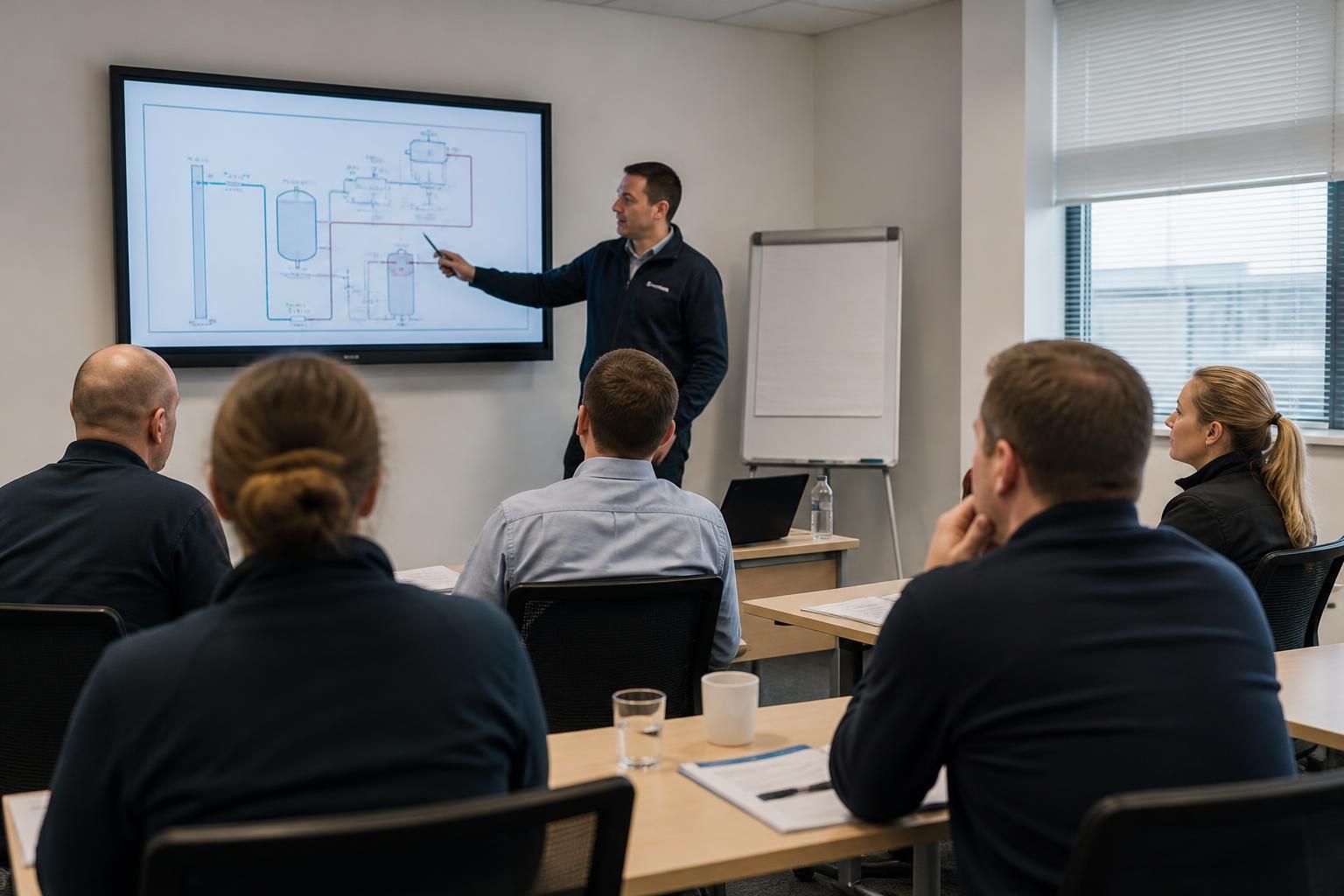
Legionella training courses explain how responsible persons and water management teams identify, control and monitor Legionella risks in building water systems. Blue Fish provides practical UK-wide instruction to support compliant procedures and informed water safety decisions.
Practical Benefits of Legionella Training
Clearer Responsibilities
Training helps responsible persons, engineers and contractors understand their respective duties, reducing the risk of important water safety tasks being overlooked.
More Consistent Monitoring
Participants can apply agreed monitoring methods consistently, helping teams recognise abnormal conditions and determine when further checks are appropriate.
Stronger Preventive Controls
A sound understanding of Legionella control supports practical measures that manage conditions in water systems before they become a greater concern.
Confident Escalation
Training clarifies how to identify warning signs, communicate concerns and escalate issues through the organisation’s water safety arrangements.
Better Compliance Evidence
Staff learn how completed checks, actions and reviews fit together, making it easier to demonstrate that required procedures are being followed.
Effective Day-to-Day Management
Practical knowledge enables teams to connect routine maintenance, operational decisions and water safety controls across the building’s management process.
Questions About Legionella Training Courses
Who should attend legionella training courses?
Suitable participants include responsible persons, facilities managers, maintenance staff, contractors and compliance personnel. Previous experience is not necessarily required, but familiarity with the site’s water systems helps contextualise learning effectively.
Read moreWhat do legionella training courses cover?
They cover water system operation, temperature control, sampling principles, cleaning requirements, record management, incident escalation and review processes, helping learners connect technical measures with site-specific responsibilities and documented evidence requirements.
Read moreWhat should I prepare before attending legionella training courses?
Bring relevant details of the site’s water systems, existing monitoring records, risk assessment and relevant policies. Consider questions about your responsibilities, control measures and how training applies to daily duties.
Read moreWhen should legionella training courses be refreshed?
Refresh training when guidance changes, responsibilities shift, monitoring arrangements are revised, or reviews identify knowledge gaps. Reassessing competence after incidents, system alterations or extended absence also supports reliable control measures.
Read moreHow is competence checked after legionella training?
Competence is checked through questioning, discussion and practical exercises that test understanding of legionella controls. Results identify further support needs, while attendance and assessment records provide documented evidence of learning.
Read more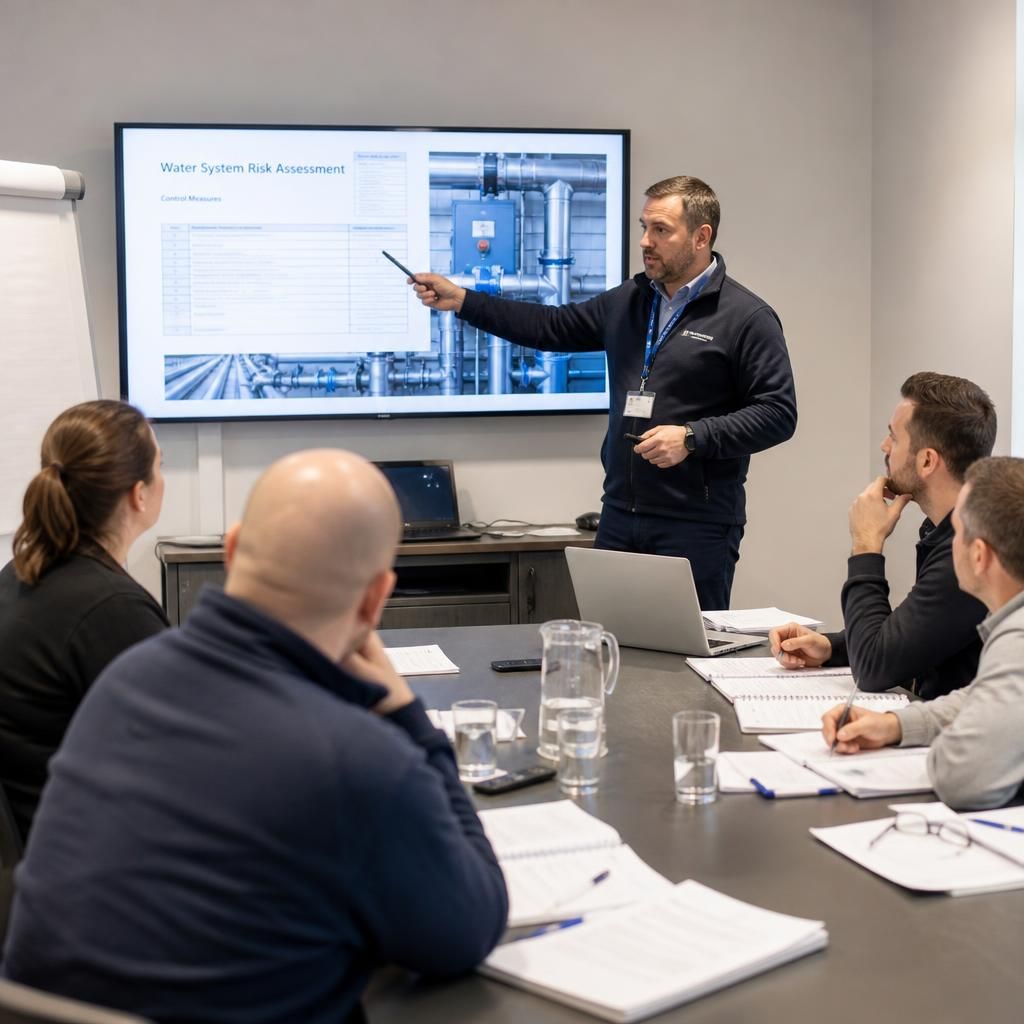
Practical Training Informed by Water Safety Expertise
Legionella training courses are most useful when they connect guidance with the records, decisions and control measures used in real water systems. Blue Fish draws on its work in risk assessments, compliance audits, system monitoring and remedial works to explain how training translates into defensible day-to-day practice.
Instruction can be aligned with a site’s management arrangements, helping participants understand the relationship between written schemes, monitoring results, corrective actions and escalation. Examples can include interpreting temperature records, checking whether monitoring arrangements match the written scheme, and distinguishing routine findings from issues requiring documented action. This keeps learning relevant to the duties assigned to responsible persons and wider water management teams.
Blue Fish’s technical water hygiene work also supports accurate discussion of sampling and testing limitations, including the role of UKAS-accredited analysis. The result is training grounded in compliance evidence rather than theory alone, enabling organisations to review procedures and identify where further control is needed.
Practical Partnership
Blue Fish provides clear, practical legionella training courses, adapting instruction to organisational responsibilities and building constructive relationships based on trust.
Discuss Your Legionella Training Requirements
Discuss your organisation’s training requirements with Blue Fish to identify the most suitable course scope, participant responsibilities and follow-up needs. Request tailored advice on the appropriate next step for your water management arrangements and compliance priorities.