
How to Clean a Septic Tank
Cleaning a septic tank involves removing accumulated sludge and waste so the treatment system can function safely. This guide explains the process for property and facilities managers, including preparation, safe access, professional cleansing, inspection and practical aftercare requirements.
Compliance Checklist
Use a documented septic tank cleaning process to protect safe water systems, meet UK responsibilities and confirm required follow-up actions.
What Professional Septic Tank Cleaning Includes
A professional cleaning brief should identify the tank, waste type, site contact, access arrangements and documents required at completion. This defined scope reduces uncertainty before attendance.
Retain the service record with waste-transfer documentation and photographs where appropriate. These records help facilities teams evidence responsible management, spot recurring problems and plan future work.
Defined cleaning scope
The engagement confirms the tank location, access requirements, waste type and site responsibilities before work begins.
Safe tank access
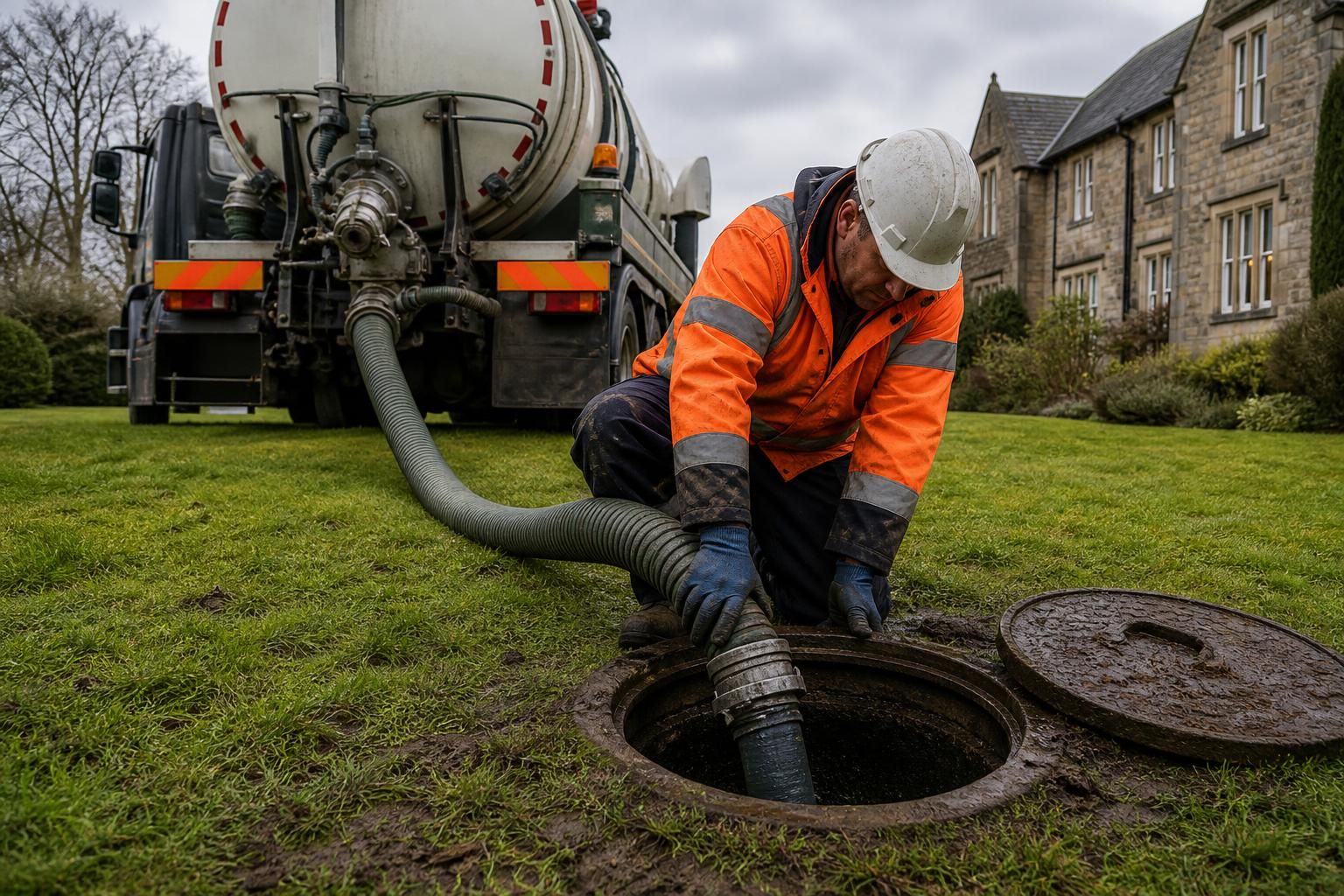
The work includes controlled access arrangements and precautions around openings, vehicle movements, gases and contaminated material.
Sludge and waste removal
Accumulated sludge and waste are removed from the septic tank so capacity and normal treatment functions can be assessed.
Condition check
Once emptied, the tank and accessible components can be checked for visible defects, unusual build-up, blockages or signs that further work is needed.
Completion information
The completed service is supported by clear records, including relevant waste documentation and photographs where they help demonstrate the work carried out.
Practical aftercare
The final advice identifies follow-up actions, monitoring needs and maintenance considerations for the property or facilities team.
Checks and Evidence After Septic Tank Cleaning
A well-managed septic tank cleaning should produce more than an empty vessel: the work should be planned by competent personnel, carried out with suitable equipment, and followed by clear findings, condition observations and practical recommendations for ongoing system management.
Documented cleaning record
The completed record should identify the tank or treatment system, site location, date of work and scope of cleansing. Recording what was undertaken gives facilities teams a clear reference for future maintenance and contractor handovers.
Waste removal documentation
Records relating to the removal and transfer of sludge should be retained with the site maintenance file. This supports traceability and helps demonstrate that waste handling was considered as part of the cleaning work.
Condition observations
The report should distinguish between the tank contents that were removed and the condition of accessible components, such as covers, inlet and outlet arrangements, baffles and visible pipework. Any limitations caused by restricted access should also be noted.
Photographic evidence
Photographs can provide useful evidence of access points, visible defects, accumulated deposits or damaged components. Each image should be linked to a written observation so that the finding can be understood without relying on photographs alone.
Defect and action schedule
Where problems are identified, the report should explain the issue, its practical significance and the recommended next step. Separating urgent safety concerns from routine remedial work helps the responsible person plan follow-up activity in a controlled way.
Maintenance and compliance record
Cleaning documentation should be kept alongside relevant system information, previous service records and site responsibilities. A consistent record supports future reviews, demonstrates that maintenance decisions were considered and helps identify when further professional assessment may be required.
Questions to Ask Before Commissioning Septic Tank Cleaning
What should a septic tank cleaning quotation include?
Before commissioning, confirm tank location, access constraints, estimated contents, disposal arrangements, environmental considerations, required documentation, and procedures for reporting unsafe conditions or structural defects to responsible site management personnel afterwards.
Read moreHow often should a septic tank be cleaned?
Cleaning frequency depends on tank capacity, occupancy, waste loading, sludge accumulation and system design. Arrange inspections to measure levels, then schedule desludging before solids impair treatment, discharge or safe operation.
Read moreWhat happens during septic tank cleaning?
Technicians isolate the system, establish safe access, remove sludge and liquid with suitable equipment, inspect tank condition, clean internal surfaces where appropriate, and document clearly defects, waste handling and recommendations.
Read moreHow should businesses assess competence for septic tank cleaning?
Check that the contractor can evidence relevant training, risk assessments, safe-work procedures, suitable equipment, waste-transfer documentation, insurance and competent supervision, then verify references for comparable commercial or industrial sites directly.
Read moreWhat records should follow septic tank cleaning?
Records should identify the tank, date of work, waste description and quantity, destination, consignment details, findings, photographs where appropriate, and recommendations, retaining copies within site compliance records for future reference.
Read moreWhat to Expect from Septic Tank Cleaning Advice and Findings
Advice about cleaning a septic tank should distinguish cleansing from repairs, surveys and ongoing maintenance. Blue Fish Water Management can clarify what the proposed visit includes, which site information is required and which matters may need separate attention, helping responsible managers understand the scope before work begins.
If access or the tank’s condition prevents the planned work from being completed fully, that limitation should be explained clearly rather than assumed. Any change to the agreed scope should be discussed with the client, with the final advice setting out what was completed and what remains outside the visit.
What should be agreed before the visit?
The agreed scope should identify the tank or tanks concerned, the reason for cleaning, known access arrangements and any available site or system information. It should also make clear whether the work includes only removal of accumulated contents or whether inspection, condition reporting and recommendations are included separately. This gives the responsible manager a clear basis for reviewing the final findings.
Once the work is complete, the responsible person should review the written outcome and assign any recommended actions, such as arranging repairs, further investigation or changes to the maintenance schedule. Keeping this information with the site’s tank and waste-management records creates a clear reference for future decisions.
If the findings identify damage, unusual waste accumulation or a wider drainage concern, seek appropriate technical advice before putting the system back into routine use. This ensures that cleaning forms part of a managed approach rather than being treated as a complete solution to every septic tank problem.
Discuss Your Septic Tank Cleaning Requirements
To establish the right cleaning arrangement, contact Blue Fish Water Management with your site details. The team can discuss your requirements, confirm whether the proposed service is suitable and help you agree the next step for your property or facility.