
Water Tank Disinfection for Safe Systems
Water tank disinfection removes contamination and controls legionella risks in stored-water systems. Blue Fish Water Management provides practical treatment and remedial guidance for commercial and industrial premises, helping responsible persons maintain safer systems and meet relevant water hygiene obligations.
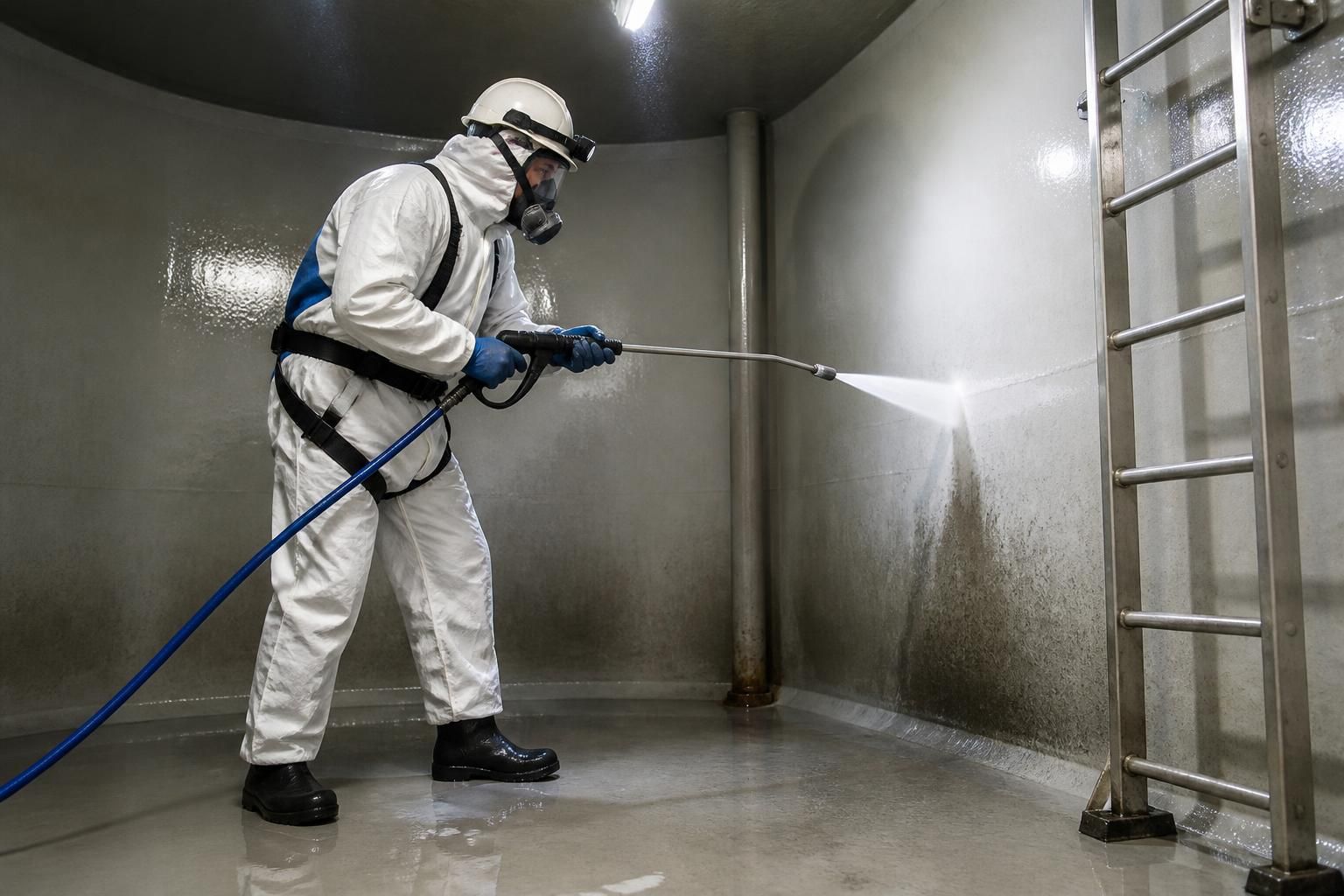
Benefits of Effective Water Tank Disinfection
Effective water tank disinfection combines cleaning, disinfectant application and verification to address contamination within storage vessels. The method should reflect tank condition, system design and identified risks.
For duty holders, this supports safer systems, clearer compliance records and more certain remedial decisions. Blue Fish Water Management can advise on treatment and follow-up monitoring, integrating disinfection into routine water hygiene management.
Controls Contamination
Thorough tank cleaning and disinfection address contamination within the storage vessel and help control legionella risks in the wider water system.
Clarifies Tank Condition
Inspection during the disinfection process can identify deposits, damage and other conditions that may require further attention.
Supports Compliance Evidence
Treatment details, verification results and follow-up actions provide useful records for demonstrating how water hygiene risks are being managed.
Informs Remedial Work
Findings from disinfection help duty holders distinguish between routine cleaning needs and defects requiring targeted remedial action.
Promotes Safer Systems
Removing contamination from storage tanks contributes to safer water systems when combined with suitable control measures and ongoing management.
Improves Ongoing Oversight
Follow-up monitoring helps confirm whether treatment has addressed the identified issue and supports more informed day-to-day water hygiene decisions.
Water Tank Disinfection Questions Answered
How often should water tanks be disinfected?
Suitability depends on tank materials, access, configuration and contamination findings. A competent assessment identifies isolation requirements, protects downstream users, selects appropriate disinfectant, and defines verification checks before work begins on-site.
Read moreWhat does water tank disinfection involve?
Work generally includes isolating and draining the vessel, removing deposits, applying suitable disinfectant, flushing connected pipework, documenting verification results, and confirming the system is safe to return to normal service.
Read moreHow long does water tank disinfection take?
Timescales depend on tank capacity, access, contamination levels and system complexity. Planned isolation, drying, remedial cleaning or verification may add time, so a site assessment should establish a realistic programme.
Read moreIs water tank disinfection needed after a positive legionella result?
A positive result does not automatically require tank disinfection. Investigate sampling points, contamination sources and system conditions first; targeted cleaning or treatment may be appropriate, followed by confirmatory testing afterwards.
Read moreCan water tank disinfection damage the tank?
Correctly specified treatment should not damage a suitable tank. Compatibility checks consider construction materials, lining condition, disinfectant concentration, contact time and temperature; damaged vessels may require repair or replacement beforehand.
Read more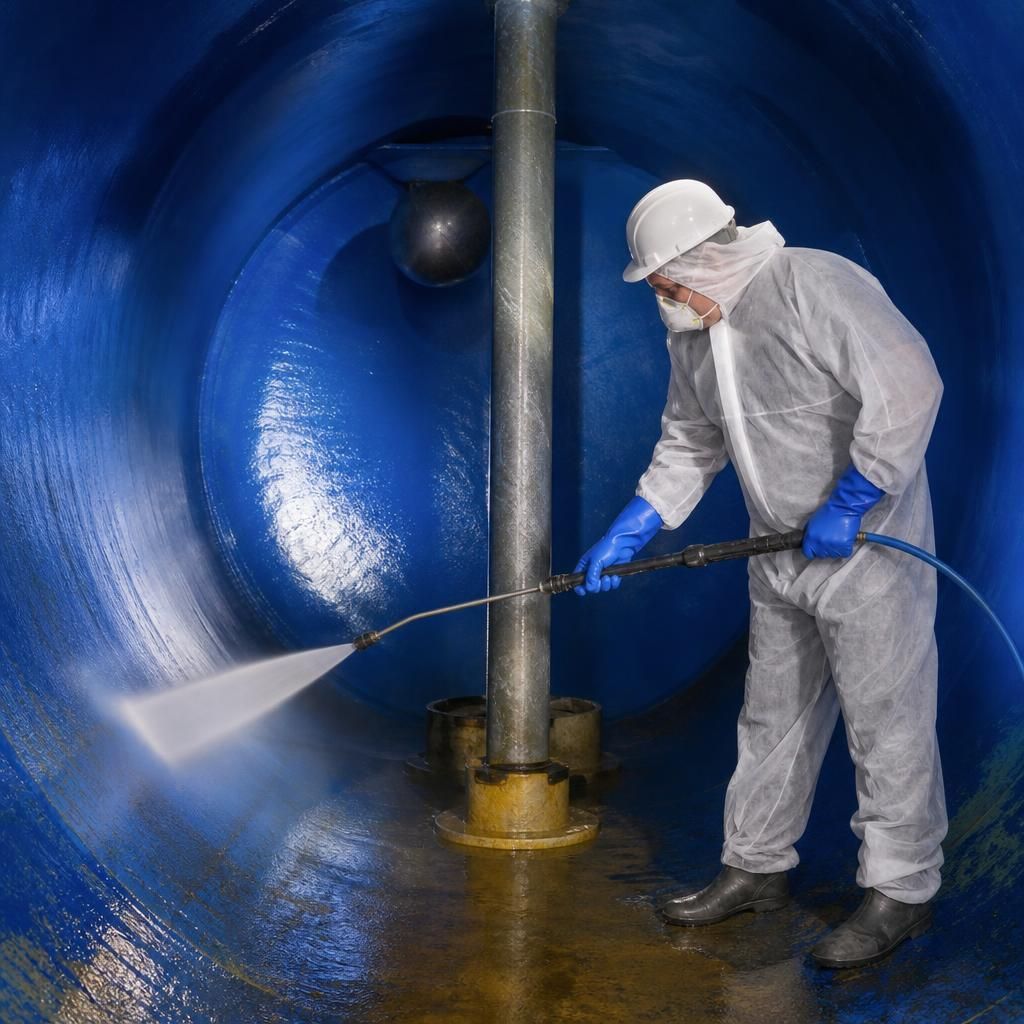
Technical Evidence for Water Tank Disinfection
Water tank disinfection is a controlled process for removing contamination from storage vessels and associated surfaces, using cleaning, an appropriate disinfectant and evidence that treatment has been completed effectively. Its scope should be determined by inspection, water hygiene findings and the tank’s role within the wider system.
Blue Fish Water Management combines legionella risk assessment expertise with practical remedial capability, enabling disinfection requirements to be considered alongside system condition, access, outlets and other relevant control measures. UKAS-accredited water testing can provide independent analytical evidence before or after treatment where sampling is appropriate.
Clear records are central to defensible tank disinfection. The service can support documented findings, treatment details, test results and recommendations for ongoing control, giving responsible persons information for compliance audits and planned water hygiene management. This evidence-led approach helps distinguish necessary treatment from routine maintenance.
Practical Partnership
Clear communication, proportionate recommendations and structured follow-up help clients manage water tank disinfection as part of accountable, ongoing system stewardship.
Discuss Your Water Tank Disinfection Requirements
Provide details of the premises, storage arrangement and reason for enquiry to Blue Fish Water Management. The team can then discuss appropriate water tank disinfection options and identify a suitable next step for your organisation.