
Cold Water Storage Tank Cleaning
Cold water storage tank cleaning removes sediment, biofilm and other contamination from tanks supplying potable or process water. Professional cleaning helps maintain water quality, supports legionella control and provides documented evidence for organisations managing hygiene and compliance responsibilities.
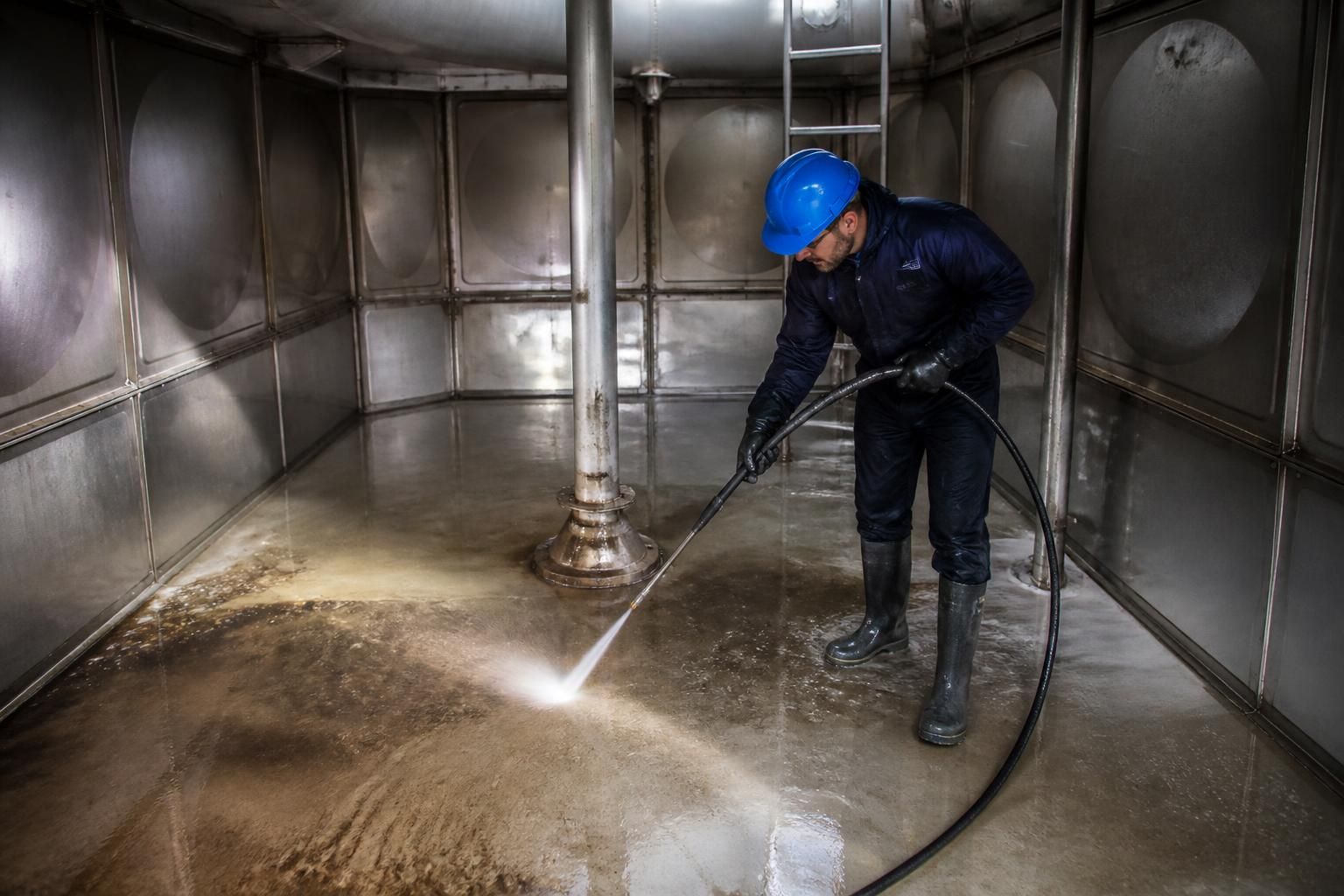
What Makes Cold Water Storage Tank Cleaning Difficult to Manage?
Managing cold water storage tank cleaning involves coordinating isolation, maintaining supply continuity, controlling access, and documenting decisions. Businesses must also determine appropriate cleaning intervals, assess findings, and demonstrate that contractors’ work addresses site-specific safety and compliance responsibilities.
Maintaining safe water supply during isolation
Cleaning usually requires the tank and connected pipework to be isolated, drained or taken out of service. Site managers must understand which outlets depend on the tank and plan suitable controls so that isolation does not create an unrecognised operational or hygiene risk.
Working within restricted tank access
Tank rooms may have limited space, difficult access, poor lighting or obstructions around lids and connections. These conditions affect how the tank can be inspected and cleaned, and may require a task-specific assessment before equipment or personnel enter the area.
Distinguishing routine deposits from significant defects
Sediment, scale, corrosion, damaged coatings and microbial growth can indicate different underlying problems. Cleaning removes contamination, but findings may also require investigation of tank condition, inlet arrangements, stagnation, temperature control or sources of ingress.
Controlling contamination during the work
Equipment, hoses, footwear and cleaning materials must be suitable for use around water systems. Poorly controlled work can introduce new contamination or leave residues behind, making preparation, cleaning, rinsing and reinstatement important parts of the procedure.
Verifying the system after cleaning
A tank should not simply be returned to service because visible deposits have been removed. The responsible person may need to confirm that it has been fully rinsed, correctly reconnected and subject to appropriate checks or water testing based on the system risk and the reason for cleaning.
Producing evidence for water hygiene management
Records should make clear what was cleaned, why the work was undertaken, what condition was found, which methods were used and whether follow-up action was identified. Clear documentation supports the site's water hygiene control scheme and helps demonstrate that remedial decisions were considered rather than assumed.
How to Decide What Cleaning Your Cold Water Tank Needs
A proportionate cleaning decision starts with the tank’s role in the water system, the condition of its cover and fittings, and the consequences of taking the supply out of use. Review inspection records, water quality results, maintenance changes, complaints and any evidence of water ingress or physical damage.
Before appointing a contractor, ask whether the proposed scope covers internal inspection, removal of deposits, appropriate disinfection, post-work checks and a clear report. The findings should determine whether routine cleaning, targeted remedial work or a broader review of the storage arrangement is justified.
Questions to establish system context
Confirm whether the tank supplies drinking water, welfare facilities, process equipment or mixed-use outlets. Check for linked tanks, booster sets, secondary storage and any users who could be affected by interruption or contamination. This information helps define the work area and identifies whether cleaning should be considered alongside a wider water hygiene review.
Once the work is complete, retain the cleaning report with the site’s water hygiene records and record any defects, recommendations or changes made to the tank. If contamination is persistent or the tank cannot be cleaned effectively, the appropriate response may involve repairs, refurbishment or review of the wider water system rather than repeated cleaning alone.
The next cleaning date should be based on the tank’s condition, use and risk profile, alongside any relevant inspection or monitoring findings. This creates a defensible maintenance plan while allowing future work to address evidence from the site rather than relying on a fixed assumption.
Benefits of Effective Cold Water Storage Tank Cleaning
Cold water storage tank cleaning is planned maintenance for tanks that store and supply cold water. By addressing deterioration before it affects use, the work supports safer operation and more consistent control of the water system.
It enables record updates and maintenance planning. Defined responsibilities make compliance reviews more straightforward, while coordinated work helps limit disruption to water-dependent activities.
More controlled water storage
Cleaning and inspection help maintain a more controlled tank environment, supporting water hygiene and legionella management.
Clearer compliance evidence
A structured record of the work, findings and follow-up actions gives responsible organisations clearer evidence for internal reviews and audits.
Better planned maintenance
Condition-based recommendations help teams schedule future cleaning and inspection around the tank’s role, use and assessed risk.
Less operational disruption
A defined scope allows isolation, cleaning and reinstatement requirements to be considered alongside activities that depend on the stored water supply.
Earlier defect identification
Internal inspection can reveal damaged covers, fittings, access points or other defects that may require remedial attention.
Stronger long-term control
Linking cleaning outcomes with monitoring results and maintenance records helps organisations manage the tank as part of the wider water system.
Questions About Cold Water Storage Tank Cleaning
What evidence of competence should a cold water storage tank cleaning contractor provide?
Choose contractors who can demonstrate relevant water hygiene competence, defined procedures, suitable equipment and clear reporting. Their method statement should identify responsibilities, controls and evidence required for the work undertaken.
Read moreHow disruptive is cold water storage tank cleaning for business operations?
Disruption is usually managed through planned isolation, staged work and agreed access arrangements. The contractor should assess supply dependencies, coordinate with site management and identify temporary measures early where required.
Read moreWho is responsible for arranging cold water storage tank cleaning?
The duty normally sits with the building owner, employer or appointed facilities manager, who should coordinate contractors, authorise isolation, review reports and ensure recommendations enter planned maintenance records appropriately.
Read moreHow is cold water storage tank cleaning adapted to different tank designs?
The method varies with tank material, access, shape, capacity, inlet arrangements and internal fittings. Assessment determines suitable cleaning equipment, isolation controls, inspection points and disinfection requirements without compromising existing components.
Read moreWhat causes contamination in cold water storage tanks?
Contamination commonly results from sediment accumulation, biofilm growth, stagnant water, damaged covers, defective fittings, inadequate turnover, or ingress during maintenance, construction and nearby environmental activity surrounding the storage installation itself.
Read moreDiscuss Your Cold Water Storage Tank Cleaning Requirements
Discuss your tank’s condition, water use and maintenance history with Blue Fish Water Management. Their team can clarify the appropriate cleaning scope, identify information to provide and advise on practical next steps for your organisation.