
Chlorine Monitoring & Control
Chlorine monitoring and control measures disinfectant levels in treated water, helping maintain effective microbial control without excessive dosing. Blue Fish Water Management supports commercial operators with risk-based assessment, system checks and documented guidance for safer, more consistent water hygiene compliance.

Chlorine Monitoring & Control: Scope and Specification
An effective chlorine monitoring and control specification sets out measurement points, sampling frequency, alarm thresholds, dosing safeguards, verification records and corrective actions. It should also identify applicable water-safety requirements and define evidence needed to demonstrate ongoing control.
System Assessment
Review the water system, treatment arrangement, risk assessment and existing control measures to identify where chlorine monitoring is required and how results should be interpreted.
Defined Measurement Points
Specify representative sampling and monitoring points, including treated-water outlets, storage arrangements and areas where disinfectant residual may change. Locations should reflect system risk and water movement.
Monitoring Equipment
Select and check suitable chlorine measurement equipment, with attention to installation, calibration, maintenance and the reliability of continuous or manual readings.
Dosing Safeguards
Set out how dosing is controlled against approved operating parameters, including prevention of over-dosing, interruption of treatment and unintended changes caused by flow or demand.
Alarms and Corrective Action
Define alarm limits, escalation routes and documented responses for readings outside the required range. Corrective action should address the cause, protect users and include follow-up verification.
Verification and Records
Maintain dated monitoring results, calibration checks, maintenance details, investigations and corrective actions. Independent verification, including UKAS-accredited water testing where appropriate, supports auditable water hygiene compliance.
Understanding Chlorine Monitoring and Control Requirements
What the different chlorine measurements indicate
Free chlorine is the active residual available to disinfect the water. Total chlorine includes both free and combined forms, while combined chlorine is associated with chlorinated compounds formed when chlorine reacts with contaminants such as organic matter or ammonia. A monitoring procedure should state the test method, measurement unit and chlorine fraction required at each location. Results should be considered with the system’s design, water use and risk assessment rather than compared without context.
Before implementation, the monitoring specification should be checked against the actual system layout, points of use and dosing arrangement. This helps confirm that samples represent the water users receive and that alarm or escalation arrangements are practical for the people responsible for the system.
Where existing controls are unclear or results are difficult to interpret, Blue Fish Water Management can review the arrangements, identify gaps and provide proportionate guidance for improvement. The outcome should be a clear, workable approach that supports informed decisions about water safety and compliance.
Where Chlorine Monitoring and Control Applies
Chlorine monitoring and control can be adapted to healthcare, education, hospitality and industrial premises, including systems affected by variable demand, storage, complex distribution or intermittent use. The approach should match system risks, operational responsibilities and the evidence each organisation needs.
Healthcare and care environments
Where water systems serve vulnerable people, chlorine monitoring can form part of a more closely managed control regime. Sampling points, review arrangements and escalation criteria should reflect the potential consequences of inadequate disinfection and the complexity of the premises.
Education premises
Schools, colleges and other education sites may experience changing occupancy during holidays, term breaks and timetable variations. Monitoring and control arrangements should account for periods of reduced demand, altered usage and the return to normal operation.
Hotels and serviced accommodation
Guest accommodation can have fluctuating demand across bedrooms, shared facilities and other outlets. A suitable approach considers how occupancy affects water movement, residual levels and the representativeness of selected sampling points.
Industrial and commercial sites
Industrial premises may contain several water uses, storage arrangements or distribution zones with different operating patterns. Chlorine control should be assessed against the actual system configuration rather than applied as a single measure across unrelated areas.
Large or complex estates
Multi-building sites and premises with extended distribution networks may need monitoring locations to be considered by zone, tank and point of use. This helps identify differences between the treated supply and water available at more distant outlets.
Variable or intermittent systems
Systems affected by irregular occupancy, standby operation or changing water demand may show fluctuating disinfectant residuals. Monitoring plans should define how unusual results are assessed and how control measures are adjusted within the site’s documented procedures.
Sites with defined reporting requirements
Some organisations need clear evidence that monitoring has been completed, reviewed and acted upon. Records should identify the relevant location, result, responsible person and follow-up action so that chlorine control can be assessed as part of wider water safety management.
Technical Expertise in Chlorine Monitoring and Control
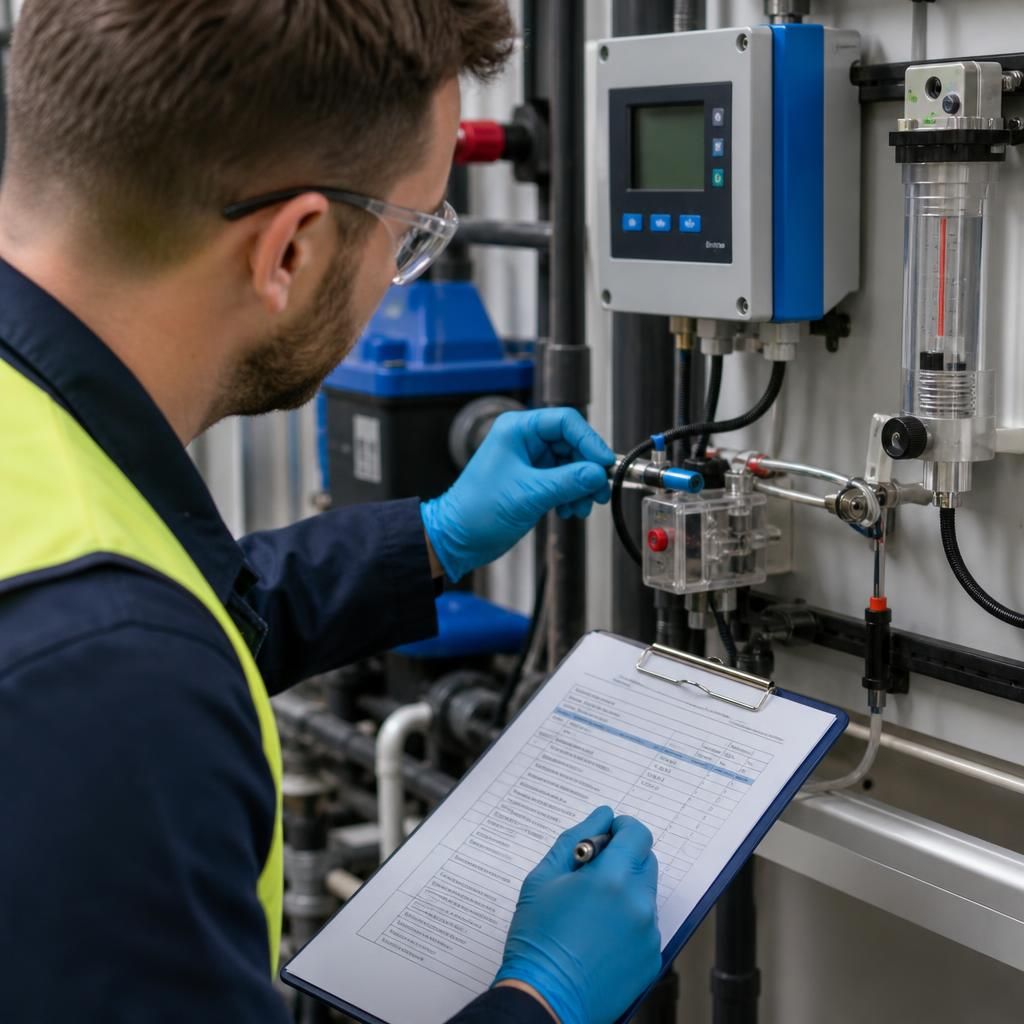
Chlorine monitoring and control is the managed process of checking disinfectant performance and keeping associated equipment within its specified operating condition. Blue Fish Water Management uses a structured method linking site observations, instrument checks and written findings.
Trained water hygiene personnel examine dosing components, alarms, injection points and control interfaces in context. They assess whether evidence is reliable enough for operational decisions, identify gaps in maintenance or verification, and explain findings to the responsible team.
Quality assurance is supported by documented procedures, consistent reporting and technical review before recommendations are issued. The resulting record identifies observations, actions and supporting evidence, giving commercial operators a clear basis for maintaining controls, demonstrating oversight and informing wider water safety documentation.
Questions to Ask Before Appointing a Chlorine Monitoring and Control Provider
What evidence demonstrates a provider’s competence in chlorine monitoring and control?
Ask for evidence of competent personnel, suitable accreditation, a defined monitoring methodology, clear reporting, agreed responsibilities, realistic timescales and follow-up arrangements, including escalation of abnormal results and documented corrective actions.
Read moreWhat site information should a provider review before proposing chlorine monitoring and control?
Relevant information includes system schematics, storage arrangements, dosing equipment, sampling points, water uses, occupancy patterns, previous results, maintenance records, risk assessments and known operational changes affecting disinfectant demand or performance.
Read moreWhat should a chlorine monitoring and control report include?
A report should record sampling results, dates, locations, methods, instrument status, interpretation, deviations, corrective actions, responsible persons and review requirements, allowing decisions and follow-up to be evidenced clearly over time.
Read moreHow should abnormal chlorine readings be escalated?
Define action thresholds in advance, notify the responsible person, assess immediate water safety implications, suspend affected use where necessary, investigate causes, document decisions, and verify corrective actions before normal operation.
Read moreWhat follow-up support is available after the initial chlorine monitoring assessment?
Follow-up may include clarification of findings, review of completed corrective actions, updated monitoring recommendations, and reassessment where system changes or persistent results indicate that controls require technical evaluation and adjustment.
Read moreDiscuss Your Chlorine Monitoring Requirements
Discuss your chlorine monitoring and control requirements with Blue Fish Water Management. We can help clarify the appropriate scope, review your existing arrangements and provide practical advice or a tailored quotation aligned with your commercial water safety responsibilities.