
What should businesses prepare before legionella water sampling?
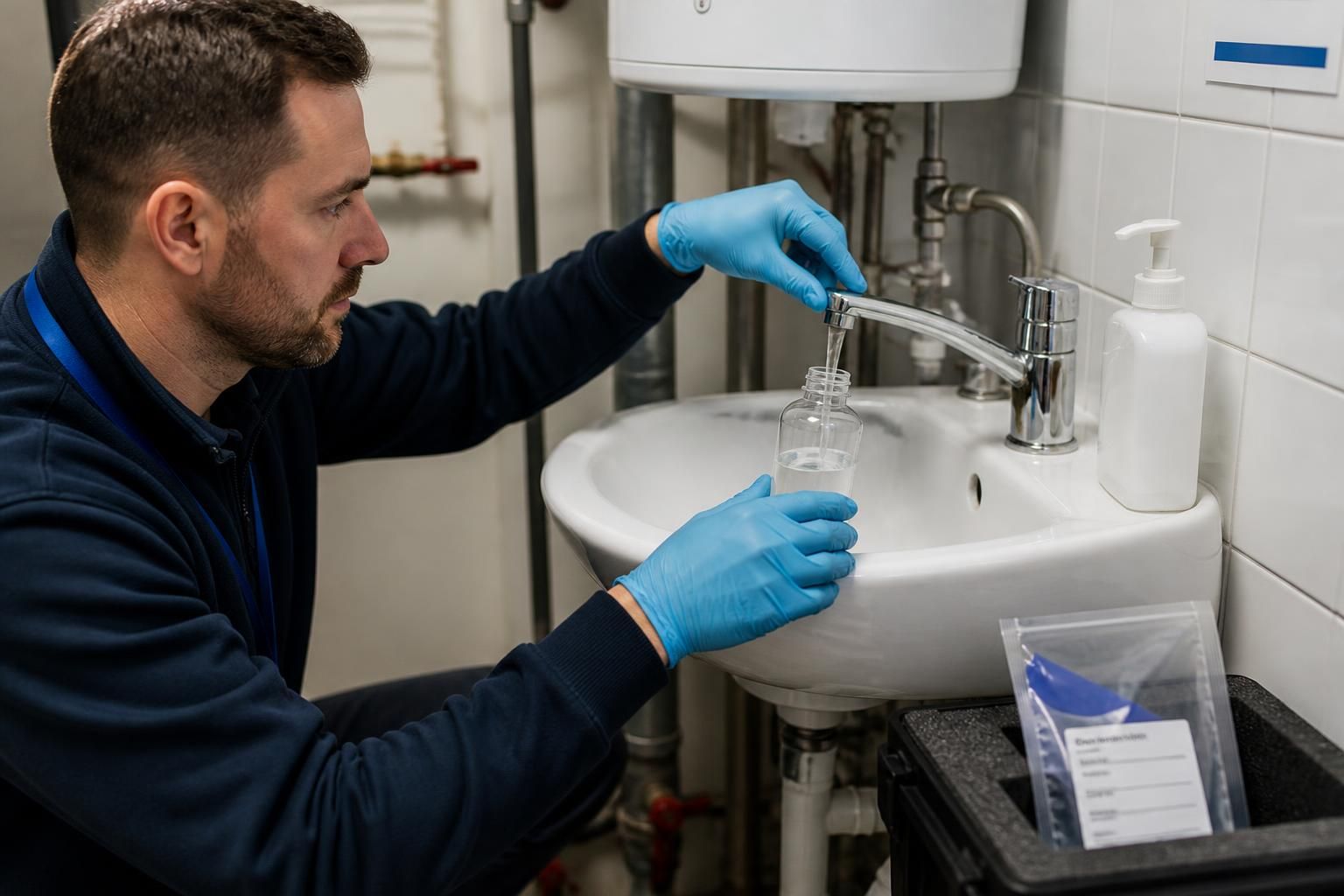
Businesses should prepare for legionella water sampling by confirming the purpose and scope of the survey, appointing a suitable site contact, and ensuring the sampling provider has enough technical and operational information to select representative samples. Preparation should support accurate interpretation of the results rather than simply making individual outlets available.
Confirm the scope of the sampling. Establish whether the work is routine monitoring, part of a legionella risk assessment, a follow-up to an unsatisfactory result, or connected with a particular water system. The purpose affects which outlets and systems need to be considered. Include hot and cold water services, storage vessels, outlets with low use, and any areas where water temperatures or stagnation may present a concern, where relevant to the assessment.
Nominate a responsible site contact. The provider should know who can explain how the premises operate, identify areas with restricted access, and answer questions about unusual water use. The contact should understand the basic layout of the water systems and know whether parts of the building are occupied, vacant, intermittently used or subject to particular operational controls. This context helps prevent samples being taken from a narrow selection of outlets that does not represent normal conditions.
Provide system information that supports sample selection. Useful information may include:
- the type of premises and its occupancy patterns;
- the location of calorifiers, storage tanks, outlets, showers and other relevant components;
- the presence of outlets that are rarely used or difficult to access;
- known dead legs, redundant pipework or areas with poor circulation;
- the normal temperature-control arrangements for hot and cold water; and
- any particular population or activity that may increase the importance of controlling exposure.
A current schematic or asset list can help the sampling provider understand the system, but it should be checked against the installation rather than treated as conclusive if the layout has evolved over time.
Agree the sampling approach in advance. Sampling points should be selected using a documented rationale. Depending on the purpose of the work, this may involve taking representative outlet samples, assessing storage or distribution components, or distinguishing between water within the system and water collected at an outlet. The provider should explain whether samples are intended to identify conditions at the point of use, investigate a suspected source, or provide evidence for ongoing monitoring. This avoids collecting samples that cannot answer the question the business is trying to resolve.
Preserve normal operating conditions. Unless a competent specialist has instructed otherwise, do not alter temperatures, clean outlets, remove fittings, dose the system or change outlet-use patterns immediately before sampling. Such actions can affect the water being tested and make the result less representative of ordinary operation. At the same time, normal safety controls must remain in place, particularly where an outlet could expose users to contaminated water or aerosol.
Plan for safe and controlled sampling. The site should identify hazards such as hot water, confined plant areas, work at height, electrical equipment, chemicals and restricted rooms. The provider may need information about the site's induction procedures, personal protective equipment requirements and permit-to-work arrangements. Sampling should not require staff to bypass access controls or interfere with essential services.
Clarify laboratory and reporting arrangements. Before work begins, confirm which samples will be taken, how they will be labelled, where they will be analysed and what information will appear on the report. The provider should use appropriate sample containers and maintain suitable handling and transport arrangements so that the sample remains identifiable and fit for analysis. Ask how results will be communicated, who will review them, and what action will follow if legionella is detected or the result requires further investigation.
Finally, make sure the organisation understands that a laboratory result is one part of water-system management. Results need to be considered alongside system design, temperatures, usage, maintenance controls and the findings of the legionella risk assessment. A clear scope, representative sampling plan and competent review give the business a more reliable basis for deciding whether monitoring, investigation or remedial action is required.
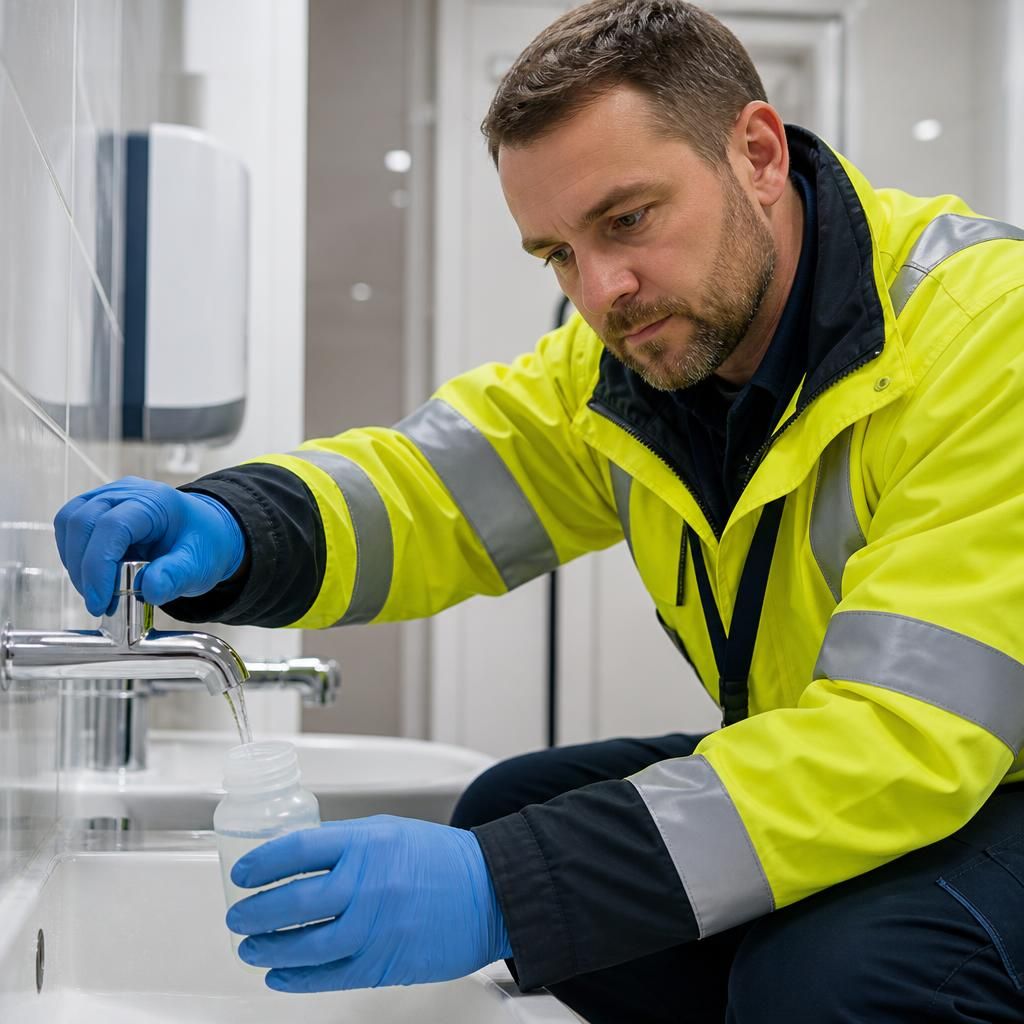
Any outlet or system component that cannot be sampled should be recorded as an explicit exclusion, with the reason noted. Restricted access, unsafe conditions, isolation or lack of an available key can all affect the final sample set. This information allows the results to be interpreted in context and shows whether an important part of the water system remains unassessed.
Ask the sampling provider to identify excluded locations in the report and advise whether they require a separate visit, alternative sampling point or further investigation. A result from accessible outlets alone should not automatically be treated as representative of the entire installation.
Prepare for legionella water sampling with expert advice
Need to confirm the right sampling approach for your premises? Speak to Blue Fish Water Management Ltd for practical advice on planning legionella water sampling and reviewing the information required before the visit.