
Chlorination of Water Systems for Compliance
Chlorination of water systems uses a controlled chlorine solution to disinfect tanks, pipework and associated components, helping manage bacterial contamination and support water safety compliance. Blue Fish Water Management plans treatment, verifies results and advises on practical follow-up actions.
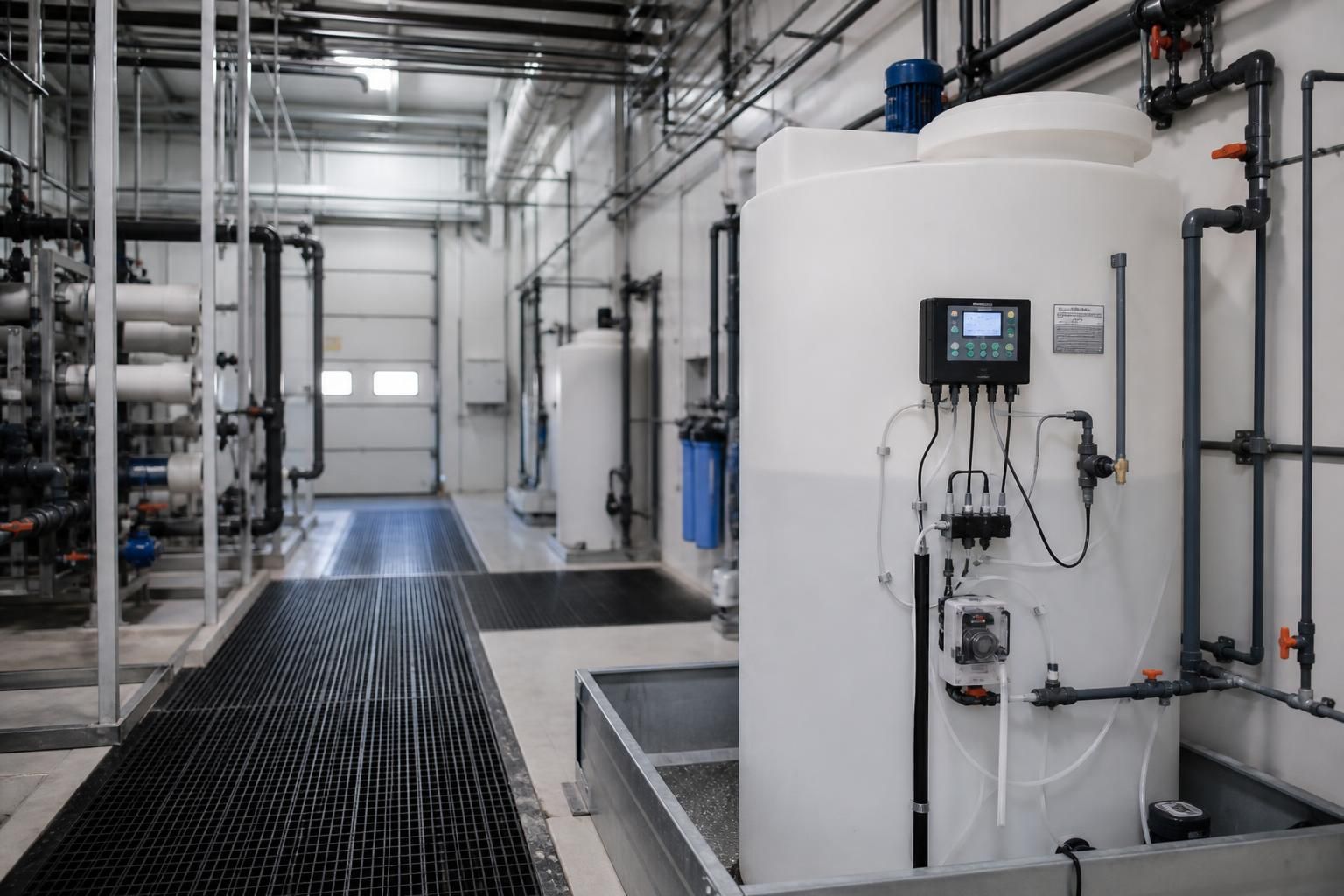
Chlorination Scope, Controls and Deliverables
A properly specified chlorination programme identifies the water system components requiring treatment, the dosing and contact controls applied, the verification evidence collected, and the records needed to demonstrate that disinfection was completed and managed appropriately.
System Scope
Treatment can cover storage tanks, distribution pipework, outlets, calorifiers and associated components, subject to the system survey and agreed method statement. The scope should identify sections requiring isolation, access and protection during disinfection.
Planned Dosing Process
The chlorination method sets out the chlorine solution, dosing arrangements, circulation requirements and contact controls for the system. These parameters are selected according to the system configuration and the treatment objective rather than applied as a standardised assumption.
Operational Controls
Before treatment, affected services and users must be considered, isolation points confirmed and suitable precautions established. Controlled discharge, reinstatement and flushing help manage the treated water and protect the system when it is returned to use.
Verification Sampling
Verification includes checks that the treatment has been completed as specified, followed by water sampling where required. Blue Fish can arrange UKAS-accredited water testing to provide independent analytical evidence for the client’s records.
Documented Evidence
A properly managed programme records the system covered, treatment method, dosing and contact controls, sampling details, analytical results, deviations and any actions identified. This creates a clear evidence trail for internal review and compliance audits.
Follow-Up Actions
Results and site observations are reviewed to identify whether further flushing, investigation, remedial work or changes to system management should be considered. Recommendations are recorded in practical terms so they can be assigned and monitored by the responsible client team.
Understanding Chlorination Requirements and Results
Chlorination of water systems is a managed disinfection process in which the required chlorine concentration is established throughout the relevant tank, pipework and outlets for a defined contact period. Effective treatment depends on factors such as water quality, system configuration, flow, temperature and the presence of dead legs or areas that are difficult to reach.
The system owner or responsible person must ensure that treatment is properly scoped, carried out by competent personnel and supported by suitable records. Results should be interpreted alongside sampling locations, chlorine measurements, contact conditions and any microbiological findings, rather than viewed as a single pass-or-fail figure. Where results are unsatisfactory, the cause may require investigation before further treatment or remedial work is specified.
What should be included in the scope?
The responsible person and competent contractor should identify tanks, cylinders, pumps, valves, calorifiers, branches and outlets that require disinfection. Dead legs, poorly circulating sections, scale, biofilm and inaccessible areas can affect the treatment, so these limitations should be recorded and addressed where practicable. Isolations, discharge points and protection of equipment should also be considered before dosing begins.
Before treatment is arranged, provide available system drawings, tank details, outlet information, previous test results and any known access or isolation constraints. This allows the chlorination plan to reflect the actual configuration rather than relying on assumptions.
Afterwards, the completed record should bring together the treatment scope, chlorine readings, contact conditions, sampling evidence and any recommended corrective actions. For a chlorination tank or wider system, this documentation provides a clear basis for deciding whether further investigation, remedial work or follow-up verification is appropriate.
Where Chlorination of Water Systems Applies
Chlorination of water systems can be specified for varied premises and system arrangements, from occupied commercial buildings to larger industrial sites. The treatment scope depends on system use, contamination risk, access, isolation requirements and the evidence the responsible person needs.
New or modified water systems
Chlorination can be used before commissioning a new installation or after significant alterations. The scope should reflect the sections changed, their connection to the wider system and the evidence required before the system is returned to service.
Commercial and multi-occupancy buildings
Offices, managed premises and other commercial buildings may require a structured treatment plan that accounts for multiple outlets, shared services and the practical arrangements needed to isolate relevant sections safely.
Industrial and complex sites
Larger industrial premises often contain separate zones, extended pipe runs or interconnected systems. Chlorination planning should identify the boundaries of each treatment area and consider whether phased work is needed.
Systems with storage or low-use areas
Storage arrangements, infrequently used outlets and sections with limited circulation can affect treatment conditions and verification. These features should be identified during the site review so the plan addresses areas that may otherwise be missed.
Suspected or confirmed contamination
Where contamination is suspected or testing has identified an unsatisfactory result, chlorination may form part of the corrective response. The underlying cause should be considered alongside treatment, particularly where access, stagnation or system condition may contribute to recurrence.
Post-remedial verification
Chlorination can be included after remedial work to support a documented return-to-service decision. Clients may require a clear record of the treated areas, treatment conditions, readings and follow-up sampling for their compliance files.
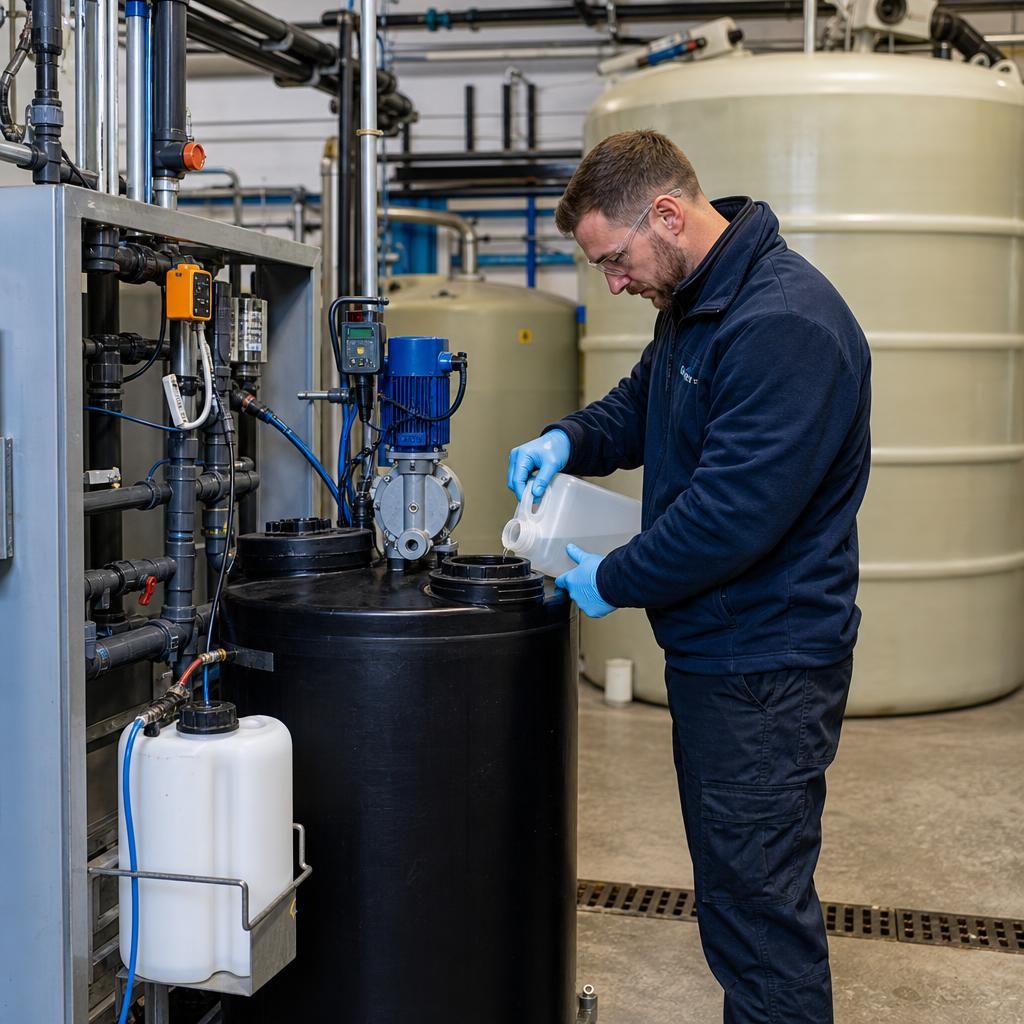
Technical Standards in Water System Chlorination
Chlorination of water systems is a controlled disinfection intervention for tanks, pipework and connected components. Where treatment forms part of in a water treatment plant chlorination, the method must reflect process layout, water use, access points and the equipment that remains connected during the work.
Blue Fish Water Management’s technical personnel review system information before selecting dosing points, isolation arrangements and treatment sequences. This helps distinguish accessible surfaces from sections that may need separate attention, while reducing the risk of untreated branches or equipment being overlooked.
Quality control is maintained through documented preparation, measured treatment conditions and clear separation between treated and untreated sections. Clients receive an auditable account of the work completed, observations made and any technical considerations requiring further investigation or corrective action.
Questions to Ask Before Appointing a Water Chlorination Provider
What evidence demonstrates a provider’s competence in chlorinating water systems?
Confirm the provider can demonstrate relevant competence, appropriate accreditation for testing, a documented method, defined responsibilities, comprehensive reporting, and arrangements for interpreting results and addressing deficiencies identified during follow-up review.
Read moreWhat should a water chlorination quotation include?
A quotation should define the treatment scope, system areas, preparation requirements, exclusions, testing arrangements, reporting deliverables, responsibilities, and costs, including any potential remedial recommendations arising from findings during subsequent review.
Read moreWhat timescale should be allowed for commercial water chlorination?
Allow time for system preparation, isolation, dosing, contact, flushing, sampling and laboratory analysis. The programme depends on system size, configuration, access and whether remedial work or repeat verification is required.
Read moreHow does the provider verify chlorine treatment throughout the water system?
Verification should combine field chlorine measurements at representative points, confirmation of contact conditions, flushing checks and post-treatment microbiological sampling, with results mapped to treated sections and outlets for formal review.
Read moreWho is responsible for preparing a system before chlorination?
The responsible person should arrange isolation, drain-down, cleaning, access, outlet identification and removal of obstructions. They must also coordinate occupants, protect equipment, and confirm the system is ready for treatment.
Read moreDiscuss Your Water Chlorination Requirements
Discuss your water chlorination requirements with Blue Fish Water Management to clarify the appropriate treatment scope, review available system information and request practical advice or a tailored quotation for the work.