
Legionella Test Kits and Water Testing Labs
Legionella test kits and laboratory testing serve different purposes: kits can support initial checks, while laboratory analysis provides documented results for water safety decisions. Explore sampling, testing and expert interpretation options for your organisation.

Which Water Testing Approach Is Right for Your Organisation?
Should you use a Legionella test kit or a water testing laboratory?
Choose kits for preliminary screening where risk is understood and decisions are limited. Use laboratory analysis for compliance evidence, uncertain conditions, large systems, investigations, or records, with cost and time considered.
Read moreWhat are the limitations of Legionella test kits?
Kits may miss low-level or intermittent contamination and cannot replace laboratory confirmation where compliance evidence is required. Results can be affected by sampling technique, storage conditions, kit limitations and interpretation.
Read moreWhich factors determine the most suitable water testing method?
Method selection depends on compliance requirements, system condition, sampling scope, required timescale and budget. Larger or complex systems generally warrant structured laboratory support; simpler checks may suit kits for screening.
Read moreWhat should a Legionella test kit result include?
A useful result should identify the sampling location, date, method, sample condition, test target, detected concentration or screening outcome, interpretation, reporting limits, and recommended follow-up actions for responsible staff review.
Read moreWhen should a business use a water testing laboratory near me?
A water testing laboratory is appropriate when sample integrity, traceability and defensible interpretation matter, including investigations, recurring monitoring, or multiple premises managed under one organisation’s water safety arrangements requiring oversight.
Read moreWhat Sets Blue Fish Apart in Water Testing Support
Blue Fish combines practical interpretation with recommendations shaped around each organisation’s water systems, responsibilities and sector. Experience across UK domestic, industrial and commercial settings supports consistent guidance, while established client relationships maintain continuity from testing decisions through ongoing hygiene management.
Interpretation beyond the test result
Blue Fish helps organisations understand what a water testing result means in relation to the system, sampling point and risk assessment. This avoids treating an isolated result as a complete water safety decision.
Testing suited to compliance needs
Where documented evidence is required, Blue Fish can support access to UKAS-accredited water testing and explain how laboratory reports relate to monitoring, audits and ongoing legionella control.
Recommendations based on your system
Advice is shaped around the organisation’s water services, responsibilities and operating context rather than relying on a standard test-kit recommendation. This helps distinguish useful sampling from testing with limited practical value.
Experience across different sectors
Blue Fish applies experience from domestic, industrial and commercial water systems when considering sampling arrangements, result interpretation and any appropriate next steps.
Consistent support over time
Established client relationships provide continuity between initial testing questions, compliance reviews, monitoring arrangements and wider water hygiene management.
What a Properly Managed Water Testing Engagement Includes
A properly managed water testing engagement sets out the sampling points, test methods, responsibilities and acceptance criteria before work begins. It should produce traceable sample records, clear laboratory reports and an explanation of what the findings mean for the relevant water system, rather than presenting isolated results without context.
Where findings require further attention, the outputs can inform remedial recommendations, verification sampling and ongoing monitoring records. This creates an auditable link between assessment, testing, corrective action and review, helping organisations maintain consistent evidence for their water hygiene arrangements.

Planned Sampling Points
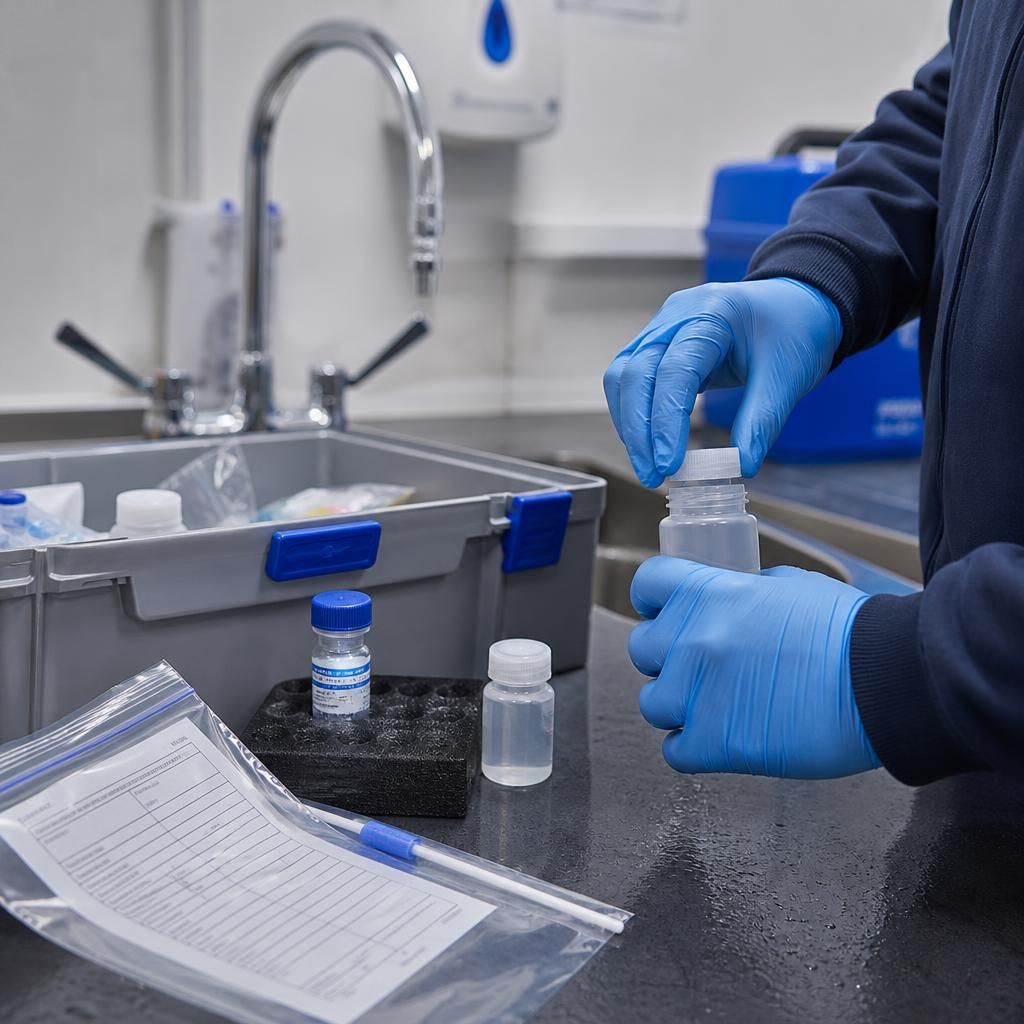
A reliable water testing programme begins by identifying representative outlets, storage vessels and system areas for sampling. The sampling plan should reflect the system design, known risks and the purpose of the investigation, with each sample labelled and recorded for traceability.
Choosing the Right Testing Method
Water testing kits may assist with initial checks, but they do not replace laboratory analysis where documented evidence is required. The appropriate method depends on the organism or parameter being investigated, the sampling objective and the level of confidence needed for a water safety decision.

Laboratory Analysis
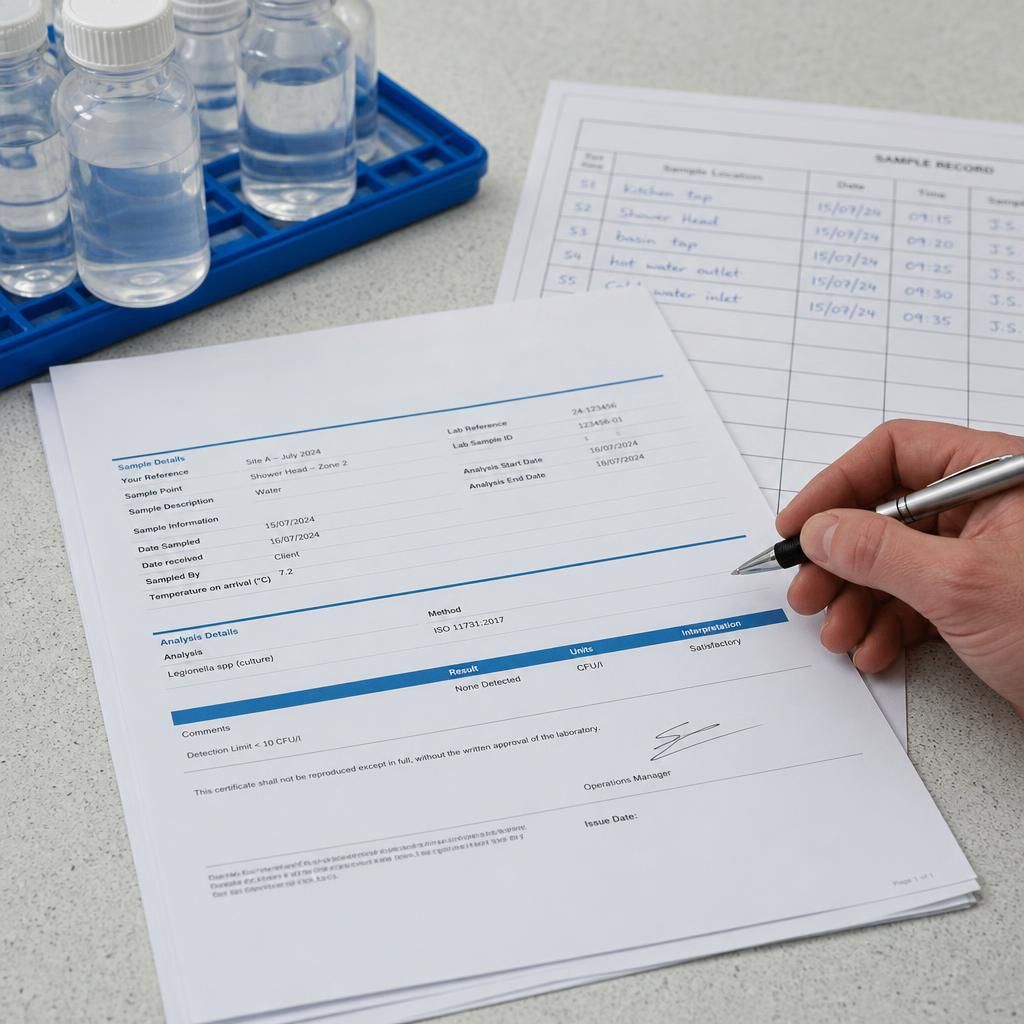
A laboratory testing service provides controlled analysis of submitted water samples and produces results that can be linked to the sampling record. UKAS-accredited testing is relevant where organisations need recognised laboratory competence and defensible evidence for compliance or risk management.
Clear, Traceable Reports
A useful laboratory report should identify the sample, collection details, test requested, method used and reported result. Reviewing these details helps organisations distinguish a complete evidence trail from an isolated result that lacks information about where, how or why the sample was taken.
Expert Interpretation
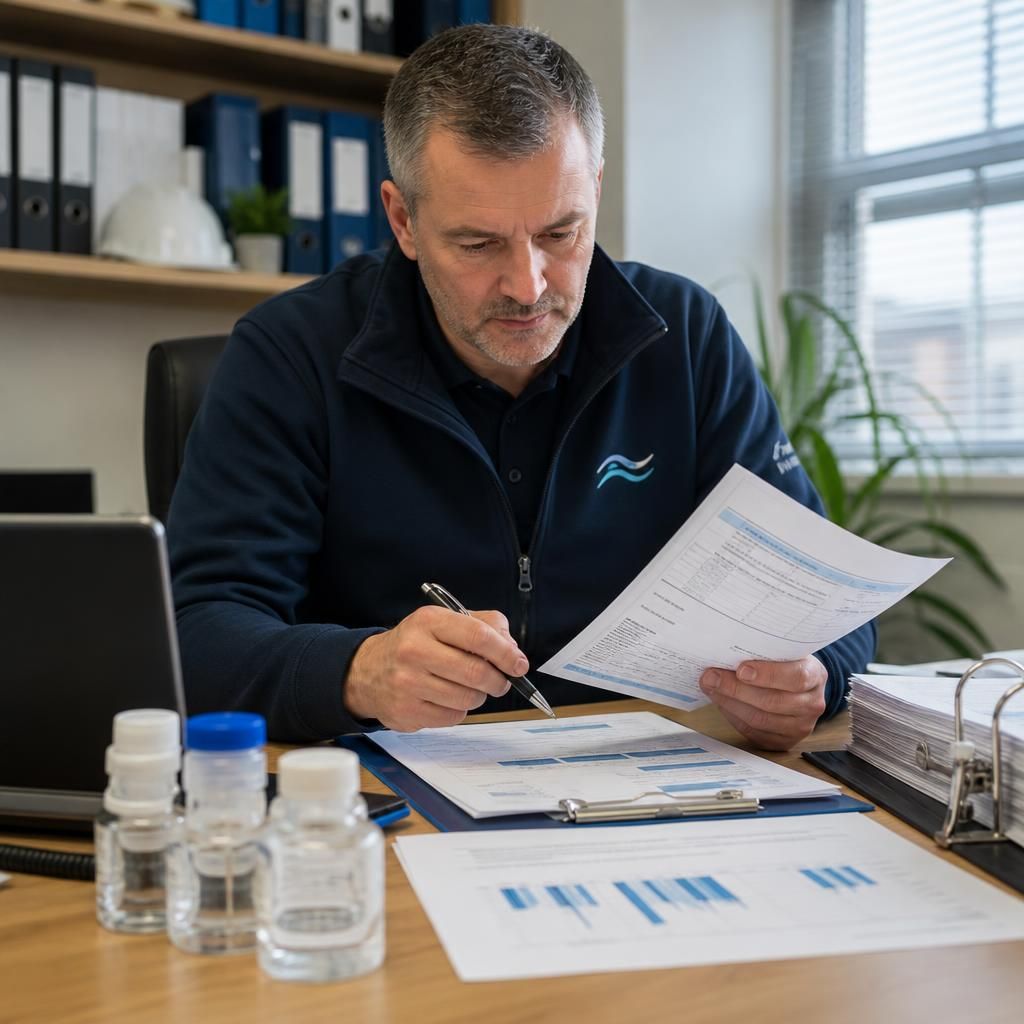
Test results require interpretation alongside the legionella risk assessment, system conditions and existing control records. Expert review can explain the significance of a finding, identify whether further investigation is appropriate and help determine what evidence should be retained.
Verification and Ongoing Monitoring
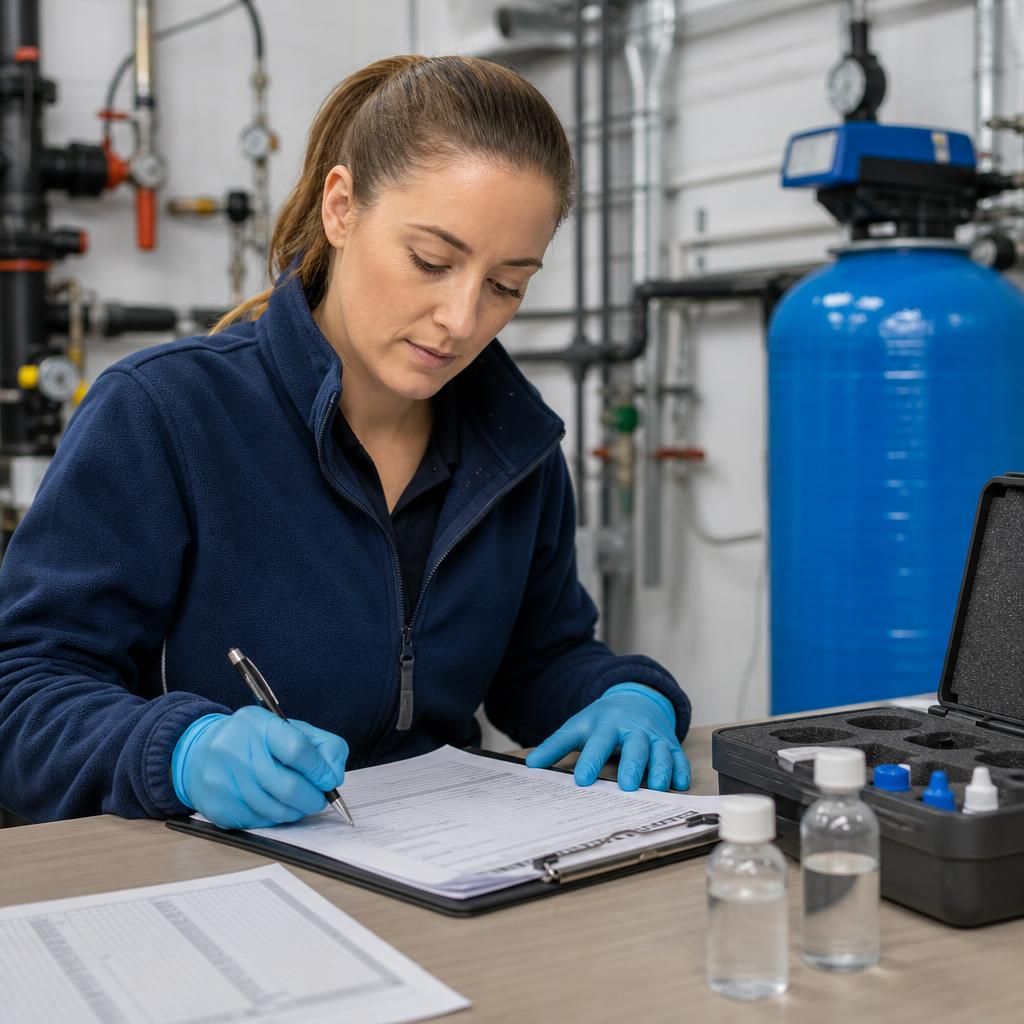
Where results identify a need for further attention, repeat sampling can help verify whether corrective measures have addressed the relevant concern. Results, actions and review dates should be incorporated into ongoing water hygiene records so that testing supports a consistent, auditable monitoring process.
Questions to Ask Before Appointing a Water Testing Provider
Before choosing a provider for legionella or other water testing, check how its staff demonstrate technical competence and how the proposed service fits your organisation’s water systems. Ask who will carry out the work, which tests are genuinely necessary, how limitations are identified and whether the provider can explain results in relation to your operational risks.
Also clarify the practical arrangements before commissioning: what you will need to provide, how findings will be communicated, what support follows the report and how repeat testing or monitoring would be managed. Comparing these points alongside the full cost and scope helps you distinguish a suitable service from a test-only package that may not meet your compliance needs.
Evidence of suitable expertise
Request a clear description of the personnel involved, their qualifications or training, and the quality procedures used to control sampling and analysis. A suitable provider should be able to explain how it manages factors such as sample selection, contamination risks, storage and transport without relying on laboratory results alone.
Use the answers to produce a written testing brief that records the system boundary, decision-maker and action required if results are abnormal. This gives procurement and site teams a common reference and helps prevent a kit or laboratory report being treated as a complete assessment of risk.
Where interpretation or follow-up is needed, Blue Fish Water Management Ltd can help align testing with wider water hygiene arrangements, so the selected service supports an evidence-based decision rather than generating results in isolation.
Clarify Your Water Testing Requirements
Unsure which legionella testing kit or laboratory service suits your site? Contact Blue Fish Water Management to clarify requirements, discuss proportionate advice and receive a tailored quotation or appropriate next step, without committing to an unsuitable solution. Make an enquiry.