
Industrial Water Tank Cleaning
Industrial water tank cleaning is the planned removal of sediment, scale, biofilm and other contamination from tanks serving industrial premises. It helps protect stored water quality, support legionella control, meet relevant compliance duties and maintain safe, reliable system operation.
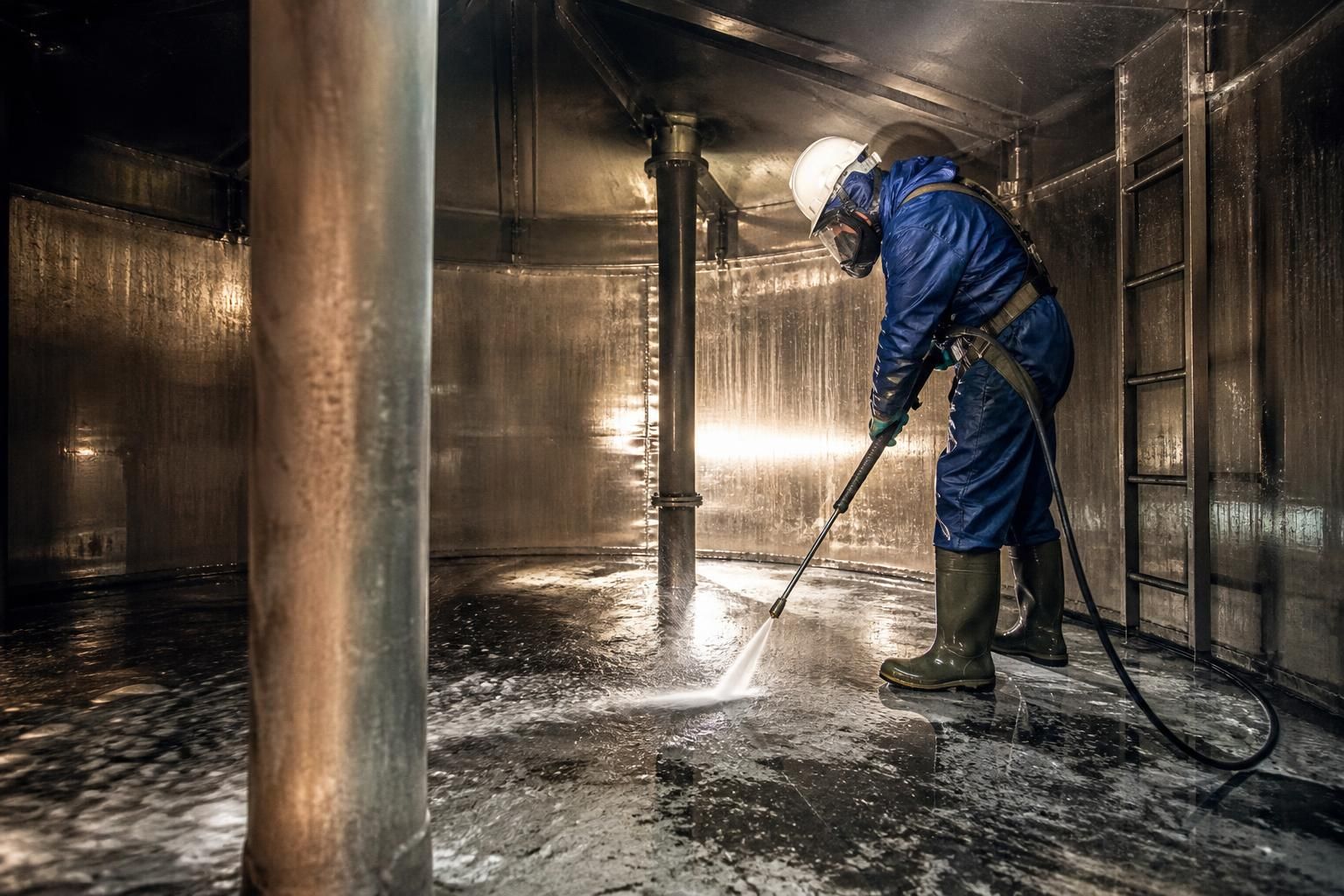
The operational challenges of industrial tank cleaning
Managing industrial tank cleaning involves more than arranging access and removing deposits. Site constraints, confined-space hazards, contamination controls, production demands, waste handling and incomplete maintenance records can complicate planning, documentation and decisions about remedial work.
Restricted access and confined-space risks
Industrial tanks may be located in plant rooms, roof spaces or other areas with limited access. Entry arrangements, ventilation, atmospheric testing, rescue planning and competent supervision must be assessed before any internal cleaning work begins.
Maintaining water safety during isolation
Cleaning usually requires sections of the water system to be isolated, drained or taken out of service. The plan must prevent cross-contamination, protect other users and ensure the system is safely reinstated after the work.
Managing production and site constraints
Industrial premises may depend on stored water for processes, welfare facilities or fire protection. Cleaning arrangements therefore need to account for operational restrictions, alternative supplies, shutdown controls and coordination with site management.
Contamination that is not visible
Sediment and scale can conceal biofilm, corrosion or damaged coatings, while clear-looking water does not confirm that a tank is hygienically satisfactory. Inspection findings may require additional cleaning, disinfection or remedial work.
Wastewater and contaminated materials
Removed sludge, deposits and wash water need to be contained, handled and disposed of in accordance with site controls and applicable environmental requirements. Drainage routes should be confirmed before cleaning starts to avoid uncontrolled discharge.
Evidence of compliance and verification
A defensible record should link the tank condition, cleaning method, isolation controls, findings, disinfection where applicable and post-work checks. Missing asset details or incomplete maintenance records can make it difficult to demonstrate that risks have been properly managed.
Unexpected defects revealed by cleaning
Cleaning can expose corrosion, defective fittings, damaged access covers, poor seals or deteriorated internal surfaces. These issues need to be assessed separately from routine cleaning so that necessary repairs are prioritised and documented.
Questions to ask before industrial tank cleaning
Industrial tank cleaning is a planned maintenance decision based on the tank’s purpose, the water it supplies and evidence of its current condition. Review inspection findings, water sampling results, previous cleaning records and any changes to the system before deciding what work is necessary.
Ask whether the tank remains suitable for its use, whether contamination could affect downstream outlets and whether defects require attention alongside cleaning. The proportionate action may be routine cleaning, cleaning with disinfection, further investigation or remedial work, depending on the evidence and the system’s risk assessment.
Reviewing the tank’s history and condition
Check the latest inspection findings, sampling results, cleaning certificates, disinfection records and any reports of changes in water quality. Note the tank’s age, construction, capacity, connected systems and previous defects, while comparing the records with the current risk assessment. If information is missing or contradictory, further inspection may be more appropriate than assuming that a standard cleaning visit will address the issue.
Once the evidence has been reviewed, record the agreed scope of industrial tank cleaning alongside the required access arrangements, isolation procedures, safety controls and waste-disposal requirements. The completed work should be documented, with any defects, follow-up sampling or further remedial actions clearly identified.
Where the tank forms part of a wider water system, consider the cleaning outcome alongside the site’s legionella control measures and water hygiene records. Blue Fish Water Management Ltd can provide practical advice on the appropriate cleaning, testing and follow-up requirements for industrial water systems.
Benefits of effective industrial tank cleaning
Industrial tank cleaning is planned maintenance that removes deposits and contamination from tanks serving industrial premises. It supports safer system operation, clearer compliance records and decisions about further work.
Coordinating work with site controls can reduce disruption to production while ensuring defects and follow-up requirements are recorded. This creates a consistent maintenance trail and supports effective long-term system management.
Improved contamination control
Removing sediment, scale and biofilm reduces the material that can compromise stored water quality and supports a more hygienic tank environment.
Stronger maintenance evidence
A documented cleaning scope, completed work record and identified follow-up actions provide clear evidence for internal reviews and compliance audits.
More dependable system operation
Cleaning can help maintain the intended condition of tanks and connected systems, while inspections identify defects that could affect ongoing performance.
Better coordination with site activity
Planned access, isolation and safety arrangements allow tank cleaning to be integrated with industrial site controls and operational requirements.
More informed future decisions
Inspection findings, sampling results and cleaning records create a useful basis for setting future maintenance priorities and reviewing system risk.
Questions About Industrial Water Tank Cleaning
What evidence should an industrial tank cleaning contractor provide?
A suitable scope should reflect tank capacity, construction, contents, connected processes and site constraints. Competent contractors document findings, explain limitations, coordinate controls and identify responsibilities for reinstatement and post-work verification.
Read moreHow is industrial tank cleaning coordinated with production activities?
Work is planned around process dependencies, isolation requirements, access and hygiene controls. Agreeing shutdown boundaries, protective measures and reinstatement responsibilities beforehand helps limit operational interference and preserves safe system management.
Read moreHow is industrial tank cleaning adapted to different tank contents?
Methods depend on whether tanks hold potable water, process water, chemicals or contaminated liquids. Risk assessment determines compatible cleaning techniques, protective controls, waste handling, rinsing, and verification requirements for the site.
Read moreWhat determines the frequency of industrial tank cleaning?
Frequency should reflect the risk assessment, tank usage, water turnover, temperature, contamination history, inspection findings and system changes. Sampling results or altered operations may justify earlier cleaning or revised intervals.
Read moreWhat checks confirm an industrial tank has been cleaned properly?
Confirmation should include visual inspection findings, removed deposits, final condition, rinse or disinfection records, waste documentation and any required follow-up sampling, supported by dated service records and photographs where appropriate.
Read moreDiscuss Your Industrial Tank Cleaning Requirements
Contact Blue Fish Water Management Ltd to discuss your industrial tank cleaning requirements, clarify any site-specific constraints, and request professional advice on the most suitable approach for the tank and its operational context.