
Grease Tank Cleaning for Commercial Kitchens
Grease tank cleaning removes accumulated fats, oils, grease and settled solids from commercial kitchen waste systems. Blue Fish Water Management provides planned cleaning for businesses, helping maintain hygienic operation, reduce blockage risk and support documented environmental and water-safety compliance.
Safe Compliance
A documented cleaning plan helps businesses assess grease build-up, meet UK environmental responsibilities, and determine maintenance for safe water management.
What Grease Tank Cleaning Includes
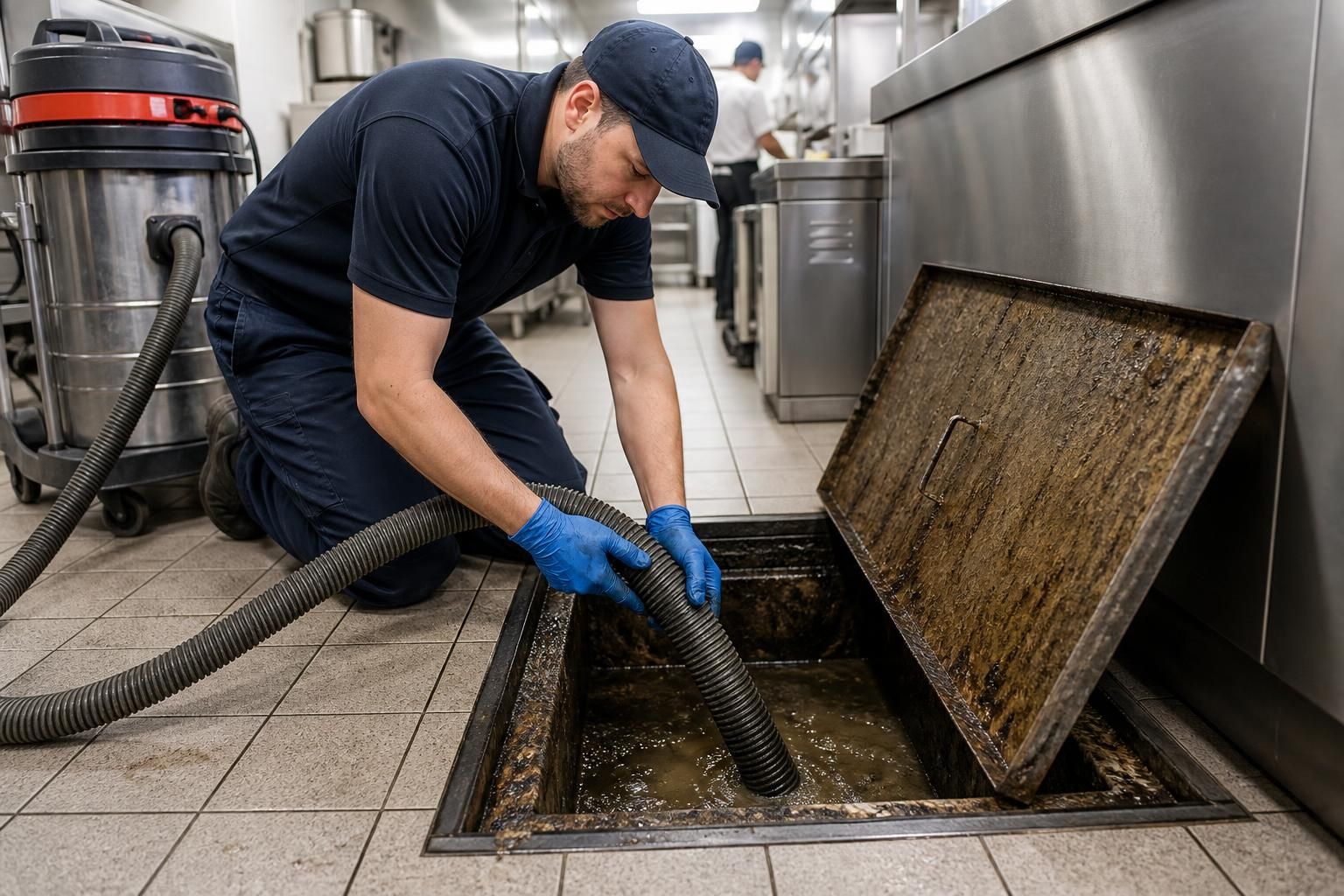
An effective grease tank cleaning engagement covers site information, tank access, safe isolation where required, removal of accumulated material, internal cleaning and suitable waste handling. The scope should reflect tank design, usage and condition rather than rely on a standard interval.
Blue Fish Water Management can help coordinate cleaning with maintenance records and retain service documentation for operational review.
Tank Condition Review
The cleaning scope considers grease accumulation, settled solids, tank configuration and operational use so that the work is suited to the system.
Thorough Internal Cleaning
Accumulated fats, oils, grease and solids are removed from the tank, with internal surfaces cleaned to support hygienic wastewater system operation.
Responsible Waste Handling
Removed material is managed through appropriate waste-handling arrangements, supporting responsible environmental management for the business.
Documented Service Evidence
Service details can be recorded for maintenance files, helping demonstrate that grease tank cleaning forms part of the site’s water and environmental controls.
Planned Maintenance Input
Cleaning findings can inform future maintenance planning, allowing the business to review tank condition and cleaning requirements as use changes.
Practical Grease Tank Cleaning Deliverables
Useful grease tank cleaning outputs give responsible teams a clear record of work completed and any issues requiring attention. Depending on the site, reporting may include condition observations, waste transfer documentation, photographs and recommendations for future maintenance.
Site-specific cleaning method
The cleaning scope is matched to the tank arrangement, access points and connected kitchen drainage. This defines the equipment, preparation steps and controls needed to complete the work without disrupting unrelated site operations.
Access and isolation checks
Before cleaning begins, the tank and its access points are checked so covers, connections and isolation requirements are understood. Any restriction that could affect safe access or the planned work can be recorded for the responsible site team.
Controlled removal of accumulated waste
Fats, oils, grease and settled solids are removed from the tank and handled as waste rather than being allowed to re-enter the drainage system. The process supports cleaner tank operation and reduces the likelihood of material contributing to downstream blockages.
Completion records for compliance files
A completion record can identify the serviced tank, work carried out and relevant site observations, giving facilities and compliance teams evidence to retain with their maintenance records.
Practical handover information
The handover explains any access, condition or operational issue that should be considered before the next planned service. This helps the responsible team review the tank within its wider maintenance arrangements.
Questions to Ask Before Arranging Grease Tank Cleaning
How often should commercial grease tanks be cleaned?
Before commissioning, confirm the tank’s capacity, access arrangements, waste classification, cleaning frequency, contractor competence and control measures, then formally agree responsibilities, scope and required documentation in writing before work starts.
Read moreWhat does commercial grease tank cleaning involve?
Commercial grease tank cleaning typically involves isolating the system, removing fats, oils, grease and settled solids, washing internal surfaces, managing extracted waste appropriately, and recording identified defects or access limitations.
Read moreWhat should businesses check before choosing a grease tank cleaning contractor?
Check the contractor’s relevant experience, waste-handling arrangements, risk assessments, insurance, equipment, reporting standards and ability to identify defects, ensuring their proposed service suits the tank and business’s operational requirements and constraints.
Read moreHow should businesses prepare a site for grease tank cleaning?
Prepare the site by clearing access routes, protecting equipment, arranging safe vehicle access, notifying affected staff, securing necessary permits, and confirming safety controls before cleaning work begins.
Read moreWhat records should businesses retain after grease tank cleaning?
Retain dated job sheets, contractor details, consignment references, disposal documentation, invoices and follow-up actions. Keep records securely, linked to the relevant tank and site, for future compliance checks and audits.
Read moreWhat to Expect from Professional Grease Tank Cleaning
Grease tank cleaning is planned around the tank’s condition, access arrangements and the waste held within it. Blue Fish Water Management discusses the proposed scope with the responsible business before work begins, including any site constraints that could affect safe and effective cleaning.
Findings are explained clearly after the work, with separate attention given to defects, access issues or maintenance considerations. Where further action may be appropriate, advice is based on the observed condition rather than assumptions, enabling the business to make informed decisions about future tank management.
Establishing the requirements
The initial discussion helps identify the tank location, access limitations, likely grease and settled-solid accumulation, and any relevant site constraints. This information is used to define the work required and clarify what the cleaning process is intended to address.
After the work, the responsible person can use the cleaning record and any recommendations to update the site’s maintenance arrangements. Future cleaning should be based on the tank’s condition, the type and volume of waste produced, and any changes to kitchen operations.
Where the assessment identifies a need for remedial attention, the next step is to review the issue with the relevant contractor and agree an appropriate course of action. This gives businesses a clear basis for managing grease tanks rather than relying on fixed intervals or unverified assumptions.
Discuss Your Grease Tank Cleaning Requirements
Discuss your grease tank cleaning requirements with Blue Fish Water Management to clarify site arrangements, confirm the proposed scope is suitable, and identify the information needed to plan the next step for your business.