
Chlorine Swimming Pool Management
Chlorine swimming pool management is the controlled use of disinfection, testing and monitoring to maintain safe bathing water and support compliance. Blue Fish Water Management advises commercial and industrial pool operators on practical controls, records and corrective action.
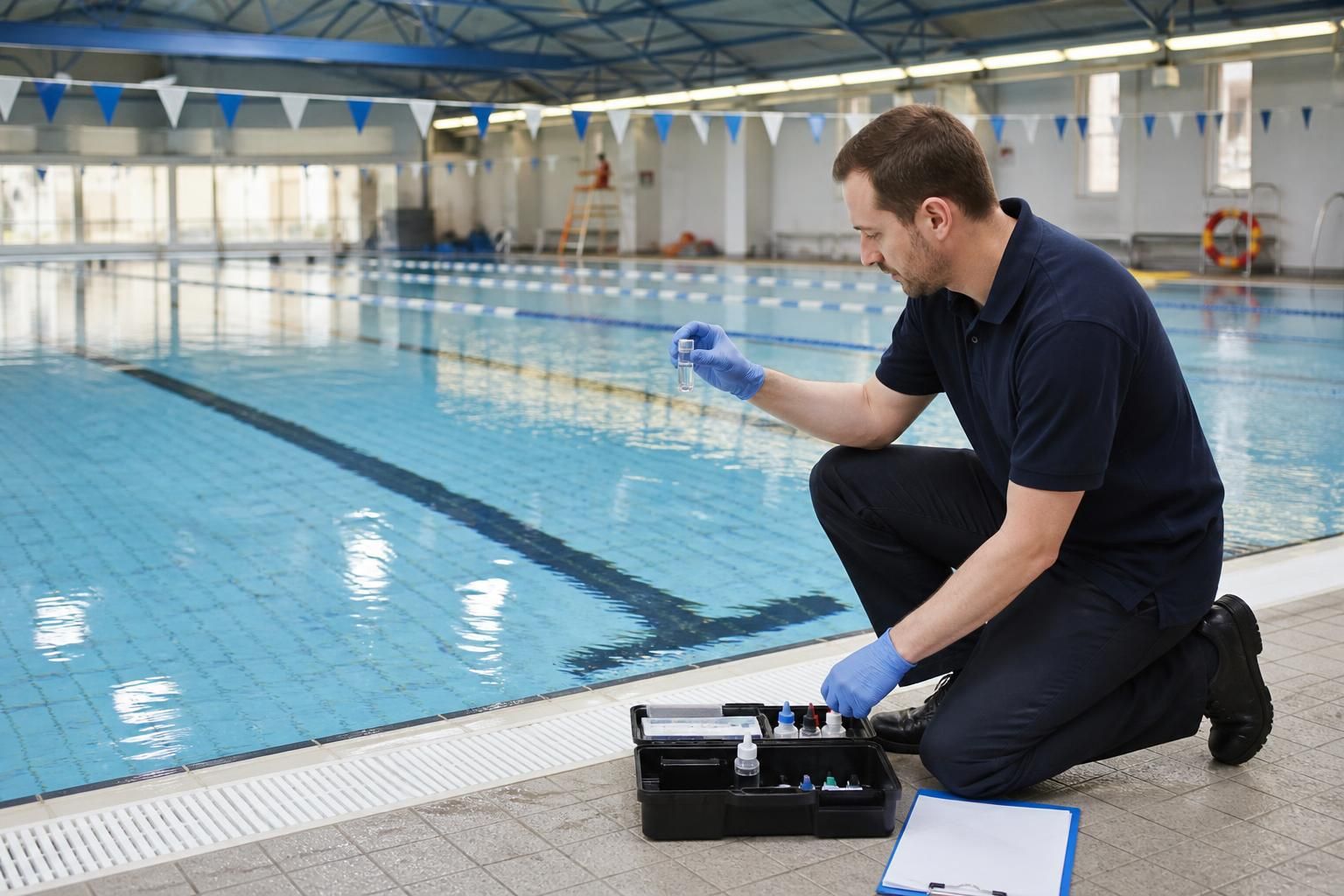
Compare Chlorine Swimming Pool Management Approaches
Options for managing a chlorine swimming pool differ in how comprehensively they address plant operation, water-quality verification, documentation and governance. Comparing their scope, suitability, level of involvement and intended outcome clarifies which approach aligns with a site’s operational responsibilities.
Routine Operator-Led Management
This approach covers scheduled checks of chlorine residual, pH, dosing equipment and basic pool records by the site team. It suits straightforward systems with clearly assigned responsibilities and competent operators. External involvement is limited, with the intended outcome of maintaining routine control and identifying obvious deviations promptly.
Structured Pool Management Programme
A structured programme combines operating procedures, defined testing schedules, plant checks, record keeping, staff responsibilities and periodic review. It is more suitable for commercial or industrial sites where several people contribute to pool operation. The greater level of involvement is intended to create consistent controls and clearer evidence for internal governance and compliance reviews.
Independent Testing and Verification
Independent verification adds objective water-quality testing and review to the site’s own operational checks. UKAS-accredited water testing can help assess whether monitoring results support the control measures in place, particularly where records need external scrutiny. This approach suits operators seeking evidence-based assurance, trend identification and informed corrective action.
Corrective and Remedial Management
This approach focuses on investigating recurring control problems, such as inconsistent chlorine levels, unsuitable dosing arrangements or weaknesses in plant operation. It may involve technical advice, remedial works and a revised monitoring process, making it appropriate where routine management alone has not resolved the issue. The intended outcome is to address the underlying cause and establish more effective ongoing control.
Practical Controls for Chlorine Swimming Pool Management
An effective arrangement translates pool responsibilities into defined tasks: checking chemical storage and dosing equipment, reviewing plant alarms, verifying test results, documenting interventions, and escalating abnormal readings. These elements help operators maintain consistent control of bathing-water conditions within UK requirements.
Chlorine Dosing Control
Review chlorine dosing arrangements, chemical storage and injection points to support consistent disinfectant levels. Controls should account for plant operation, pool usage and the condition of dosing equipment.
Routine Water Testing
Structured testing checks chlorine, pH and other relevant bathing-water parameters against the site’s operating requirements. Results should be assessed rather than simply recorded, so abnormal readings can be investigated.
Plant and Equipment Checks
Inspect dosing pumps, controllers, pipework, alarms and associated treatment equipment as part of the management process. Identifying faults or calibration issues helps prevent equipment problems from undermining water quality controls.
Records and Compliance Evidence
Maintain clear records of test results, chemical checks, equipment inspections, incidents and remedial actions. Complete documentation gives operators an auditable account of how chlorine swimming pool controls are being managed.
Abnormal Reading Response
Define what happens when chlorine or pH results fall outside the site’s control limits. Investigation, escalation, corrective action and follow-up testing should be documented so the cause is addressed and normal control can be verified.
Defined Responsibilities
Assign pool water management tasks to suitably informed personnel and make escalation routes clear. Practical guidance and training help staff understand testing methods, chemical safety, record keeping and the actions required when conditions change.
Questions About Chlorine Swimming Pool Management
When is specialist chlorine swimming pool management support appropriate?
Suitability depends on pool type, bather load, plant design, existing controls and recorded risks. A structured review identifies proportionate monitoring, competency, documentation, remedial priorities and compliance decisions for operators.
Read moreWhat indicates that chlorine swimming pool controls need review?
Controls warrant review when test trends drift, dosing becomes inconsistent, plant alterations occur, alarms recur, records contain unexplained gaps, or changing use affects disinfectant demand and materially increases operating risk.
Read moreShould chlorine swimming pool management be a review or an ongoing service?
Either may be appropriate: a review suits defined concerns, system changes or compliance planning, while ongoing management supports scheduled oversight, trend evaluation and documented decisions within the operator’s governance arrangements.
Read moreHow is chlorine swimming pool management support matched to compliance needs?
Support should reflect documented duties, system complexity, risk profile and compliance gaps. Options may include targeted advice, procedural review, staff guidance or broader governance support, with scope agreed clearly.
Read moreWhat information is needed to scope chlorine swimming pool management?
Scoping requires pool type, capacity, usage patterns, plant configuration, chemical arrangements, existing procedures, test records, incident history, identified deficiencies, responsible personnel, and the operator’s required compliance outcomes and review priorities.
Read moreQuestions to Ask Before Appointing a Pool Management Provider
Chlorine swimming pool management should be set out as a defined control programme rather than an informal testing arrangement. Before proceeding, ask which parts of the pool operation are included, which standards and guidance inform the approach, and what competence the people carrying out the work can demonstrate.
Clarify what evidence will be provided, how findings and corrective actions will be reported, and the expected timescales for assessments, results and recommendations. Confirm which responsibilities remain with the pool operator, how information will be shared between visits, and how the arrangement will be reviewed when the pool, plant or operating conditions change.
Agree the scope in writing
The agreed scope may address chlorine dosing, manual water testing, plant-room checks, chemical storage, alarm review, logbook checks and investigation of unusual results. It should also state whether the provider reviews circulation, filtration and related control measures, and identify any areas that remain the operator’s responsibility. Clear exclusions are as important as included tasks because they prevent assumptions about who must act when a defect or unsafe reading is identified.
The next practical step is to provide the prospective provider with the pool’s design details, operating regime, plant information and existing water-quality records. This allows the proposed chlorine swimming pool management programme to be considered against the actual risks and controls at the site.
A suitable arrangement should leave the operator with a clear understanding of what good control looks like, what evidence demonstrates it, and which circumstances require the programme to be reconsidered. That clarity supports consistent decision-making rather than relying on isolated test results.
Discuss Your Chlorine Swimming Pool Management Requirements
Discuss your chlorine swimming pool management requirements with Blue Fish Water Management to clarify the controls, evidence and specialist input appropriate to your operation. We can help identify a practical next step based on your pool arrangements and responsibilities.