
Professional Water Tank Cleaning Services
Professional water tank cleaning services remove sediment, biofilm and other contamination from storage tanks, helping organisations protect water quality and support legionella control. Cleaning is planned around tank condition, system use and relevant compliance requirements.
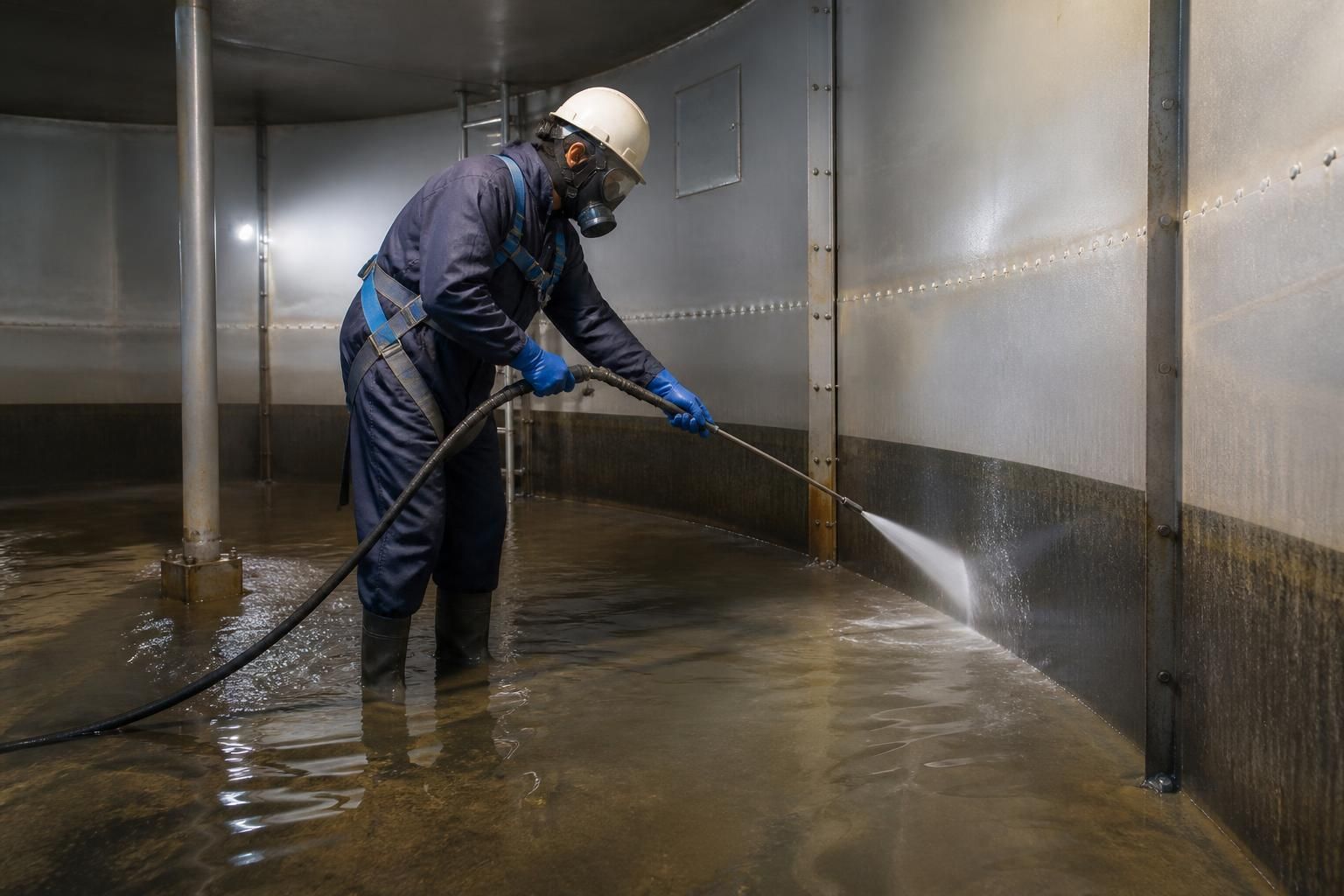
What Makes Water Tank Cleaning Difficult to Manage
Water tank cleaning is a controlled maintenance task requiring suitable planning, safe access, appropriate methods and documented checks. Organisations must account for tank condition, water use, contamination risks and legal duties when arranging the work.
Maintaining Water Supply During Cleaning
Tanks may support essential outlets, so cleaning work must be coordinated with system operation. Temporary isolation, alternative supply arrangements and clear communication can be needed to avoid disrupting business activities or leaving parts of a building without usable water.
Safe Access to the Tank
Access points, confined spaces, ladders and internal surfaces can create significant risks for the people carrying out the work. A suitable method statement and risk assessment should address entry arrangements, equipment, ventilation, water hazards and emergency controls.
Selecting an Appropriate Cleaning Method
The method depends on tank materials, construction, access, deposits and the condition of associated components. Incorrect cleaning techniques can damage surfaces, disturb fittings or fail to remove contamination from difficult areas.
Managing Disinfection and Recommissioning
After cleaning, the tank and connected system may require controlled disinfection before being returned to service. Chemical handling, contact times, flushing and checks must be managed carefully so that the system is safe to use and is not left with unsuitable residuals.
Meeting Compliance and Record-Keeping Duties
Organisations need evidence that maintenance has been planned, completed and checked appropriately. Records should identify the tank, work undertaken, findings, verification results and any remedial actions, supporting wider water hygiene management and audit requirements.
Dealing With Defects Found During Cleaning
Cleaning can reveal corrosion, damaged coatings, insecure covers, faulty valves or other defects that affect water quality and system performance. These findings need to be assessed separately from the cleaning task, prioritised and tracked through to suitable remedial work.
Assessing Your Water Tank Cleaning Requirements
Start by reviewing the tank’s maintenance records, inspection findings and any changes to the water system since the last service. Note reported taste, odour, appearance or temperature concerns, together with any periods when the tank has been unused or difficult to inspect.
When comparing tank cleaning services, ask how the work will affect water supplies, what evidence will be provided afterwards and whether follow-up testing or remedial work is appropriate. The right approach should reflect the tank’s role, condition and level of risk rather than applying the same cleaning programme to every installation.
Assess condition, use and risk together
A tank containing visible sediment, scale, sludge, biofilm or other contamination may require cleaning, particularly where it supplies water used by many people or supports a higher-risk process. A sound tank with no relevant contamination may instead need continued monitoring and a defined review point. The decision should be recorded with the reasons for the chosen action.
Once the review is complete, use the findings to define a proportionate cleaning scope. If the tank has defects, persistent contamination or unsuitable pipework, cleaning alone may not address the underlying risk and further investigation or remedial work may be needed.
Before closing the task, ensure the work is recorded alongside the tank’s maintenance history, including the condition found, method used and any recommendations. This provides a clear basis for deciding when the next inspection or cleaning service should be considered.
Practical Outcomes of Planned Water Tank Cleaning
Water tank cleaning is a planned intervention that restores suitable internal conditions and supports dependable operation of the connected water system. When its scope is matched to the installation, it can reduce avoidable interruptions, identify maintenance issues early and help keep routine water management tasks under control.
This supports safer operations, clearer compliance decisions and more controlled long-term maintenance.
Better control of contamination
Removing sediment, biofilm and other deposits helps maintain cleaner tank conditions and supports the wider legionella control strategy.
Earlier identification of defects
The cleaning process provides an opportunity to inspect internal surfaces and identify corrosion, damage or access problems requiring further attention.
Clearer compliance evidence
Recording the tank condition, cleaning method and recommendations creates useful evidence for maintenance reviews and compliance decisions.
More proportionate maintenance
Findings from the tank can be used to align future cleaning, inspection and remedial work with the installation’s condition and level of risk.
Better planned interventions
A documented outcome gives responsible teams a clearer basis for scheduling the next inspection or cleaning activity without relying on assumptions.
Questions About Water Tank Cleaning Services
What competence should a water tank cleaning contractor demonstrate?
Qualified technicians assess tank condition, isolate systems safely where necessary, document cleaning methods and findings, and identify issues requiring escalation, enabling responsibilities and follow-up actions to remain clear for stakeholders.
Read moreWhat documentation should a water tank cleaning service provide afterwards?
A service record should identify the tank, date, scope, cleaning method, condition before and after, waste handling, photographs where relevant, test results, defects, recommendations and follow-up actions for future reference.
Read moreHow can water tank cleaning be planned to minimise disruption to operations?
Plan cleaning around low-demand periods, agreed isolation arrangements and temporary water provisions. Confirm access, tank sequencing and reinstatement checks beforehand, so essential operations remain controlled while work proceeds as planned.
Read moreWhat determines the required frequency of water tank cleaning?
Cleaning frequency depends on risk assessment, tank design, usage, water turnover, environmental conditions, inspection findings and contamination history. Reconsider the interval after alterations, incidents, prolonged stagnation or recurring defects emerge.
Read moreWhen should a water tank be cleaned rather than replaced?
Cleaning is appropriate when the tank remains structurally sound and contamination is removable. Replacement is more suitable where corrosion, persistent defects, obsolete design or repeated failures compromise continued safe operation.
Read moreDiscuss Your Water Tank Cleaning Requirements
Discuss your tank’s condition, access arrangements and cleaning objectives with our water hygiene specialists. We can help clarify the appropriate scope, explain associated evidence requirements and advise whether additional inspection or testing should be considered.