
Commercial Tank Chlorination for Safer Water
Tank chlorination is the controlled disinfection of storage tanks and associated water systems, using measured chlorine dosing and verification. Blue Fish Water Management provides this service for commercial premises to address contamination risks and support documented water safety compliance.
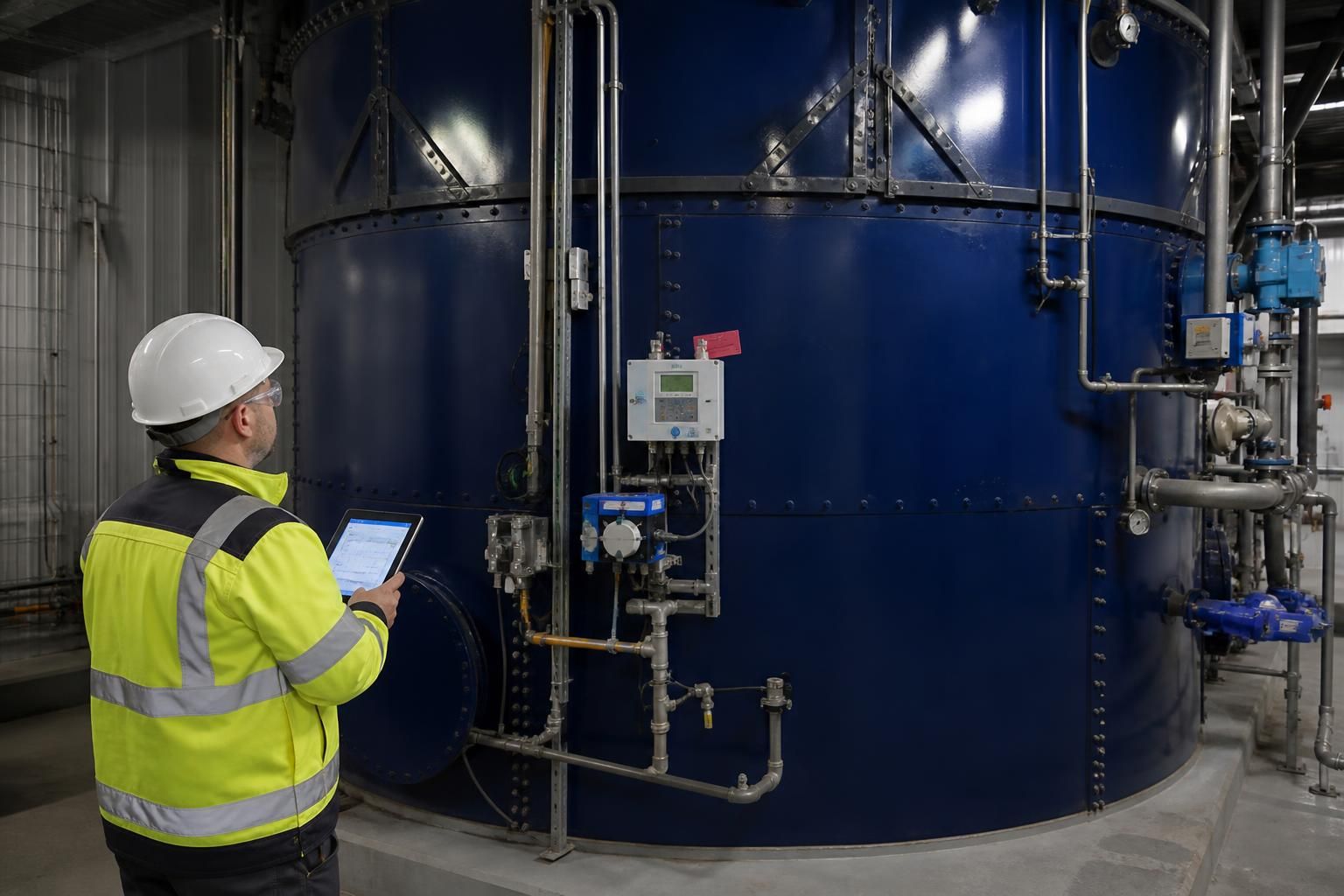
Which Tank Chlorination Approach Is Appropriate?
Tank chlorination can be planned as a standalone storage-tank treatment, incorporated into wider system disinfection, or repeated as part of monitored control. The appropriate approach depends on contamination findings, system design, operational risk and the evidence required for compliance.
Tank-Only Chlorination
Suitable where contamination is confined to a storage tank and connected components, with no evidence that the wider distribution system is affected. This focused treatment limits the work to the identified area and should be followed by appropriate verification.
Tank and Distribution System Disinfection
Used where contamination may have travelled beyond the tank into pipework, outlets or other connected components. Treating the storage and distribution system together provides a wider response when the source or extent of contamination is not confined to the tank.
Remedial Chlorination After Unfavourable Findings
A remedial approach may be appropriate following water testing, inspection or a risk assessment that identifies contamination or inadequate control. The treatment should address the relevant tank condition, system factors and underlying cause rather than relying on disinfection alone.
Planned Chlorination Within Water Safety Controls
Where a risk assessment identifies an ongoing need for controlled disinfection, tank chlorination can form part of a documented water management programme. The scope and frequency should be justified by system design, operational risk and monitoring evidence.
Chlorination With Verification and Records
This approach combines measured chlorine dosing with checks such as water testing, clearance and recorded results. It is appropriate where the organisation needs evidence that the treatment was completed and that the system has been returned to an acceptable condition.
What Is Included in Commercial Tank Chlorination?
A structured tank chlorination service covers the preparation and control measures needed for effective treatment. It may include pre-treatment inspection, equipment isolation, chlorine measurement, post-treatment flushing, water sampling and clear records for ongoing compliance.
Tank and System Assessment
The service begins with a review of tank condition, access, connected pipework and system configuration. This helps identify deposits, dead legs, damaged components or other factors that could affect the effectiveness of disinfection.
Dosing Requirements
Treatment parameters are established from the tank and system characteristics. The required chlorine dose is controlled against the planned method so that the process is consistent with the site-specific water safety requirements.
Site Safety Controls
Practical controls are applied before treatment, including coordination with responsible site personnel, protection of sensitive equipment and clear identification of any restrictions on water use during the work.
Treatment Verification
Chlorine levels are checked during the process to confirm that the treatment has reached the intended parts of the system. Relevant observations and measurements provide an auditable basis for assessing the work.
System Reinstatement
Following treatment, the system is flushed and returned to service in a controlled manner. This includes checking that affected outlets and connected components are suitable for normal operation after chlorination.
Compliance Documentation
The completed work is supported by clear service records, including the treatment details, verification information, sampling outcomes where applicable and any recommendations for follow-up action.
Questions About Tank Chlorination Support
When should a commercial storage tank undergo chlorination?
Tank chlorination may suit systems requiring planned disinfection after contamination, alterations, prolonged stagnation or maintenance. Risk assessment findings, system design, responsible-person duties and sampling requirements should guide treatment decisions appropriately.
Read moreWho is responsible for tank chlorination in commercial premises?
The responsible person for water safety usually coordinates tank chlorination, while competent contractors carry out treatment. Management should confirm duties, authorise isolation, review results, and retain relevant compliance records appropriately.
Read moreWhat information is needed before arranging tank chlorination?
Useful information includes tank capacity, configuration, access arrangements, connected outlets, pipework materials, recent alterations or contamination events, existing schematics, and site constraints affecting safe treatment planning, access and coordination requirements.
Read moreIs tank chlorination suitable for every commercial water system?
Not every system needs tank chlorination. Suitability depends on tank condition, system use, contamination evidence, water safety risk assessment, treatment objectives, and whether controlled disinfection can be completed safely and effectively.
Read moreWhat risks can poorly controlled tank chlorination create?
Poorly controlled chlorination can leave ineffective disinfection, excessive chemical residuals, damaged components, unsafe water, or incomplete flushing. These failures may create health risks, operational disruption and avoidable potential compliance concerns.
Read morePoints to Confirm Before Tank Chlorination
Before commissioning tank chlorination, confirm which tanks, outlets and connected pipework are included, what preparatory work is required, and how the system will be isolated and returned to service. Ask who will carry out the work, what relevant competence they hold, and how the treatment method will be selected for the site and its water system.
Request details of the evidence provided after treatment, including chlorine measurements, sampling results, completion records and any limitations or remedial recommendations. The scope should also set out the planned timescales, responsibilities for authorising reconnection, and any follow-up monitoring, sampling or management actions needed to maintain water safety.
Confirm the treatment boundary
Ask for a written description of the equipment covered and any parts that are excluded. Confirm whether the work includes tank cleaning, removal of sediment or biofilm, disinfection of connected pipework, flushing and reinstatement. If a section cannot be treated, the reason and any alternative control measure should be recorded so that the remaining risk is understood.
Once tank chlorination is complete, the results should inform the site’s wider water safety arrangements rather than be treated as an isolated task. Any abnormal findings or recurring contamination should prompt investigation of the underlying cause, such as tank condition, ingress, stagnation or ineffective control measures.
The next step is to incorporate the findings into the site’s water safety plan, assigning responsibility for any corrective work and agreeing how the system will be checked after return to service. This creates a clear link between the chlorination record and the ongoing management of commercial water risks.
Discuss Your Tank Chlorination Requirements
Discuss your tank chlorination requirements with Blue Fish Water Management for practical, site-specific advice on whether treatment is appropriate, what information should be reviewed first, and how to define a suitable next step for your organisation.