
How are legionella water sampling results interpreted?
Legionella water sampling results are interpreted by considering whether legionella was detected, the concentration reported by the laboratory and the location sampled, alongside the system’s risk assessment and operating conditions. The findings determine whether routine monitoring is appropriate or whether investigation, remedial work and further sampling are needed to control the risk.

Legionella water sampling results are interpreted by comparing the reported concentration with established guidance, then considering the sample location, water system conditions, site risk assessment and the people who may be exposed. A result is not treated in isolation: it helps determine whether existing control measures are working or whether investigation, corrective action and repeat sampling are required.
Results are usually reported as colony-forming units per litre (cfu/l). The laboratory may also report that legionella was not detected. This means the organism was not detected in that particular sample under the test conditions; it does not prove that legionella is absent from the entire water system. Sampling only represents the outlets, tanks, calorifiers or other points selected at the time.
For hot and cold water systems, the commonly applied interpretation is broadly as follows:
- Below 100 cfu/l: this is generally considered an acceptable result, although the system should continue to be managed and monitored in line with its risk assessment.
- Between 100 and 1,000 cfu/l: the control regime should be reviewed. Further sampling may be appropriate, particularly where results are found at more than one outlet, concentrations are increasing or the system serves people who are especially vulnerable to legionnaires’ disease.
- Above 1,000 cfu/l: prompt action is normally needed. The cause should be investigated, remedial measures implemented and follow-up samples taken to confirm that control has been restored.
These ranges are a guide rather than a substitute for professional judgement. The significance of a result can change according to the type of system and its users. For example, a finding in a healthcare, care, residential or other setting with vulnerable occupants may require a more cautious response than the same result in a lower-risk environment. The responsible person should use the site-specific risk assessment and relevant HSE guidance when deciding what action is proportionate.
The sampling point is also important. A positive result from a little-used shower, tap or other peripheral outlet may indicate localised stagnation, while positive results from several outlets may suggest a wider problem with water temperatures, circulation, storage, incoming water conditions or general system management. Results from a storage vessel or return pipework can provide different information from a sample taken at an outlet. The report should therefore be read alongside the sampling plan and an accurate record of where each sample was collected.
Interpretation should also take account of the conditions recorded during sampling. Relevant information can include:
- hot and cold water temperatures at the sampled outlet;
- whether the outlet is regularly used or has been left unused;
- the presence of dead legs, redundant pipework, low-flow areas or other stagnation risks;
- the condition of tanks, calorifiers, showers, hoses and other system components;
- recent maintenance, disinfection, refurbishment or changes to occupancy; and
- previous sample results and whether the concentration is stable, reducing or rising.
A single negative result does not cancel the need for routine control, and a single positive result does not always identify the source of contamination. Where action is needed, the investigation may include checking temperature control, flushing arrangements, storage and distribution equipment, water usage patterns and the quality of previous maintenance records. Remedial work can range from correcting operating conditions and removing stagnant sections to cleaning, disinfection or making physical alterations to the system, depending on the cause.
Repeat sampling should be planned around the action taken and the level of risk. It should confirm whether legionella concentrations have fallen and whether the underlying control failure has been addressed, rather than being used simply to obtain a more favourable result. If results remain positive, increase, or occur alongside evidence of poor temperature control or system defects, the control strategy should be reassessed by a competent person.
The laboratory report, sampling locations, temperature records, investigation findings, remedial work and follow-up results should all be retained as part of the water safety records. This evidence helps demonstrate that results have been reviewed properly and that decisions are based on the system’s actual risks, not on a laboratory number alone.
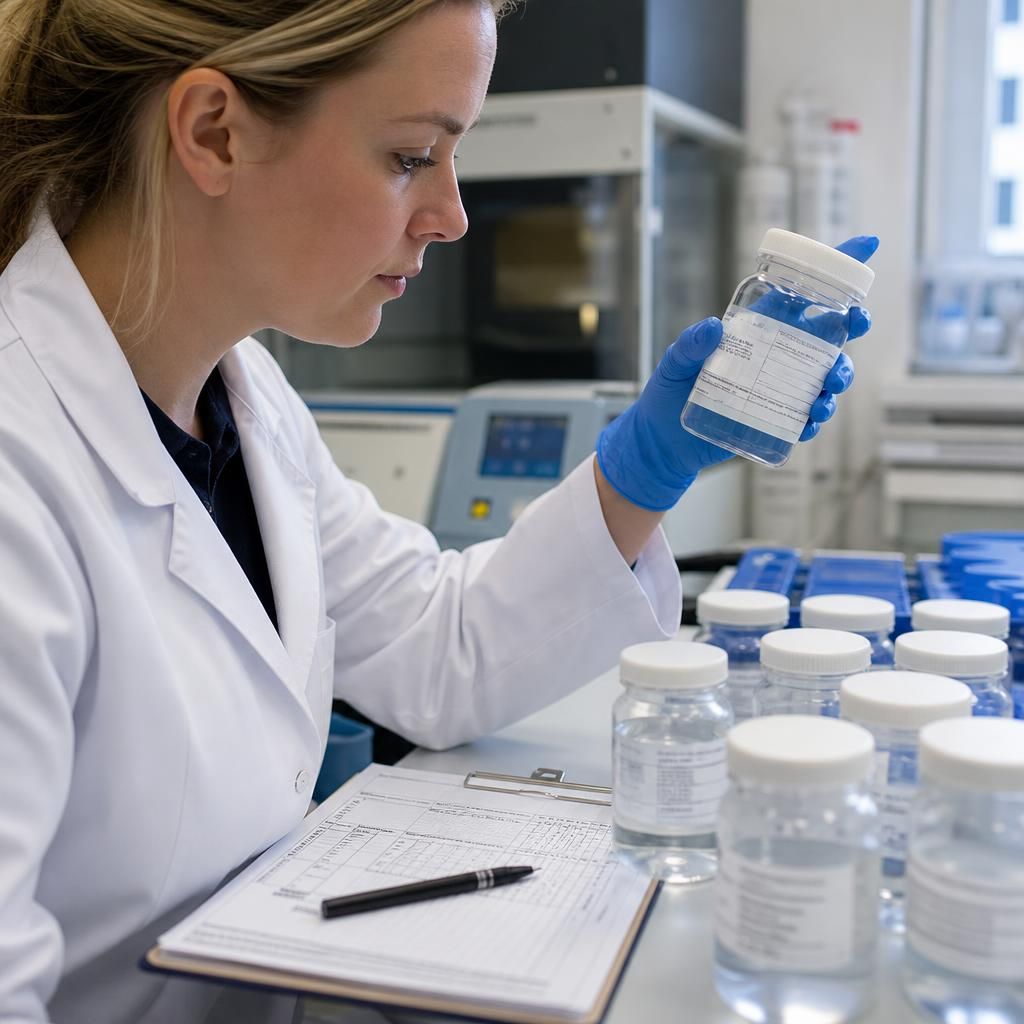
Interpreting a legionella report also means checking the information behind the reported result, not just the cfu/l figure. The sample date, collection point, sample type and laboratory method should all be reviewed to confirm that the result relates to the intended part of the water system.
- Sample identification: confirm the outlet, tank, calorifier, return pipe or other point tested matches the sampling plan.
- Collection details: check the date, time and whether the sample was taken as a routine, investigative or post-remedial sample.
- Reported result: note whether legionella was detected, the concentration recorded and any qualification or comment provided by the laboratory.
- Sample integrity: review whether the laboratory identified any issue affecting the result, such as a damaged container, insufficient volume or a delay in analysis.
These checks help establish whether the result can be compared meaningfully with earlier or later samples. If the report contains an unusual notation, an incomplete sample description or a qualification that is unclear, the responsible person should obtain clarification from the laboratory or competent water hygiene professional before deciding what the result means.
Need help interpreting your legionella water sampling results?
If you need an independent review of a legionella report or advice on the appropriate next step, contact Blue Fish Water Management Ltd to discuss your water system and sampling records with a competent water hygiene professional.