
Fuel Tank Cleaning Services
Fuel tank cleaning removes sludge, sediment, water and other contaminants from stored fuel systems. Blue Fish provides this specialist service for UK domestic, industrial and commercial sites, helping maintain fuel quality and meet relevant storage and safety requirements.
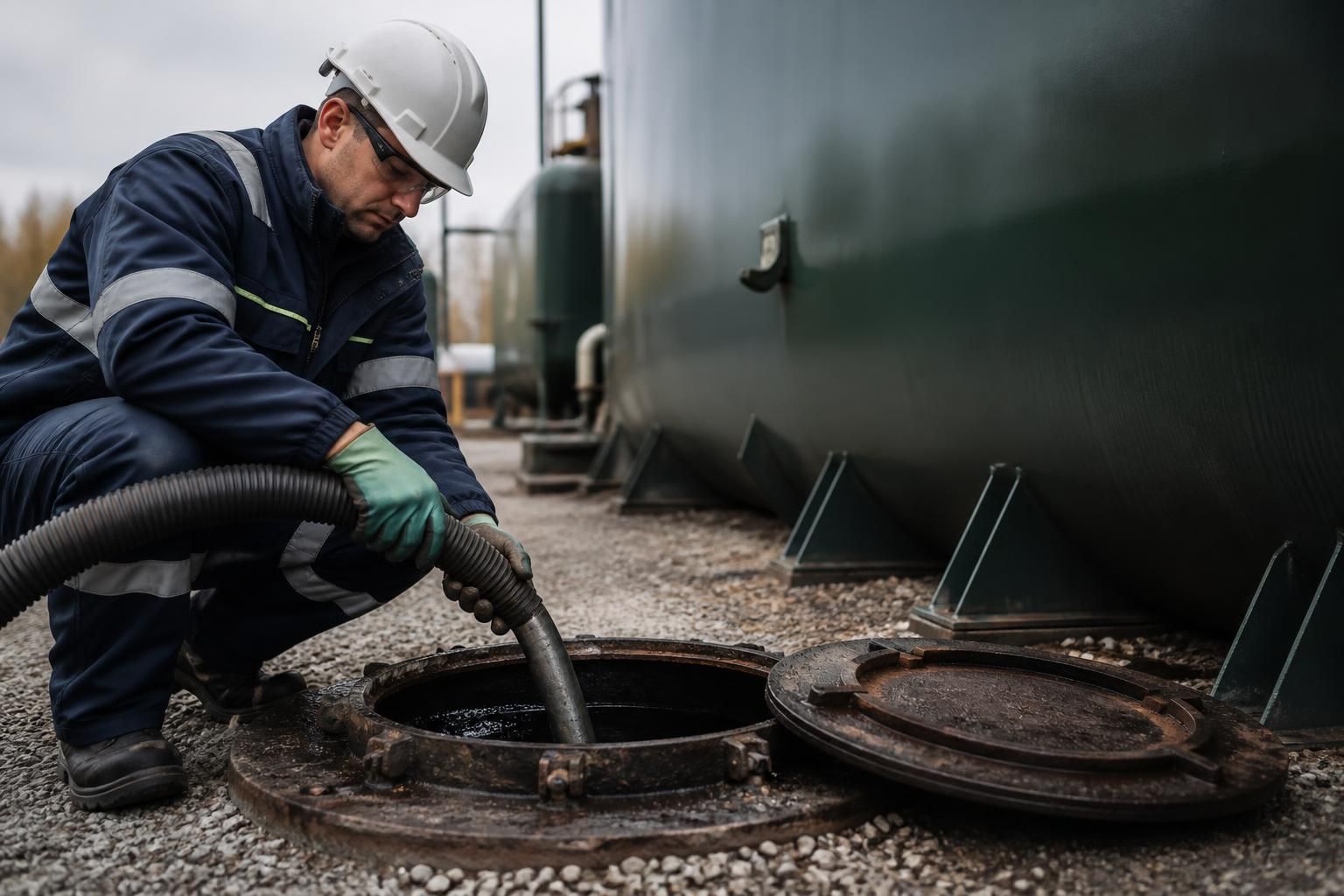
Safe Storage
Assess fuel storage risks, remove contamination, document findings, and plan proportionate cleaning to support safe systems and UK compliance responsibilities.
What Fuel Tank Cleaning Includes
A fuel tank cleaning engagement is planned around tank construction, access and operational requirements. The scope identifies isolation arrangements, inspection points and controls for protecting personnel, equipment and surrounding areas.
Afterwards, findings help site managers review tank condition and plan maintenance. Clear records of completed work support ongoing control of fuel storage risks and provide a reference for future inspections.
Tank and Fuel Condition Review
The engagement considers tank construction, access and stored-fuel condition to identify contamination and relevant storage risks.
Contamination Removal
Cleaning addresses sludge, sediment, water and other contaminants that can affect fuel quality and tank management.
Controlled Cleaning Arrangements
Isolation requirements, inspection points and site controls are planned around the tank and its operational environment.
Documented Findings
Records capture the work completed and relevant observations, giving site managers a clear reference for maintenance and future inspections.
Compliance Support
The completed scope supports review of fuel storage risks and ongoing responsibilities under relevant UK storage and safety requirements.
Fuel Tank Cleaning Deliverables
Practical fuel tank cleaning outputs include documented contamination findings, inspection observations, work records and recommendations. Experienced technicians use these details to inform maintenance decisions, demonstrate control measures and support responsible management of fuel storage systems.
Pre-cleaning system review
The cleaning plan is based on the tank’s use, stored fuel, access arrangements and known maintenance concerns. This helps define a proportionate method of work before cleaning begins.
Contamination removal
Cleaning targets accumulated sludge, sediment, water and other fuel-system contaminants that can affect stored fuel quality. The work is focused on restoring a cleaner internal tank environment.
Internal condition observations
Technicians record relevant observations about the tank during the cleaning process, including visible contamination and conditions that may require further attention or investigation.
Clear service documentation
Clients receive a structured record of the work completed, the areas addressed and the findings identified. This provides useful evidence for maintenance files and internal control procedures.
Practical follow-up guidance
The completed findings are used to identify sensible next steps for fuel storage management, such as further investigation, remedial work or continued monitoring where the condition of the system indicates it is appropriate.
Fuel Tank Cleaning Questions Answered
How often should fuel tanks be cleaned?
Cleaning methods depend on tank construction, fuel type, access, contamination and operational risk. A competent assessment should establish isolation requirements, waste handling arrangements, confined-space controls and inspection scope before work.
Read moreWhen is fuel tank cleaning necessary?
Fuel cleaning is necessary where inspection identifies corrosion, structural deterioration, persistent water ingress, fuel degradation, or operational changes requiring safe storage and reliable equipment rather than an arbitrary calendar schedule.
Read moreWhat should you check before commissioning fuel tank cleaning?
Before commissioning, confirm tank identification, fuel contents, site access, isolation arrangements, hazardous-area controls, waste-disposal responsibilities, insurance requirements, and the contractor’s method, exclusions, deliverables, and records in writing before work begins.
Read moreHow much does fuel tank cleaning cost?
Fuel tank cleaning costs depend on tank size, construction, access, contamination, fuel recovery, waste handling, isolation requirements and remedial findings. Obtain an itemised quotation defining inclusions, exclusions and disposal arrangements.
Read moreWhat does fuel tank cleaning involve?
Fuel tank cleaning typically involves controlled fuel removal, internal access, sludge and sediment extraction, water removal, surface inspection, waste handling, reinstatement, and records confirming work completed and relevant observations recorded.
Read moreWhat to Expect from Fuel Tank Cleaning
Fuel tank cleaning is planned around the tank’s construction, stored fuel, access arrangements and operational requirements. Blue Fish reviews the proposed work with the client before cleaning begins, confirming the practical scope, safety controls and any measures needed to protect connected equipment or maintain continuity of fuel supply.
Findings are explained clearly after the work, with observations kept separate from recommendations for further maintenance or remedial action. This gives responsible managers a transparent record of the tank’s condition and a sound basis for deciding which actions are necessary, proportionate and appropriate to the site.
How the cleaning scope is established
The review considers the condition and use of the fuel storage system, available access and any operational requirements identified by the client. Blue Fish then confirms the proposed scope, relevant safety controls and any precautions needed to protect connected equipment or support continuity of fuel supply.
Once the cleaning work is complete, the responsible person can review the findings with Blue Fish and decide whether any further investigation or remedial action is necessary. Advice is proportionate to the tank’s condition and the risks identified, rather than based on a standardised programme.
This provides a clear basis for completing outstanding actions, planning future maintenance or confirming that no additional work is currently required.
Discuss Your Fuel Tank Cleaning Requirements
To discuss your fuel tank cleaning requirements, contact Blue Fish to confirm the information needed, review site-specific considerations, establish whether the service is suitable for your storage system, and agree a practical next step.