
Chlorine Filtration Systems
Chlorine filtration systems remove or reduce chlorine in water supplies, helping domestic, industrial and commercial users manage taste, odour and process requirements while supporting water hygiene controls. Blue Fish Water Management specifies suitable solutions across the UK.
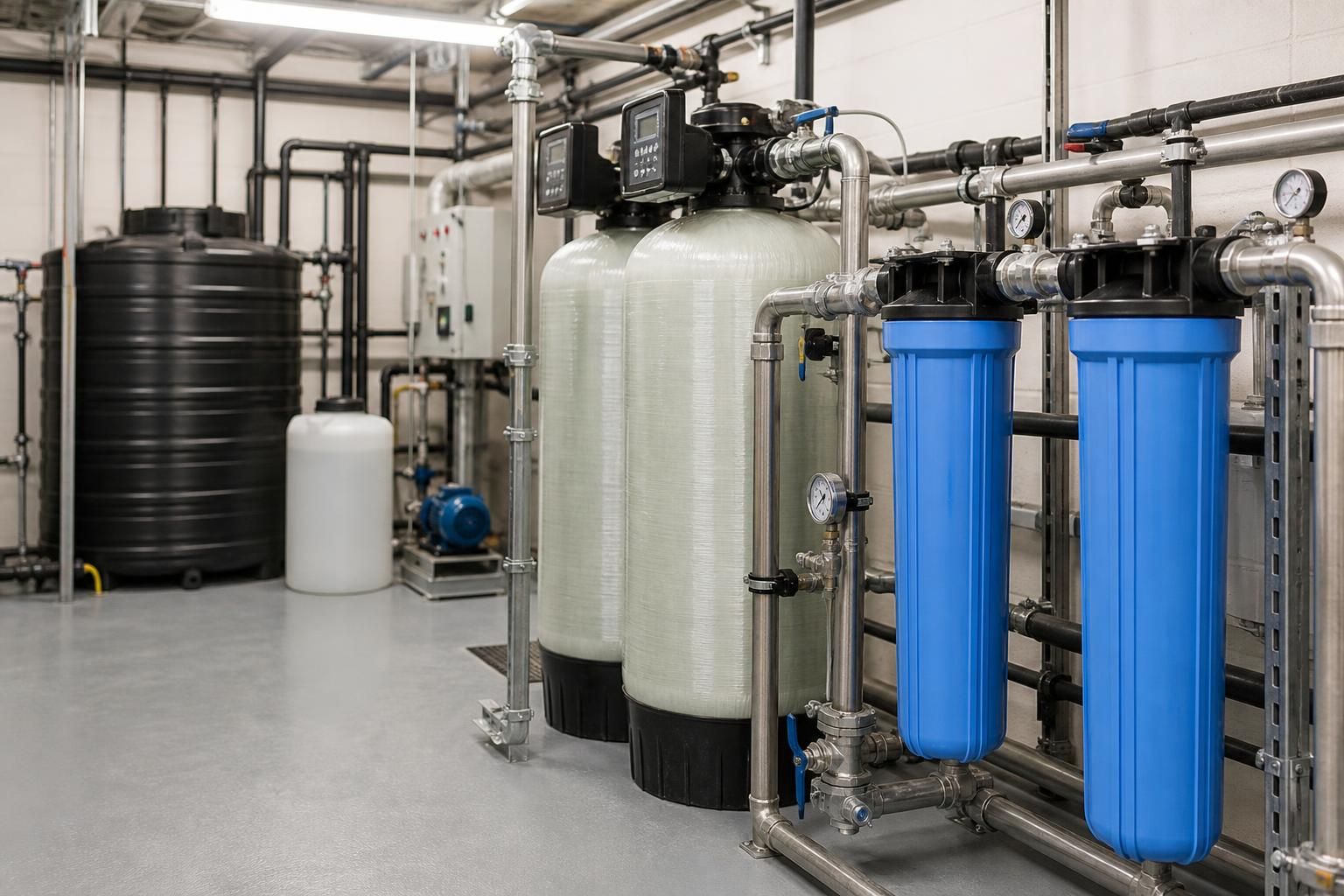
Compare Chlorine Filtration System Options
Chlorine filtration systems can be compared by contaminant target, treatment capacity, installation complexity and operator input. Options range from point-of-use units to whole-system treatment, with selection guided by water chemistry, usage patterns, hygiene controls and intended water quality.
Point-of-use carbon filters
Installed at individual taps, outlets or appliances, these compact systems target chlorine where water is consumed or used. They suit limited draw-off points and applications where treating the whole supply would be unnecessary, but cartridges require planned replacement and monitoring.
Whole-building carbon filtration
A central activated carbon filter treats water entering a building or defined distribution area. This approach is appropriate where chlorine reduction is required across multiple outlets, although it needs sufficient space, flow capacity, backwashing or media maintenance, and careful hygiene management.
Catalytic carbon systems
Catalytic carbon is designed for chlorine and, in some applications, chloramine reduction. It may be considered where conventional carbon does not match the water chemistry or treatment objective, with selection based on incoming water quality, flow demand and contact time.
Duplex or parallel filters
Duplex arrangements use two filter vessels to support continuity during service, regeneration or media replacement. They are suited to commercial and industrial systems where interruption of treated water could affect operations, provided valve sequencing and maintenance procedures are properly controlled.
Process water dechlorination
Industrial users may require chlorine reduction to protect manufacturing processes, ingredients, equipment or downstream treatment stages. The filtration system should be specified against the process water criteria rather than taste alone, including peak flow, operating cycles and any other contaminants present.
Filtration with pre-treatment
Sediment or other pre-filtration can be combined with carbon media where suspended solids or deposits could reduce performance. This configuration is useful when incoming water quality may foul the main media, but each additional stage increases inspection, replacement and operational requirements.
Managed chlorine reduction systems
Removing disinfectant residuals can alter water hygiene controls within a distribution system. Systems that reduce chlorine should therefore be assessed alongside storage, temperature, stagnation, sampling and maintenance arrangements, with the treatment objective documented before installation.
Practical Elements of Chlorine Filtration Systems
A suitable chlorine filtration system should be supported by documented design decisions, appropriate equipment selection, controlled installation and clear operating information. The practical elements below show how Blue Fish Water Management structures projects around safety, maintenance and compliance requirements.
System and water assessment
The starting point is an assessment of the incoming supply, intended use, flow demand and existing water hygiene controls. This helps establish whether chlorine reduction is appropriate and identifies constraints such as variable demand, available space and downstream process requirements.
Suitable filter specification
Filter selection considers the required level of chlorine reduction, water quality, flow rate, pressure conditions and available treatment capacity. Where activated carbon or another filtration medium is appropriate, the specification should also account for media replacement, backwashing or other servicing needs.
Designed for the installation
The system layout is developed around pipework connections, isolation points, drainage, access for maintenance and protection of downstream equipment. Clear design information supports practical installation without compromising safe operation or established water hygiene arrangements.
Controlled installation
Installation includes positioning the filter equipment correctly, making secure connections and providing the valves, gauges and other components needed for operation and servicing. Work is coordinated with the wider water system so that the filtration stage is integrated appropriately.
Commissioning and checks
Before handover, the system can be checked for leaks, flow conditions, pressure behaviour and correct operation. Commissioning information provides a reference point for future monitoring and helps identify when performance or operating conditions change.
Operating and maintenance records
Clear instructions set out routine checks, filter or media replacement requirements, cleaning considerations and actions for abnormal results. Maintaining these records supports planned servicing, demonstrates control of the equipment and contributes to wider UK water hygiene compliance.
Handover and user guidance
Relevant personnel receive practical information on normal operation, isolation arrangements, inspection points and escalation of faults. A structured handover helps ensure the chlorine filtration system remains understood and properly managed after installation.
Which Chlorine Filtration Support Is Right for Your System?
When is specialist support needed for a chlorine filtration system?
Assessment findings, water chemistry, flow rates, usage patterns and operational constraints should guide selection, ensuring the system addresses chlorine reduction requirements without undermining disinfection, monitoring, compliance responsibilities and maintenance.
Read moreWhat operating controls should accompany a chlorine filtration system?
Operating controls should define permitted chlorine levels, flow settings, contact times, alarm responses, isolation procedures and recordkeeping requirements, with responsibility assigned for routine checks, escalation and corrective action when required.
Read moreWhat should be checked before a chlorine filtration system is commissioned?
Before commissioning, verify installation quality, pipework integrity, filter loading, valves, drainage, instrumentation, safe access and documentation. Confirm test results and corrective actions are recorded before handover to the responsible operator.
Read moreHow should a chlorine filtration system integrate with existing water treatment equipment?
Integration should preserve treatment objectives by coordinating filtration with dosing, storage, pumps, softeners and monitoring. Hydraulic compatibility, bypass arrangements, control signals and maintenance access should be fully documented before connection.
Read moreHow can chlorine filtration performance be reviewed over time?
Performance should be reviewed through trend analysis of chlorine residuals, flow, pressure, filter condition, water quality results and maintenance records. Investigate deviations, document findings, and adjust servicing or media replacement.
Read moreQuestions to Ask Before Proceeding with a Chlorine Filtration System
Before proceeding, establish the treatment objective and the system boundary: which supply or point of use requires chlorine reduction, what water quality information is available, and how flow demand, peak usage and downstream equipment will affect the specification. Ask how the proposed media or filtration stage will perform under those conditions and whether reducing chlorine could alter existing water hygiene controls.
Also clarify the evidence and responsibilities attached to the work. Questions should cover commissioning records, test results, operating instructions, maintenance requirements, reporting arrangements and the timescale for each project stage. Confirm who will monitor performance, manage consumables, investigate changes in water quality and review the system when site use or risk conditions change.
Confirm the treatment scope
Ask which outlets or processes the filtration system will serve, whether treatment is required at the point of entry or point of use, and how untreated and treated water routes will be identified. Confirm how storage tanks, recirculation systems, blending arrangements and changes in demand could affect the design. The specification should also explain whether chlorine reduction is a treatment objective, a process requirement or part of a wider water hygiene control strategy.
Use the answers to confirm that the proposed chlorine filtration system has a defined purpose, suitable operating limits and a clear relationship with the wider water hygiene arrangements. Any unresolved technical or safety issue should be recorded and addressed before equipment is ordered or installed.
The next step is to agree a written scope covering the selected treatment stages, site interfaces and acceptance requirements. This gives all responsible parties a consistent basis for reviewing the design and managing the system once it is in use.
Discuss Your Chlorine Filtration Requirements
Discuss your chlorine filtration requirements with Blue Fish Water Management to review the application, operating conditions and compliance considerations. Receive practical advice on whether filtration is appropriate and what information should inform the next step.