
Water Tank Pressure Washing for Businesses
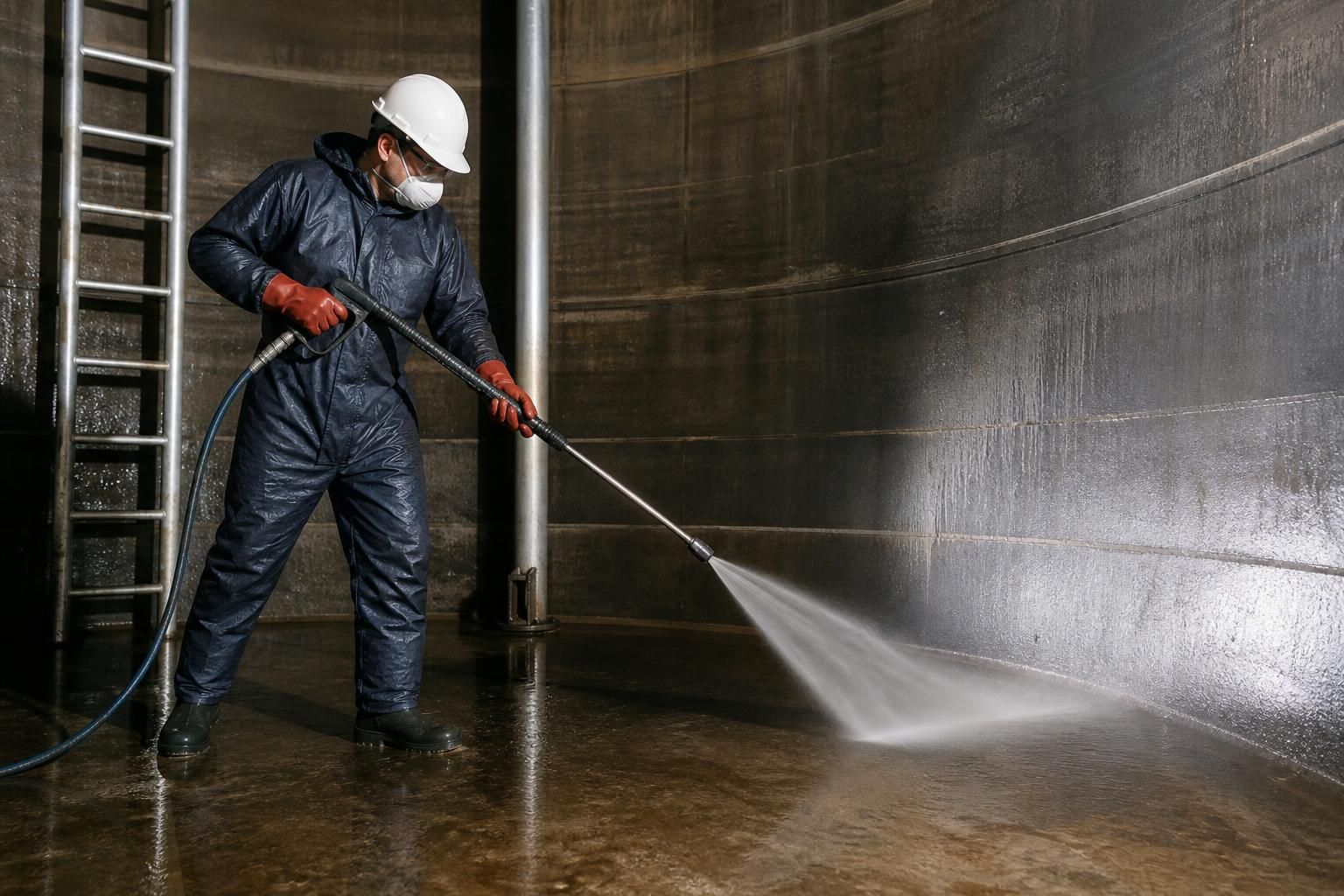
Water tank pressure washing uses controlled high-pressure cleaning to remove sediment, scale and biofilm from storage tanks in commercial, industrial and domestic settings. Blue Fish coordinates cleaning with water safety requirements, supporting hygienic systems and documented legionella control.
Water Safety
Use documented tank cleaning findings to support UK water safety responsibilities and define appropriate practical follow-up for legionella control measures.
What Water Tank Pressure Washing Includes
An engagement begins by reviewing the tank’s construction, access, water use and maintenance information. This helps establish suitable controls, practical preparation and whether pressure washing is appropriate for a storage tank.
After cleaning, the findings record the tank’s condition, areas needing attention and follow-up. Blue Fish supplies information that responsible persons and contractors can use to coordinate remedial decisions and ongoing monitoring.
Tank condition review
The tank, access arrangements, construction and available maintenance records are considered before pressure washing begins.
Controlled internal cleaning
Pressure washing targets sediment, scale and biofilm on suitable internal tank surfaces without treating every tank as though the same method applies.
Water safety controls
The cleaning approach is aligned with relevant water hygiene considerations and the site’s existing legionella control arrangements.
Condition issues identified
Cleaning can expose defects, contamination sources or areas of deterioration that may require separate remedial attention.
Documented findings
The engagement records relevant observations from the tank cleaning so responsible persons can understand its condition and required follow-up.
Practical next steps
Findings can support decisions about repairs, further water hygiene measures and ongoing monitoring of the storage system.
Practical Outputs from Water Tank Pressure Washing
Key deliverables include a method statement, tank-specific cleaning controls, safe isolation arrangements, photographic evidence and a structured completion report. These records help facilities teams verify the work undertaken, identify exceptions and retain auditable evidence for water hygiene management.
Pre-clean condition assessment
The tank is assessed before cleaning to identify sediment levels, scale, surface condition, access limitations and any visible defects that may affect the work or require separate attention.
Controlled pressure cleaning
Pressure and cleaning methods are selected for the tank construction and condition, removing deposits and biofilm while reducing the risk of damage to internal surfaces, fittings and protective coatings.
Contamination control
Cleaning arrangements are planned to prevent debris and contaminated water from re-entering the supply. Drainage, access and isolation requirements are considered as part of the task controls.
Hygienic reinstatement
Following cleaning, the tank and associated components are checked before being returned to service. Any remaining defects, access concerns or restrictions are identified for facilities teams to review.
Actionable findings
The completed information distinguishes cleaning work from wider remedial requirements, helping responsible persons decide whether repairs, disinfection, monitoring or further water hygiene assessment is appropriate.
Questions to Ask Before Commissioning Water Tank Pressure Washing
How should businesses choose a pressure cleaner with water tank equipment?
Choose a pressure cleaner with water tank capability only after confirming equipment suitability, operator competence, isolation requirements, discharge arrangements, and compatibility with the tank’s construction and lining condition before work begins.
Read moreWhat information should a business provide before water tank pressure washing?
Provide tank location, capacity, construction, access details, connected services, water use constraints, previous inspection findings, known defects, isolation points, and relevant water safety records before work, enabling accurate onsite planning.
Read moreHow is a water tank pressure washing method selected?
The method should reflect contamination type, tank geometry, access constraints, drainage arrangements and water hygiene risk, balancing cleaning effectiveness against damage, aerosol generation and recontamination for the planned site operation.
Read moreHow should a water tank be recommissioned after pressure washing?
Recommissioning should include final rinsing, removal of cleaning residues, inspection for defects, secure closure, appropriate disinfection where specified, controlled refilling, and confirmation that water quality requirements are met before use.
Read moreWhen should businesses arrange water tank pressure washing?
Arrange pressure washing when inspection identifies sediment, scale, biofilm or contamination that routine maintenance cannot address, or after significant tank works, ensuring timing aligns with risk assessment recommendations and isolation.
Read moreHow Water Tank Pressure Washing Is Managed
Water tank pressure washing is planned around the tank’s construction, condition, access arrangements and connected water system. Before work begins, Blue Fish clarifies the cleaning scope, isolation requirements and any constraints that could affect how the tank is treated, so the responsible facilities team can make informed arrangements.
Findings are discussed in practical terms, including visible defects, contamination or conditions that may need further attention. Advice is based on what is observed during the cleaning rather than assumptions, helping clients distinguish completed work from recommendations for maintenance, repair or additional legionella control measures.
Scope and preparation review
Blue Fish considers the tank’s purpose, internal condition, access points, water supply arrangements and any linked equipment that could be affected by isolation or cleaning. The agreed scope identifies relevant limitations in advance, allowing the responsible person to understand which areas are included and which conditions may require separate action.
After the cleaning, the responsible person can use the documented outcome to decide whether the tank is suitable to return to service or whether repair, investigation or further water hygiene action is needed. This supports a controlled handover rather than treating pressure washing as an isolated task.
Where the work identifies an issue beyond the cleaning scope, Blue Fish can explain its significance in relation to the tank and connected system, enabling the facilities team to agree appropriate next steps with the relevant duty holders.
Discuss Your Water Tank Pressure Washing Requirements
For advice on pressure washing with water tank systems, contact Blue Fish to discuss tank access, construction, isolation requirements and reporting needs. The team can help establish whether the proposed cleaning approach is suitable for your site.