
Water Tank Relining & Refurbishment
Water tank relining and refurbishment restore deteriorated storage tanks by addressing corrosion, leaks and surface failure without automatically requiring full replacement. For organisations, this work can improve tank integrity, support hygienic operation and help maintain water safety responsibilities.
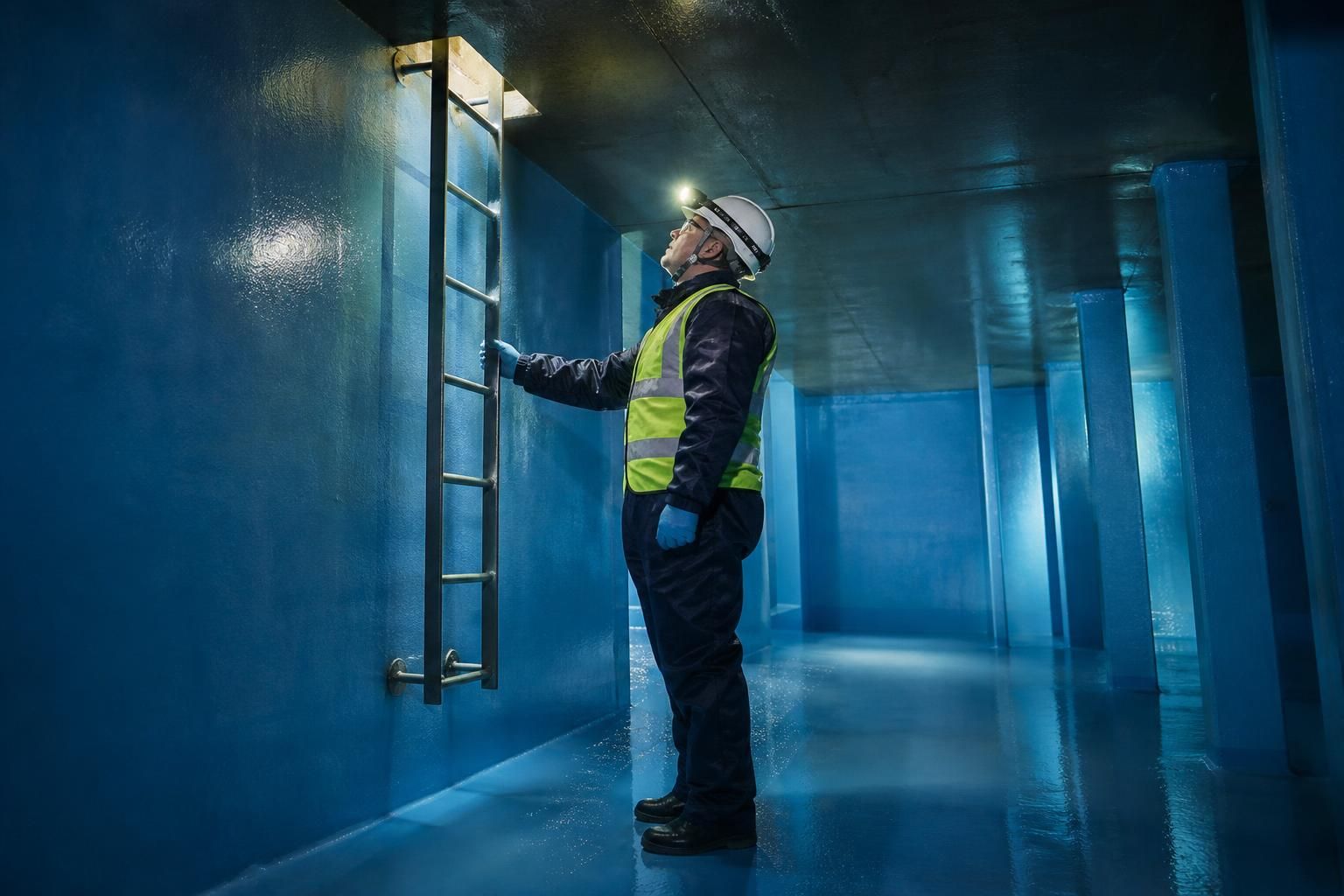
Challenges That Can Make Water Tank Relining Necessary
Water tank refurbishment must account for the tank’s construction, substrate condition, intended water use and site constraints. Poor assessment can lead to unsuitable materials, incomplete preparation, avoidable disruption, weak records and difficulty demonstrating the installation remains fit for service.
Corrosion and Substrate Deterioration
Corrosion, pitting, delamination and weakened coatings can affect whether a tank is suitable for relining. The underlying steel, concrete or GRP substrate must be assessed carefully; a new lining cannot compensate for structural defects or unstable surfaces.
Selecting a Suitable Relining System
The relining material must be compatible with the tank construction, stored water and operating conditions. Systems intended for potable water may require different evidence and controls from those used in other applications, so suitability should be confirmed before installation.
Thorough Surface Preparation
Successful refurbishment depends on removing corrosion, scale, contamination, loose coatings and moisture-related defects before the new system is applied. Inadequate preparation can leave weak points beneath the lining and make early failure more likely.
Leaks and Hidden Defects
Visible leaks may indicate damaged joints, penetrations, fittings or areas of movement rather than a simple coating failure. Inspection should identify the source and extent of the defect so that repairs address the tank’s integrity rather than only covering the symptom.
Maintaining Water Hygiene During Works
Relining introduces practical water hygiene controls, including isolating the tank, protecting prepared surfaces from contamination and managing materials that come into contact with the stored water. The tank should be cleaned and returned to service in accordance with the relevant water safety arrangements.
Access, Isolation and Operational Disruption
Tank location, access openings, confined spaces, connected pipework and the need to maintain supply can complicate refurbishment. A suitable method statement should address safe access, isolation, ventilation, inspection and any temporary arrangements required while the tank is unavailable.
Verification and Compliance Records
A refurbished tank should have clear records covering the inspection findings, preparation, products used, application stages, curing and final checks. These records help demonstrate what work was completed and support future maintenance, risk assessment and water safety reviews.
Key Questions Before Relining or Refurbishing a Water Tank
Before commissioning water tank relining or refurbishment, review the tank’s inspection findings, maintenance records and any evidence of leakage, corrosion, coating failure or contamination. Ask whether the proposed repair addresses the underlying defect, is suitable for contact with the stored water and can be documented for future maintenance and compliance reviews.
The proportionate option may be localised repair, a broader refurbishment or replacement where the tank cannot be reliably restored. Compare the condition of the tank, the consequences of taking it out of service and the expected service life of the proposed work before deciding which route provides a suitably robust outcome.
Check the tank’s structural condition
Review the tank shell, joints, internal surfaces, supports, access points and connections for movement, distortion, cracking, corrosion or weakening. Establish whether defects are isolated or connected to a wider failure, and whether the substrate can be prepared to receive a new lining. If the tank has lost structural integrity, relining may conceal rather than resolve the problem, making replacement the more appropriate option.
Once the preferred approach is identified, agree the work scope, access requirements, isolation arrangements and reinstatement checks with the contractor before work begins. The specification should also identify how the tank will be prepared, what relining or refurbishment system will be used and how the completed work will be inspected.
After completion, retain the inspection findings, product information, installation records and any post-work testing or cleaning evidence with the tank’s maintenance documentation. These records provide a clear reference for future inspections and help demonstrate that the refurbished tank remains suitable for its intended use.
What Effective Tank Refurbishment Can Improve
Water tank relining and refurbishment use compatible repair systems and renewal work to restore serviceable storage assets where deterioration is manageable, rather than treating every defect as a replacement case.
It can also support safer operational planning by reducing the likelihood of recurring defects, clarifying when intervention is needed and helping teams coordinate maintenance around business-critical water services.
Improved Tank Protection
Restoring damaged internal surfaces can help limit further corrosion and keep deterioration under controlled review.
More Hygienic Surfaces
A compatible relining system can provide a renewed, cleanable surface where existing coatings or substrates have failed.
Clearer Compliance Evidence
Defined work scopes, inspection findings and completion records give responsible teams clearer evidence of how tank defects were addressed.
Less Disruptive Intervention
Where the tank remains suitable for restoration, refurbishment may avoid the greater disruption associated with full replacement.
Better Long-Term Control
A documented refurbishment baseline helps teams compare future inspection findings and prioritise maintenance on an informed basis.
Water Tank Relining & Refurbishment: Your Questions Answered
What evidence of competence should a water tank relining contractor provide?
A competent contractor should explain the repair method, relevant experience, safety controls and verification evidence, while coordinating isolation and reinstatement with responsible site personnel to minimise operational disruption where practicable.
Read moreIs water tank relining suitable for every storage tank?
No. Suitability depends on tank material, structural condition, access, stored-water requirements, contamination history and the defect's extent. Severe deterioration, incompatible surfaces or poor structural integrity may make replacement more appropriate.
Read moreHow disruptive is water tank relining to normal site operations?
Disruption depends on tank location, capacity, system configuration and whether temporary storage or bypass arrangements are available. Phased work may help maintain essential services while repair activities proceed in sequence.
Read moreWho remains responsible for a water tank after relining?
The responsible organisation remains accountable for safe operation, inspection, maintenance and compliance after relining. The contractor’s records support oversight, but do not replace site-specific management arrangements or ongoing risk assessments.
Read moreWhat affects the lifespan of a refurbished water tank?
Lifespan depends on substrate preparation, relining-system compatibility, water chemistry, temperature, loading, inspection quality and maintenance. Promptly addressing new defects helps prevent local damage developing into wider refurbishment requirements or replacement.
Read moreDiscuss Your Water Tank Relining Requirements
Discuss your tank’s condition, proposed use and operational constraints with Blue Fish. Their specialists can help clarify whether relining or refurbishment is appropriate and outline a tailored scope of work for your organisation.