
Water Tank Pressure Washer Services
A water tank pressure washer service uses controlled high-pressure equipment to remove sediment, scale and biofilm from storage tanks. For commercial, industrial and domestic water systems, professional cleaning supports hygienic operation and provides documented evidence for ongoing water safety management.
Water Safety
A water tank pressure washer service identifies requirements, supports safe systems, meets UK responsibilities, and establishes a basis for action.
What a Water Tank Pressure Washer Service Includes
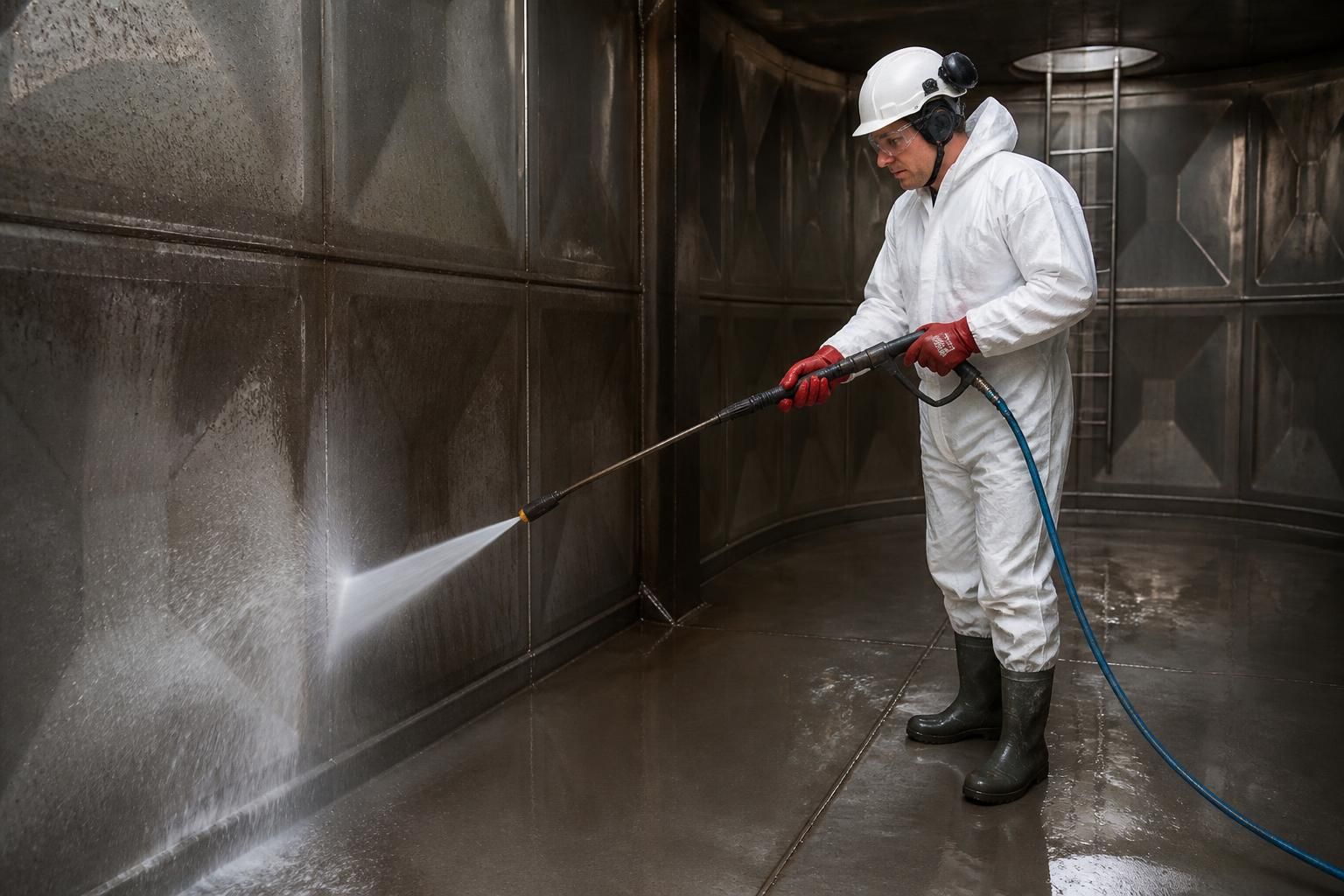
A water tank pressure washer is specialist equipment for cleaning internal tank surfaces, with pressure and attachments selected to suit the tank’s construction, lining, fittings and access.
A service can include pre-cleaning checks, safe isolation, setup, post-work inspection and a written record. This gives the responsible person an account of the work and highlights defects or follow-up actions requiring attention.
Defined Cleaning Scope
The engagement establishes which tank areas, compartments and accessible surfaces require pressure washing, so the work is aligned with the system’s condition and operational requirements.
Controlled Pressure Application
Pressure settings and nozzle selection are managed to remove deposits effectively while taking account of tank materials, protective coatings, fittings and vulnerable components.
Targeted Surface Cleaning
Specialist attachments help address internal surfaces and areas where deposits can accumulate, including corners, joints and around tank fittings.
Protection of the Water System
The cleaning approach is planned around the tank’s role within the wider water system, with controls intended to prevent avoidable damage during the work.
Condition Findings
Visible issues identified during the service can be noted for consideration, such as damaged surfaces, compromised fittings or access limitations affecting future maintenance.
Actionable Service Information
The completed service information helps the responsible person understand the work undertaken and decide whether further cleaning, repair or water hygiene action is required.
Water Tank Pressure Washing: Evidence and Compliance Outputs
Key deliverables include equipment selection, controlled application, condition observations and clear records. Experienced technicians assess how cleaning relates to the wider water system, distinguish routine findings from defects, and provide practical recommendations for investigation, repair or continued monitoring.
Tank access and isolation planning
The work is planned around tank access, safe isolation and the sequence of cleaning activities, helping minimise disruption to the connected water system and ensuring the pressure-washing method is suitable for the installation.
Targeted removal of contamination
Pressure washing is directed at deposits such as sediment, scale and biofilm, with the cleaning approach adjusted to the tank’s condition and the areas requiring attention rather than applied as an indiscriminate process.
Photographic service evidence
Where appropriate, photographs can support the written service record by showing relevant tank conditions and the areas addressed during the cleaning visit. This gives responsible persons clearer evidence for internal review and compliance files.
Post-cleaning reinstatement checks
Following cleaning, the service record can note the condition of the tank and any issues affecting reinstatement. Matters requiring repair, further investigation or additional water hygiene action are identified separately from completed cleaning work.
Compliance-focused documentation
Documentation is structured to support the wider water safety file, recording the work undertaken and relevant observations in a form that can be reviewed during audits, system monitoring and future maintenance planning.
Questions to Ask Before Choosing a Water Tank Pressure Washer
How does a water tank pressure washer protect tank surfaces during cleaning?
Suitability depends on tank material, access, contamination, drainage arrangements and system controls. A competent contractor should confirm the method will remove deposits without damaging linings, fittings or connected infrastructure safely.
Read moreHow does a water tank pressure washer control contaminated wash water?
Technicians should isolate discharge, contain wash water, and prevent entry into drains or watercourses. They should follow site procedures, use suitable disposal arrangements, and clearly record any abnormal contamination findings.
Read moreWhat should a water tank pressure washer method statement include?
A method statement should define isolation, access, equipment settings, cleaning sequence, inspection points, water recovery, hygiene controls, emergency arrangements, responsibilities and records, alongside site-specific hazards and control measures for approval.
Read moreWhen should businesses commission a water tank pressure washer?
Commission one when inspection, risk assessment or monitoring identifies a hygiene concern, before recommissioning, after remedial work, or where documented cleaning intervals require planned intervention within site water safety plans.
Read moreHow is a water tank pressure washer service verified after cleaning?
Verification should combine visual inspection, evidence that deposits were removed, confirmation of hygienic reinstatement, and completed records. Any defects, residual contamination or follow-up requirements should be documented clearly for review.
Read moreHow the Water Tank Pressure Washer Process Is Managed
A water tank pressure washer service should begin with a clear explanation of the proposed cleaning method, access requirements and any limitations affecting the tank or its surrounding system. The equipment and pressure used should be appropriate to the tank’s construction and condition, rather than selected as a standard setting for every installation.
Findings should be discussed in practical terms, distinguishing removable contamination from evidence of damage, deterioration or wider system concerns. Advice should explain which points require further investigation, repair or monitoring, so the client can make informed decisions without treating routine cleaning observations as confirmed defects.
What is checked at the outset?
Relevant information may include the tank’s construction, capacity, access points, connected pipework and any known water-quality or operational concerns. The proposed approach should identify areas that can be cleaned safely, any restrictions on access or drainage, and matters that may need to be referred for separate remedial work.
After the work, the responsible person can review the recorded condition alongside the tank’s role in the wider water system and decide whether it is suitable to return to service, needs remedial attention or should be subject to further monitoring. This keeps pressure washing as a defined maintenance activity rather than treating it as a substitute for investigating defects.
Where Blue Fish Water Management is instructed, the findings can be discussed with the relevant water-safety contacts so any follow-on action is understood and allocated appropriately. This provides a clear route from tank cleaning to proportionate water-safety decisions.
Discuss Your Water Tank Pressure Washer Requirements
Contact Blue Fish Water Management to discuss your tank access, cleaning requirements and site constraints. The team can help confirm whether the proposed approach suits the installation and identify the next practical step for your organisation.