
Water Tank Servicing & Maintenance
Water tank servicing supports landlords, facilities teams and businesses responsible for stored water systems. Structured inspections and maintenance checks help identify contamination risks, defects and remedial requirements, supporting safe operation and documented compliance.
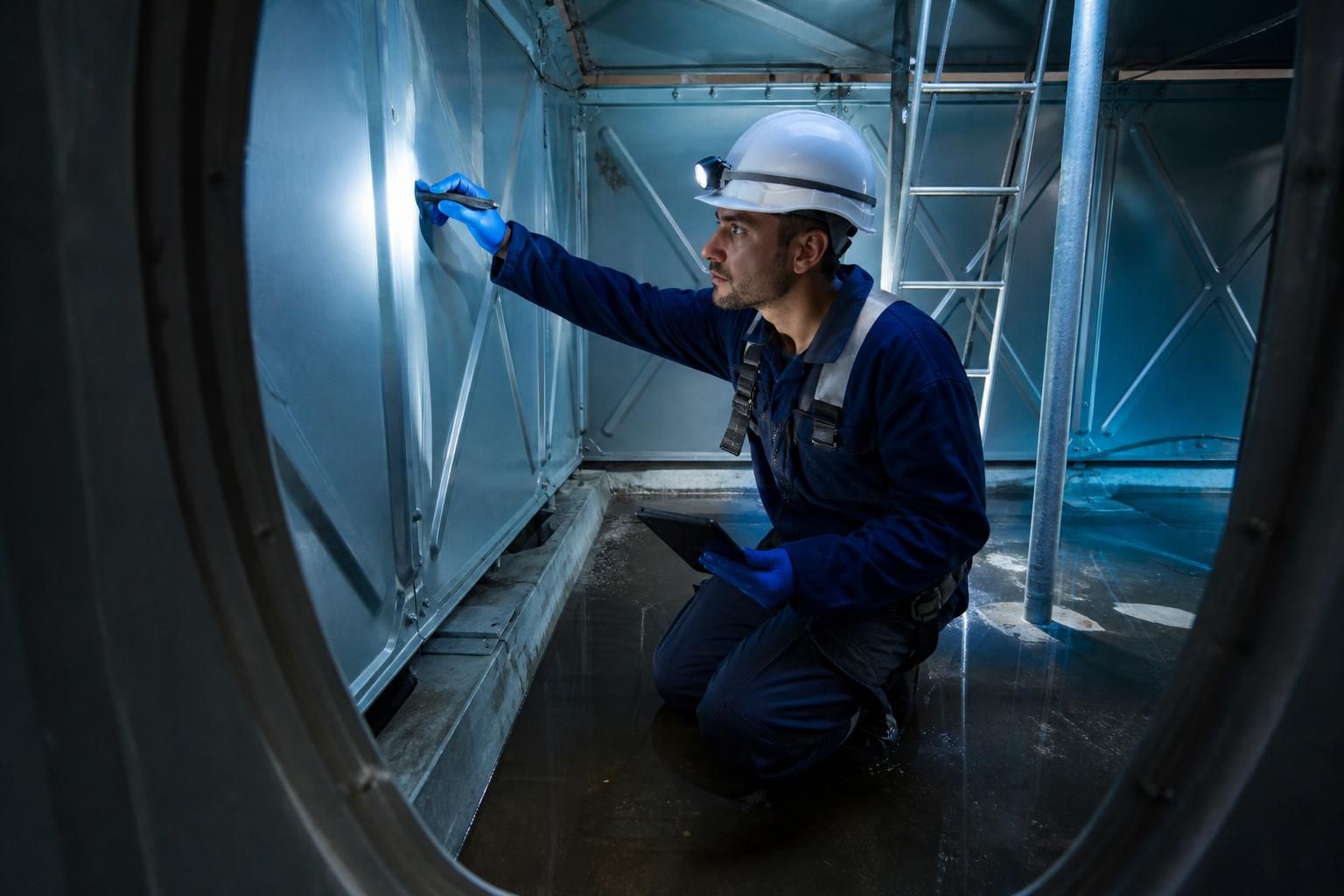
Safe Maintenance
Planned water tank servicing helps identify defects, hygiene risks and maintenance needs, giving dutyholders clear evidence for safe, compliant action.
What Water Tank Servicing Covers
Water tank servicing checks the tank, lid, fittings and connected pipework, with practical maintenance as required. It may include internal examination, cleaning, access checks, insulation review and advice on repairs or replacement.
Findings are documented for dutyholders, supporting planned corrective work and future maintenance. Recommendations are proportionate to the tank’s design, condition and use, keeping action focused on water safety and operational needs.
Tank Condition Inspection
The tank, lid, internal surfaces, fittings and connected pipework are checked for defects, deterioration, contamination risks and signs that maintenance is required.
Cleaning and Hygiene Checks
Where appropriate, servicing includes cleaning to remove deposits and maintain hygienic conditions within the stored water system.
Access and Insulation Review
Access arrangements, covers, insulation and surrounding conditions are reviewed to identify issues that could affect inspection, protection or water quality.
Practical Remedial Advice
Findings are used to identify proportionate repairs, replacement requirements or other corrective work suited to the tank’s condition, design and use.
Documented Findings
Inspection results and recommendations are recorded for dutyholders, providing a clear basis for planned maintenance and water safety compliance decisions.
Practical Servicing Records and Compliance Outputs
Water tank servicing is most useful when its scope reflects the installation’s risk profile. Typical deliverables include condition-based observations, prioritised actions, photographic evidence, maintenance logs and clear information for coordinating follow-on works.
Installation-Specific Service Scope
The inspection considers tank type, capacity, location, connected pipework and how the stored water system is used, so maintenance findings are assessed against the installation rather than treated as a generic checklist.
Tank Fabric and Internal Condition
Checks can examine accessible tank surfaces, covers, seals, insulation and supports for deterioration, damage or conditions that could affect water quality and system integrity.
Hygiene and Contamination Controls
Servicing reviews potential contamination routes, including insecure covers, defective screens, stagnant areas and unprotected openings, with practical measures identified for corrective maintenance.
Associated Components and Access
Relevant valves, overflow arrangements, warning pipes, vents and access provisions are considered where they affect safe operation, inspection or future cleaning and repair work.
Prioritised Remedial Recommendations
Findings are translated into clear actions, distinguishing defects requiring attention from lower-priority maintenance observations and helping dutyholders plan suitable follow-on works.
Evidence for Compliance Reviews
A structured service report can provide a traceable record of the areas inspected, evidence gathered, limitations encountered and actions advised for inclusion within the site’s water hygiene records.
Maintenance Planning Information
Service outputs help facilities teams coordinate cleaning, repair, replacement or further assessment by recording relevant access requirements, affected components and the reason for each recommended task.
Questions to Ask About Water Tank Servicing
How often should water tank servicing be carried out?
Confirm the service covers tank materials, access, internal and external condition, associated pipework, cleaning requirements and records, with findings linked to specific actions and responsible parties for effective follow-up maintenance.
Read moreWhen should a water tank be replaced rather than serviced?
Replacement is considered when deterioration, corrosion, structural damage, obsolete materials or persistent defects compromise hygiene, capacity or integrity, making continued servicing unsuitable. Assessment should document evidence and specify remedial options.
Read moreWhat qualifications should a water tank servicing provider have?
Choose providers with demonstrable competence in water hygiene, legionella control and stored-water systems, supported by qualified personnel, suitable procedures, documented training and the ability to produce technically sound service records.
Read moreWhat does water tank servicing cost?
Water tank servicing costs depend on tank size, access, condition, location, hygiene requirements and reporting scope. Request an itemised quotation separating inspection, cleaning, testing, repairs and follow-up recommendations where applicable.
Read moreShould water tank servicing include water quality testing?
Testing may be appropriate where risk assessment, system history or observed conditions indicate concern. Results can inform remedial decisions, but sampling should be proportionate and interpreted competently with inspection findings.
Read moreHow the Water Tank Servicing Process Works
Water tank servicing is carried out against the system’s intended use, known history and relevant site information. The service scope is established in advance so the responsible organisation understands what will be reviewed and which records or access arrangements may be needed.
Findings are presented in clear terms, with observed defects, hygiene concerns and recommended actions kept distinct. This gives facilities teams and other dutyholders a transparent basis for deciding whether further investigation, remedial work or ongoing monitoring is appropriate.
Information and access requirements
Relevant information may include previous inspection records, cleaning certificates, water quality results, known defects and details of any connected systems. Safe access to the tank, suitable isolation arrangements where required and contact with the responsible site representative should be confirmed before work begins. Where information is incomplete, this is identified rather than assumed.
After the inspection, the responsible organisation can review the findings with its maintenance and compliance teams, using the report as a shared reference for any follow-up decisions. This keeps the condition of the tank, recommended actions and supporting evidence aligned within the site’s wider water safety records.
Where clarification is needed, Blue Fish Water Management can explain the observations and their practical significance, helping dutyholders determine an appropriate way forward without losing sight of the system’s intended use and risk profile.
Discuss Your Water Tank Servicing Requirements
If your organisation needs to review its water tank servicing requirements, contact Blue Fish Water Management to discuss the installation, available records and appropriate scope. The next step can then be agreed around your site’s operational and compliance needs.