
Hot Water Tank Cleaning & Maintenance
Hot water tank maintenance and cleaning involve inspecting, descaling and removing contamination from storage vessels, while checking components that affect temperature and water quality. For commercial premises, this supports hygienic operation, identifies defects and informs decisions about repair or replacement.
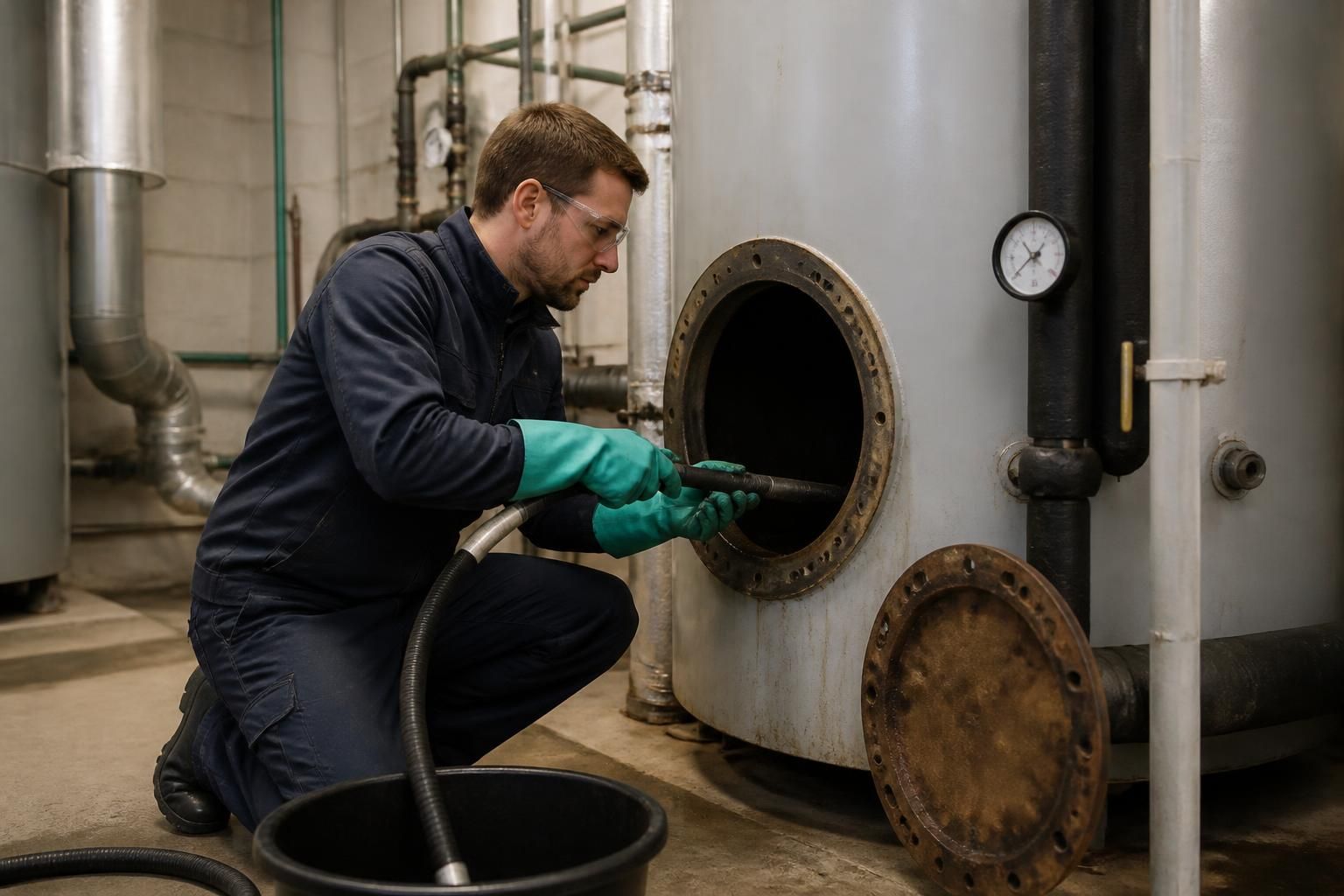
Key challenges in hot water tank cleaning and maintenance
Hot water tank cleaning and maintenance is the controlled management of vessel condition, stored-water hygiene and associated equipment. Difficulties commonly involve access, safe isolation, temperature control, documentation, contamination sources and deciding when deterioration requires corrective action.
Maintaining safe stored-water temperatures
Temperature must be managed carefully during maintenance so that cleaning activity does not compromise hot-water hygiene. Checks should consider the vessel, circulation arrangements and connected outlets rather than relying on a single temperature reading.
Removing scale without damaging the vessel
Limescale and sediment can reduce effective capacity, affect heat transfer and conceal deterioration. Cleaning methods need to remove deposits without harming internal coatings, fittings, joints or components that are difficult to replace.
Managing contamination during cleaning
Opening a tank can disturb sediment and introduce contamination if equipment, hoses or access points are not suitably controlled. The work should include an assessment of how the vessel will be cleaned, flushed and returned to service.
Coordinating isolation and system disruption
A hot-water tank may serve washrooms, production areas or other operational facilities. Isolation, drainage and recommissioning therefore need to be coordinated so that maintenance does not create avoidable risks for building users or dependent processes.
Identifying defects during inspection
Cleaning provides an opportunity to examine the tank and associated fittings for corrosion, damaged insulation, faulty valves, leaking connections and other defects. Visible deterioration may require further investigation rather than being treated as a cleaning issue alone.
Keeping maintenance evidence useful
Records should show what was inspected, cleaned or replaced, together with relevant findings and follow-up actions. Clear documentation helps demonstrate that maintenance decisions were considered and supports comparison during later inspections or compliance reviews.
Deciding between repair and replacement
A tank may remain serviceable despite deposits or minor defects, while advanced corrosion, recurring contamination or obsolete components can make continued maintenance less appropriate. The decision should consider condition, system design, risk and the likely reliability of remedial work.
Questions to ask when reviewing hot water tank maintenance
Begin by reviewing the tank’s condition alongside its maintenance records, inspection findings and temperature-monitoring information. Check for corrosion, scale, sediment, damaged insulation, faulty valves and other defects that could affect stored-water quality or reliable operation. The review should also consider the tank’s age, construction, capacity and connection to the wider hot water system.
Cleaning may be proportionate where contamination or deposits are present but the vessel remains structurally sound. Repairs may address isolated component faults, while a decision to replace a hot water tank is more appropriate where deterioration affects its integrity, repeated defects persist or repair would not provide a dependable solution. Record the reasoning and any follow-up checks so future maintenance decisions are based on evidence.
Check whether the records support the maintenance decision
Review inspection dates, cleaning details, identified defects, remedial work and follow-up findings alongside temperature-monitoring records where relevant. Confirm that the records identify the tank or system concerned and distinguish completed work from recommendations that remain outstanding. Where evidence is incomplete, establish whether a targeted inspection or updated assessment is needed before deciding on further cleaning, repair or replacement.
Once the review is complete, prioritise actions according to their effect on water quality, system reliability and safety. Any cleaning, component repair or decision to replace a hot water tank should be recorded with the findings that led to it, together with the checks needed to confirm that the work has addressed the identified issue.
Where the condition or performance of the vessel is uncertain, an appropriately detailed inspection can provide a sound basis for planning remedial work and future maintenance. This helps ensure that expenditure is directed towards the most relevant corrective action rather than relying on age or appearance alone.
Benefits of effective hot water tank maintenance
A structured programme gives facilities teams a clear view of tank condition and actions. Linking findings to planned work helps identify issues before they disrupt hot water provision or complicate compliance reviews.
Consistent records improve coordination of isolation, access and follow-up checks. They make recurring defects easier to track, supporting repair or replacement decisions while limiting disruption to site operations.
Safer stored-water conditions
A controlled cleaning and maintenance process helps keep the vessel and associated components in a condition that supports hygienic hot water storage.
Clearer compliance evidence
Documented inspections, cleaning work and follow-up checks give facilities teams a clearer evidence trail when reviewing water hygiene controls.
More organised maintenance planning
Recorded findings help teams schedule cleaning, repairs and further inspections according to the tank’s condition rather than relying on routine assumptions alone.
Better operational control
Understanding the condition of the tank, valves, insulation and connections makes it easier to coordinate maintenance with the wider hot water system.
Stronger lifecycle decisions
Consistent condition information supports better decisions about continued use, remedial work or replacement as the vessel ages.
Hot Water Tank Maintenance: Questions Answered
What evidence should a contractor provide after hot water tank cleaning?
Documentation should identify observations, actions, responsible parties and verification requirements. Testing, inspection records and photographs can provide evidence, while planned isolation and access arrangements help minimise operational disruption during maintenance.
Read moreHow can businesses plan hot water tank cleaning around site operations?
Coordinate cleaning with planned maintenance, low-demand periods and responsible-site contacts. Confirm water-use constraints, protection for users, sequencing with dependent systems, and contingency arrangements before work begins on the agreed date.
Read moreHow should businesses assess a contractor’s competence for hot water tank maintenance?
Assess relevant experience with hot water storage systems, staff competence, documented procedures, insurance, risk controls and understanding of water hygiene requirements. Request examples of comparable work and clear communication arrangements.
Read moreWho should oversee hot water tank maintenance within a business?
A designated facilities or water-safety lead should coordinate the maintenance programme, involving responsible engineers, compliance personnel and relevant contractors, while retaining accountability for decisions, records and required follow-up actions.
Read moreHow should businesses tailor hot water tank maintenance to their premises?
Tailor maintenance to occupancy, water demand, vessel configuration, operating temperatures, access constraints and the wider system. Higher-risk uses may require more frequent review, specialist controls and documented site-specific escalation procedures.
Read moreDiscuss Your Hot Water Tank Maintenance Requirements
Discuss your hot water tank with Blue Fish to clarify the inspection, cleaning or remedial advice required. Share relevant system details and existing records so a tailored approach reflects your site’s equipment, use and water-quality responsibilities, and request tailored advice.