
Water Tank Refurbishment: Process & Safety
Water tank refurbishment combines inspection, hygienic preparation, repair and relining to restore storage systems safely. For commercial, industrial and domestic-site operators, Blue Fish provides practical guidance supporting water hygiene, risk control and ongoing compliance.
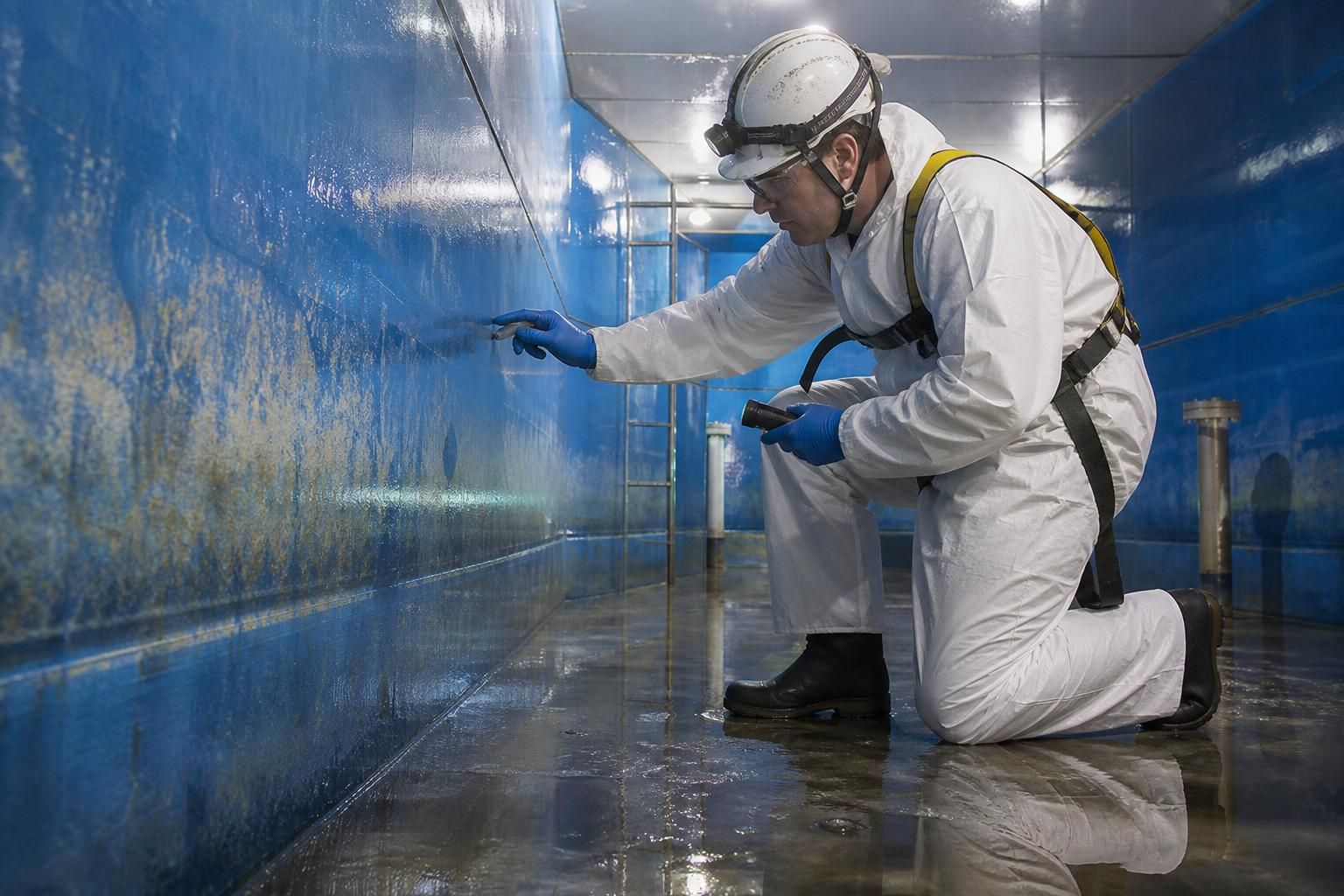
Safe Compliance
A defined refurbishment process helps dutyholders control contamination risks, meet UK water safety responsibilities, and plan proportionate action from evidence.
What the Refurbishment Includes
The engagement defines required work, confirms the tank’s suitability and sets controls for safe completion. It gives the client a clear scope, responsibilities and acceptance criteria before site activities begin.
Handover records can cover completed works, limitations and recommended monitoring. They help dutyholders retain evidence, brief site personnel and manage the refurbished tank within wider water safety arrangements.
Condition Assessment
The tank, fittings and surrounding installation are assessed to identify corrosion, damage, leaks and factors affecting refurbishment.
Safe Isolation
The work plan addresses tank isolation, draining and protection of connected water systems before refurbishment starts.
Hygienic Preparation
Internal surfaces are prepared to remove deposits and contamination while maintaining suitable hygiene controls throughout the work.
Repairs and Relining
Defective areas are repaired and the tank is relined where appropriate to restore a sound, hygienic storage surface.
Safety Controls
The method considers access, confined-space risks, suitable protective equipment and controls needed for safe site activities.
Quality Verification
Completed work is checked against the agreed scope so that defects, restrictions and any further actions are clearly identified.
Practical Deliverables for Safe Refurbishment
The refurbishment record should connect technical decisions with evidence: condition photographs, preparation checks, material information, coating details, test results and clear reporting that enables dutyholders to verify safety controls and retain compliance documentation.
Condition Survey and Defined Scope
The refurbishment should begin with a structured condition survey covering the tank, access arrangements, surrounding installation and relevant water hygiene risks. Its findings support a written scope that distinguishes essential remedial work from optional improvements.
Controlled Isolation and Safe Access
A documented isolation plan should identify how the tank will be taken out of service, how alternative supply arrangements will be managed, and what controls are needed for access. This helps prevent accidental use of the system while refurbishment is in progress.
Material Suitability Verification
Records should confirm that repair and lining materials are suitable for their intended water contact and compatible with the tank construction. Product information, application requirements and relevant supporting documentation should be retained with the project file.
Preparation and Application Checks
The work record should show that surfaces were prepared to the specified standard before repairs or lining were applied. Checks during application can include coverage, defects, curing conditions and any areas requiring correction before the tank is returned to service.
Post-Refurbishment Verification
Completion checks should establish that the refurbished tank is in an acceptable hygienic and physical condition. Any required cleaning, disinfection or water quality verification should be recorded alongside the responsible person, date and outcome.
Handover and Ongoing Control Records
The final handover pack should bring together the agreed scope, completed works, inspection findings, material records, verification evidence, photographs and recommendations for future monitoring. This gives dutyholders a usable baseline for risk assessments and subsequent maintenance decisions.
Water Tank Refurbishment and Safety: Key Questions
What does the water tank refurbishment process involve?
Safety is managed through isolation, contamination controls, competent preparation, specified materials, curing verification, post-work inspection and suitable water-quality testing before the tank is reinstated for operational use by the dutyholder.
Read moreHow is water tank refurbishment documented for compliance?
Compliance records should provide traceability from identified defects to completed remedial work, including tank identification, approvals, material certificates, inspection sign-off, test reports, residual risks and maintenance recommendations for dutyholder review.
Read moreWhen should a water tank be refurbished rather than replaced?
Refurbishment is favoured when the tank remains structurally sound but has local corrosion, failed coatings, or hygiene defects; replacement may be preferable where integrity, access, or configuration cannot be restored.
Read moreWhich materials are suitable for safe water tank refurbishment?
Suitable materials must be compatible with stored water, substrate and service conditions, with potable-water approval where relevant. The specification should address adhesion, corrosion resistance, curing and cleanability before site application.
Read moreHow long does water tank refurbishment take?
Duration depends on tank size, access, defect extent, preparation requirements, coating system and curing conditions. The contractor should confirm programme, isolation arrangements and reinstatement criteria after surveying the specific installation.
Read moreWhat to Expect During Water Tank Refurbishment
Blue Fish begins by relating the proposed refurbishment to the tank’s condition, use and water hygiene requirements. Findings are explained in practical terms, including the significance of defects, any limitations identified and whether refurbishment is proportionate to the risks.
Before work proceeds, the agreed scope, access requirements, safety controls and verification steps are clarified with the dutyholder. If site conditions require a change to the planned approach, the reason and implications are discussed so that decisions remain traceable and properly informed.
How the proposed work is determined
The assessment considers visible corrosion, cracking, failed joints, surface degradation, access constraints and the tank’s operational use. These findings are used to define the work sequence and identify any conditions that could affect hygiene, worker safety or the suitability of the finished tank.
Once refurbishment is complete, the findings should be reviewed against the agreed safety requirements, with any remaining limitations or maintenance actions recorded clearly. This gives the dutyholder a practical basis for deciding whether the tank can return to service and what controls must continue.
The completed refurbishment record can then support updates to the site’s water safety plan, risk assessment and monitoring arrangements. Blue Fish can explain the significance of the evidence provided, helping responsible persons retain a clear audit trail for future inspections and compliance reviews.
Discuss Your Water Tank Refurbishment Requirements
To discuss whether refurbishment is suitable for your storage tank, share the available system information and inspection findings with Blue Fish. The team can help clarify practical requirements, verification needs and the appropriate next step for your site.