
Drinking Water Quality Testing for Businesses
Drinking water quality testing assesses water used for consumption against relevant safety parameters, helping businesses identify contamination risks and verify treatment performance. Blue Fish Water Management Ltd provides sampling, laboratory analysis and practical interpretation for commercial and industrial water systems.
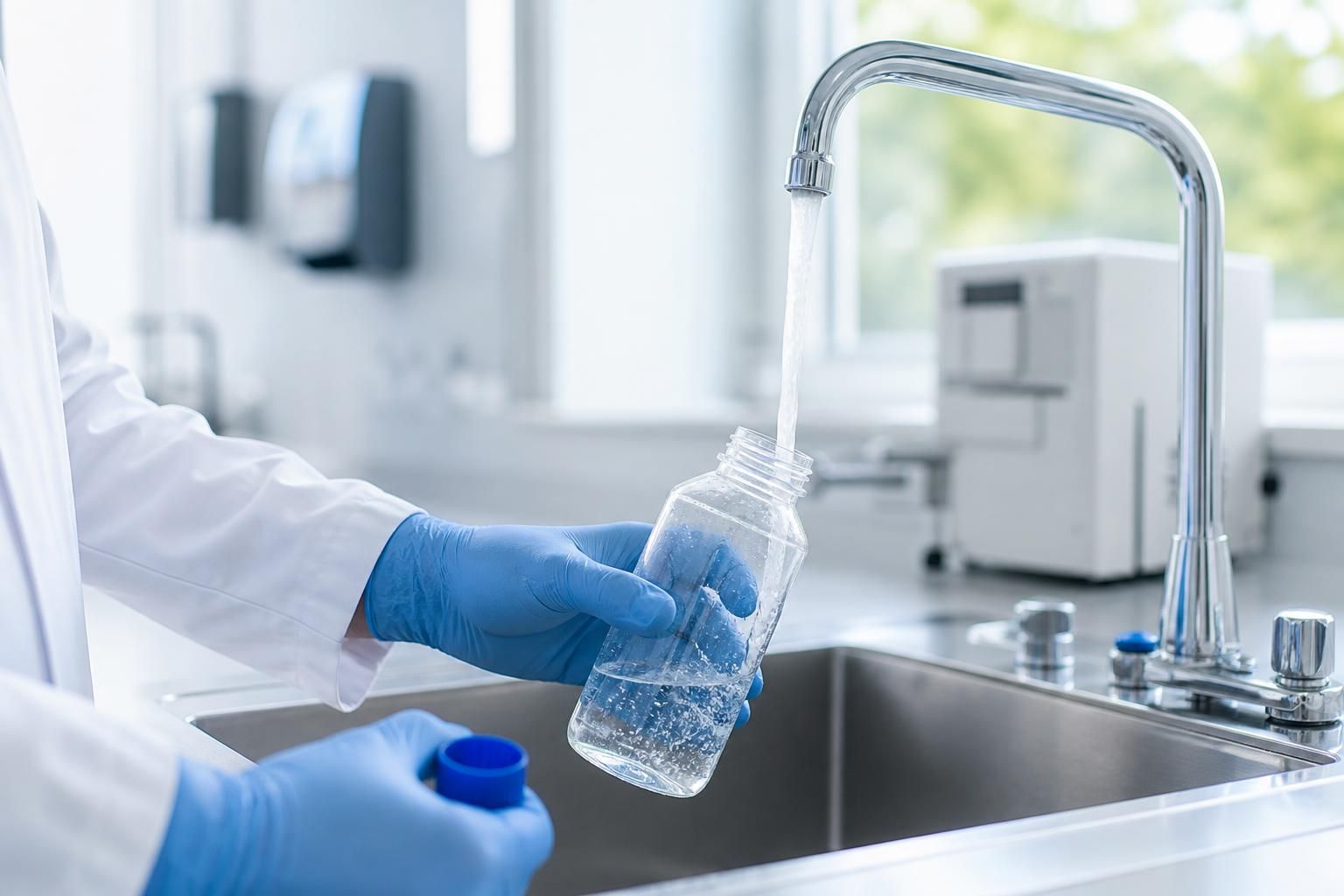
Water Quality Testing Options Compared
Water quality testing can range from a targeted check of one parameter to a planned programme covering multiple outlets and risks. Comparing scope, sampling method, interpretation and follow-up helps determine which approach suits a particular drinking water system.
Targeted Parameter Testing
A targeted test examines a specific parameter or small group of parameters linked to a known concern, such as suspected contamination or a treatment issue. It suits businesses seeking focused evidence rather than a broad assessment, with results interpreted in relation to the system and reason for sampling.
Baseline Drinking Water Survey
A baseline survey samples relevant outlets and assesses a wider range of drinking water quality parameters. This approach is suitable when a business needs an informed picture of its water quality before reviewing controls, changing treatment or establishing a monitoring plan.
Outlet and System Sampling
Sampling multiple outlets helps identify whether water quality is consistent throughout a building or varies between locations. It is appropriate for larger or more complex commercial and industrial systems where storage, distribution routes or outlet use may influence results.
Investigative Testing
Investigative testing is used when an existing result, complaint or operational change requires further examination. The scope is selected around the suspected source or pathway, helping distinguish an isolated result from a wider drinking water quality issue.
Treatment Performance Testing
Testing before and after treatment, where relevant, helps assess whether a filtration or other water treatment process is performing as intended. This option suits businesses reviewing treatment controls and needing laboratory evidence to support operational decisions.
Routine Monitoring Programme
A planned monitoring programme repeats sampling at defined outlets and intervals selected for the system’s risks and use. It provides ongoing evidence for internal controls, compliance records and the review of changing water quality conditions.
Post-Remedial Verification
Verification testing follows remedial work or corrective action to check whether the relevant water quality concern has been addressed. The sampling plan should reflect the original finding, affected outlets and the control measure introduced.
Practical Elements of Drinking Water Quality Testing
An effective programme links outlet selection to building use, occupancy and stored-water arrangements. It also defines sample handling, target parameters, reporting thresholds and record-keeping, so results can be compared consistently and reviewed alongside relevant control measures.
Sampling Plan
Sampling locations are selected according to building use, occupancy, water storage and distribution arrangements, creating a representative basis for assessing drinking water quality.
Outlet Sampling
Samples can be taken from relevant drinking-water outlets, with outlet identification and collection details recorded to support accurate interpretation of each result.
Parameter Selection
The testing schedule is aligned with the system, its intended use and the risks identified during review. This helps ensure that relevant microbiological and chemical parameters are considered.
Laboratory Analysis
Collected samples are submitted for laboratory analysis, including UKAS-accredited water testing where appropriate to the required assessment and reporting arrangements.
Result Interpretation
Results are reviewed against applicable reference values and agreed reporting thresholds. Findings are considered alongside system conditions, control measures and any relevant sampling history.
Clear Reporting
A structured report records sample details, analytical findings and points requiring attention, giving responsible persons a clear basis for maintaining water hygiene records and planning further action.
Drinking Water Quality Testing Questions
When should a business arrange drinking water quality testing?
Independent laboratory testing is particularly useful when businesses need documented evidence for internal controls, landlord or client assurance, investigation of unusual results, or confirmation that remedial measures have worked effectively.
Read moreWhat parameters are included in drinking water quality testing?
Testing may cover microbiological indicators, metals, chemicals, pH, turbidity, hardness and taste or odour, selected according to the supply, building, treatment processes, suspected contamination risks and intended water use.
Read moreHow are drinking water test results interpreted against compliance requirements?
Results are assessed against applicable standards, contractual requirements and site-specific control limits. Any exceedance should trigger documented review, investigation, proportionate corrective action and, where necessary, confirmatory sampling as required.
Read moreWho is responsible for arranging drinking water quality testing?
Responsibility usually rests with the building owner, employer, landlord or facilities manager, depending on the premises and water arrangements. Specialist advisers can define sampling plans, coordinate testing and explain findings.
Read moreHow is a drinking water testing plan designed for a commercial building?
A plan maps representative outlets, usage patterns, storage arrangements and sampling points, then sets frequencies, methods, parameters, responsibilities and review actions alongside operational controls appropriate to the building’s risk profile.
Read moreQuestions to Ask Before Commissioning Water Quality Testing
Before commissioning drinking water quality testing, ask which outlets, users and water systems will be included, and why each sample is needed. Confirm the parameters to be tested, the sampling method, laboratory arrangements and any site information required to interpret results accurately.
Also establish who will carry out the work, what evidence of competence and quality control will be provided, and how findings will be reported. The agreement should explain timescales, action thresholds, record retention and responsibility for investigating abnormal results or arranging follow-up testing.
Which locations and parameters are included?
Check whether the programme covers representative outlets, low-use points, storage tanks, treatment stages and areas used by different groups of people. The testing schedule should identify the microbiological or chemical parameters requested, explain why they are relevant, and state any exclusions so that a satisfactory result is not mistaken for evidence about untested parts of the system.
Once these points are agreed, the testing programme should be documented alongside the site’s water safety arrangements. Results can then be reviewed in context, rather than treated as isolated figures, helping the responsible person decide whether existing controls remain suitable or require further investigation.
Blue Fish Water Management Ltd can provide practical interpretation of drinking water quality results, helping businesses understand what the findings mean for their systems and what corrective action may be appropriate.
Discuss Your Drinking Water Testing Requirements
Discuss your drinking water quality testing requirements with Blue Fish Water Management Ltd. We can help you define the information needed at the outset, compare suitable approaches and determine an appropriate next step for your commercial or industrial premises.